
A Quick Start Guide to Pipe Fittings Types

Jan 26, 2026
Introduction to Pipe Fittings: The Unsung Heroes of Piping Systems
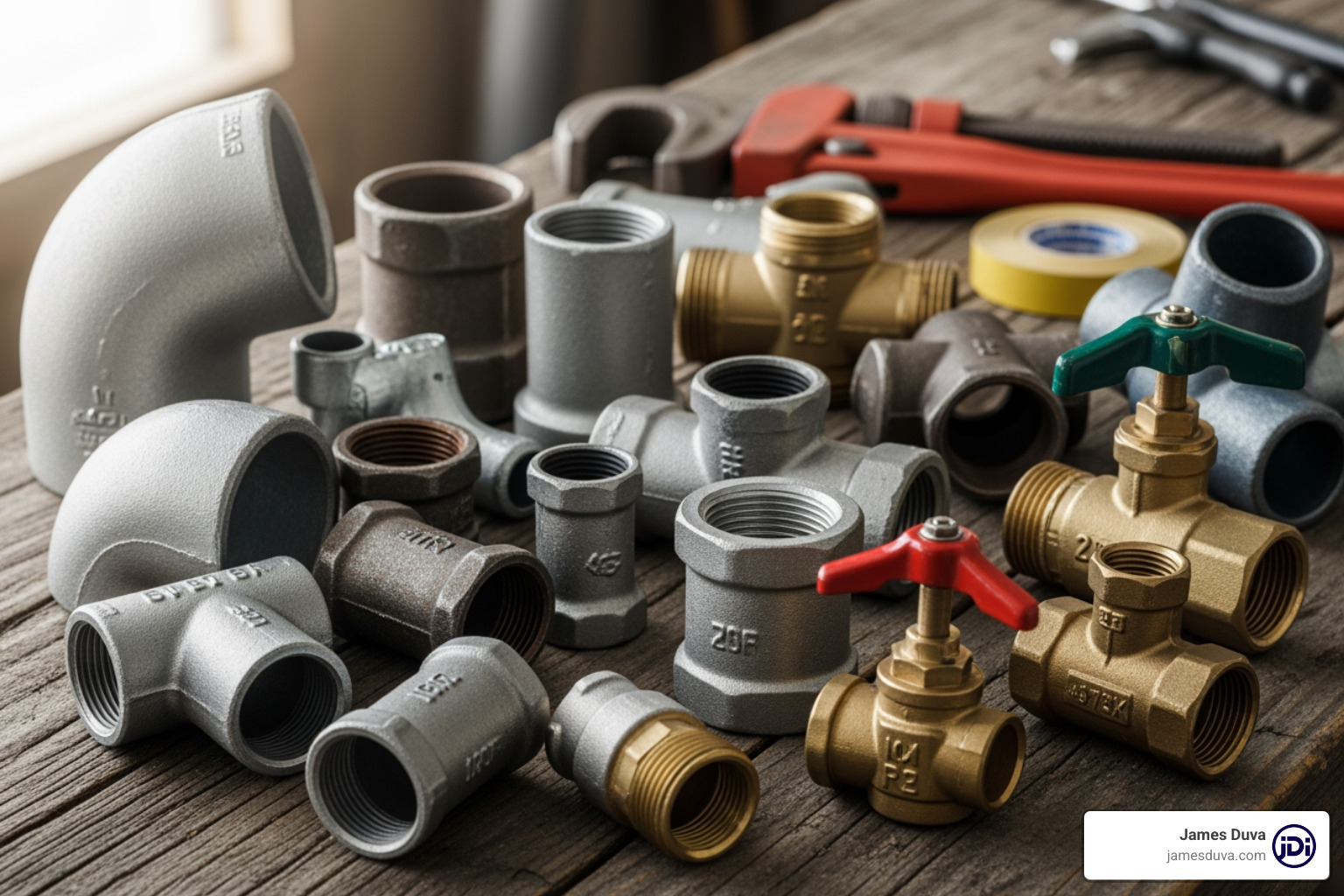
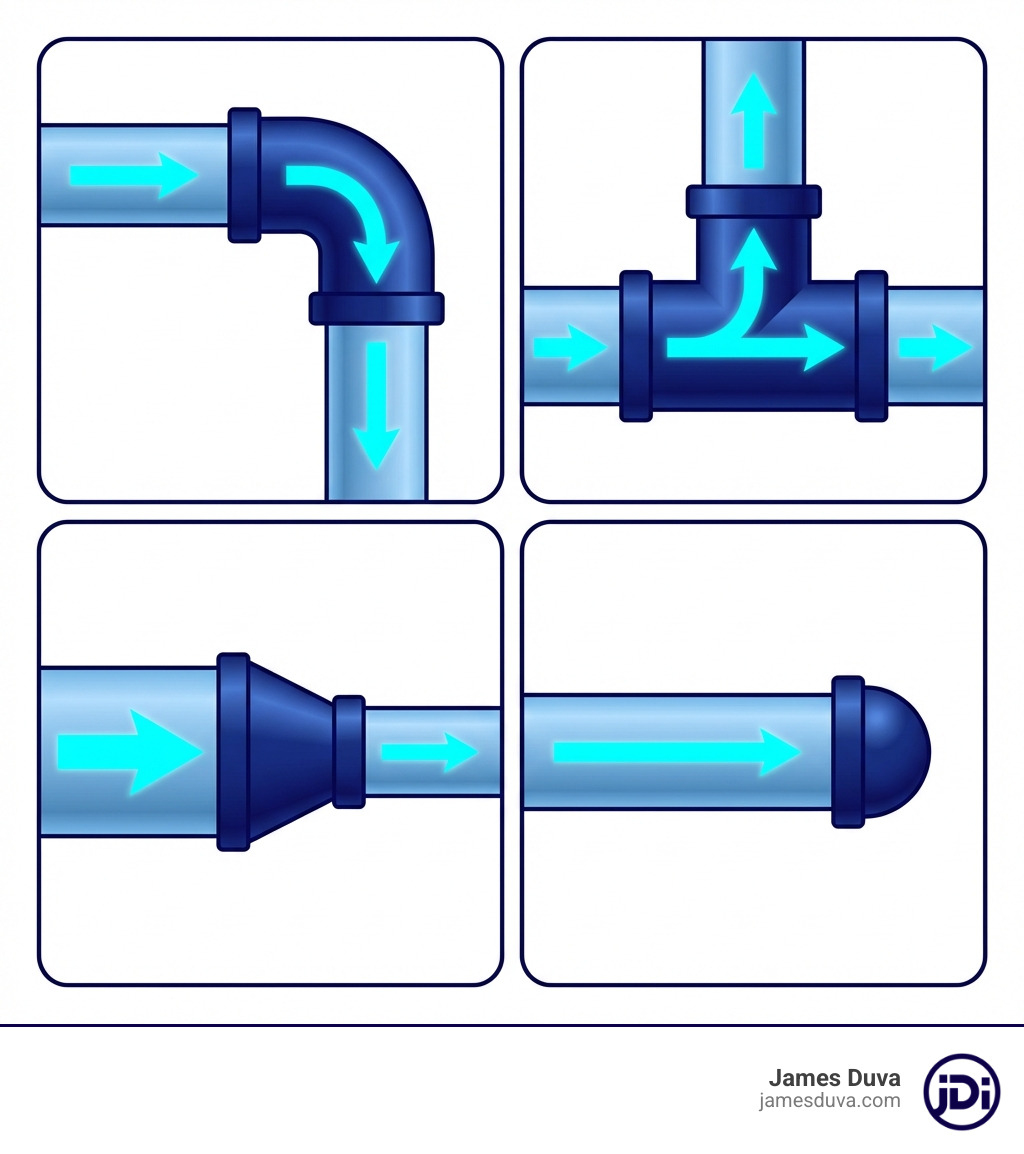
Pipe fittings are essential components that connect, control, and redirect the flow of fluids or gases in piping systems. From complex chemical processing networks to simple water supply lines, these fittings perform four key functions:
- Change Direction: Elbows and bends guide pipes around obstacles.
- Join Pipes: Couplings and unions connect pipe sections.
- Split Flow: Tees and crosses create branch lines.
- Reduce or Terminate: Reducers change pipe diameter, while caps and plugs seal line ends.
The global pipe fittings market, valued at $15.2 billion in 2022 and projected to reach $23.5 billion by 2030, highlights their critical role across industries like oil and gas, water treatment, and chemical processing.
In industrial settings, proper fitting selection is paramount. The wrong choice can lead to catastrophic system failure. Material selection is especially critical; a stainless steel fitting excels in corrosive environments where other materials would fail, while nickel alloys handle extreme temperatures and pressures. For professionals in chemical processing, oil and gas, or water treatment, using substandard materials can create safety hazards and costly downtime.
I’m Billy Walker, Vice President of James Duva Inc.. Since 1978, we’ve supplied industrial-grade stainless steel and nickel alloy pipe fittings to the power, process, and water treatment industries. Our expertise in specialty piping components helps engineers and contractors source the exact materials they need for critical applications.
Learn more about our full range of pipe fittings.
A Functional Guide to Common Pipe Fitting Types
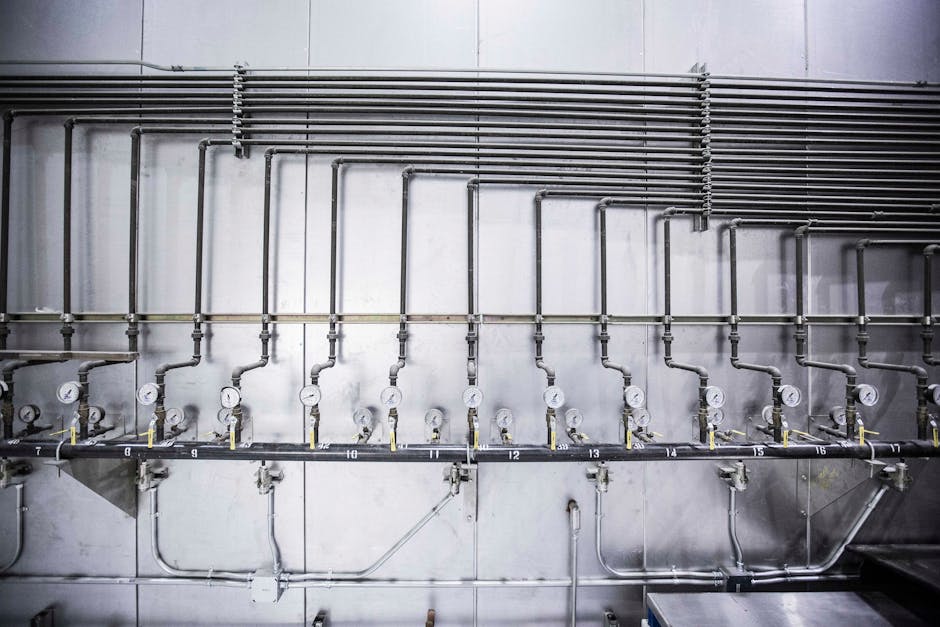
Pipe fittings are categorized by their primary function, such as changing flow direction, branching, or connecting pipes. Understanding these types is the first step in selecting the right component for any plumbing or industrial project, whether you are building a small utility line or a large process piping system.
Fittings for Changing Direction
Directional pipe fittings alter the path of the pipe to steer around obstacles or change course.
- Elbows: The most common directional fittings, elbows create sharp bends, typically at 90 or 45 degrees.
- Bends: Similar to elbows, bends offer a smoother, longer-radius turn to minimize friction and prevent blockages from solids in the fluid.
- Long-Sweep Elbows: A type of 90-degree elbow with a wider arc, promoting smoother flow and reducing turbulence. They are essential in drain lines to prevent clogs.
Explore our selection of elbows and bends.
Fittings for Branching and Creating Junctions
Branching pipe fittings allow you to create junctions and distribute flow to multiple directions.
- Tees: Shaped like a ‘T’, a tee fitting adds a 90-degree branch to a main pipeline. Reducing tees connect a smaller branch pipe, while sanitary tees have a curved shape for smooth flow in drain systems.
- Crosses: With four openings, these fittings connect four pipes at a central point, creating two branch lines from a single point.
- Olets: Specialized fittings that are welded onto a pipe to create a branch outlet without a traditional tee. Common types include:
- Weldolet: Butt-welded for high-strength, high-pressure connections.
- Sockolet: Uses a socket weld connection for the branch pipe.
- Thredolet: Provides a threaded outlet for the branch connection.
Weldolet vs. Thredolet vs. Sockolet: Choosing the Right Olet Fitting
Fittings for Connecting and Extending Pipe Runs
These pipe fittings ensure a continuous flow path while offering flexibility for maintenance.
- Couplings: A simple fitting that joins two pipes in a straight line, often used for repairs.
- Unions: A three-part coupling designed to be easily disassembled, making it ideal for sections that require future maintenance or equipment replacement.
- Adapters: Used to connect pipes with different end types (e.g., threaded to non-threaded). Threaded adapters bridge connection styles, while compression fittings create a seal without solder or glue, common for connecting valves.
Pipe Adapters & Bushings: The Unsung Heroes of Piping Systems
Fittings for Changing Pipe Size
When you need to alter the diameter of a pipeline, these pipe fittings ensure a smooth transition.
- Reducers: These fittings connect pipes of different diameters. Concentric reducers taper evenly and are used in vertical lines, while eccentric reducers are off-center to prevent air pockets in horizontal lines.
- Bushings: A compact fitting that fits inside a larger fitting to reduce the connection size, typically used for threaded connections.
What is a Pipe Bushing? Uses, Benefits, and Types Explained
Fittings for Terminating a Line
Terminating pipe fittings seal the end of a pipeline, either permanently or temporarily.
- Caps: A pipe cap seals the end of a pipe, creating a permanent, leak-proof closure.
- Plugs: Used to close an opening within a fitting, often for temporary seals or cleanout access points in drain systems.
Find our range of end caps and plugs.
Specialized Industrial Fittings
The industrial world relies on specialized pipe fittings designed for unique demands.
- Tube Fittings: Designed for tubing rather than pipe, these fittings create leak-tight connections for instrumentation and process control systems where precision is critical.
- Sanitary Fittings: Essential for industries like food and beverage and pharmaceuticals, these fittings have smooth, crevice-free surfaces and quick-disconnect clamps to ensure hygiene and prevent bacterial growth.
- Flanges: Used to connect pipes, valves, and other equipment, flanges are bolted together with a gasket to create a strong, sealed connection. They are ideal for large-bore piping and systems requiring easy disassembly for maintenance.
To see how these components work together in real systems, explore our broader range of industrial fittings and components.
Choosing the Right Material for Your Pipe Fittings
Choosing the right material for your pipe fittings is as crucial as selecting the right type. The decision depends on material compatibility with the pipe, system pressure and temperature, and the fluid being transported. For critical applications, many engineers rely on high-performance alloys from suppliers like James Duva Inc., who specialize in stainless steel and nickel alloy components.
| Material | Key Properties | Common Applications (Industrial Focus) | Pros | Cons |
|---|---|---|---|---|
| Stainless Steel | Excellent corrosion resistance, high strength, good temperature tolerance | Chemical processing, oil & gas, water treatment, food & beverage | Durable, hygienic, versatile, wide temperature range | Higher cost than plastics/carbon steel |
| Nickel Alloys | Exceptional corrosion resistance (acids, chlorides), high temperature & pressure strength | Extreme chemical environments, aerospace, marine, power generation | Unparalleled resistance to harsh conditions | Very high cost, specialized welding required |
| Copper | Good corrosion resistance, excellent heat conductivity, lead-free | Potable water lines, HVAC, medical gas systems | Durable, recyclable, antimicrobial | Susceptible to galvanic corrosion with dissimilar metals, higher cost than PVC |
| Brass | Durable, good corrosion resistance, malleable, versatile | General plumbing, gas lines, decorative fixtures, low-pressure industrial | Strong, good for threaded connections | Can be susceptible to dezincification, not for extreme temps/pressures |
See our material selection guide.
Common Metal Pipe Fittings: Stainless Steel, Nickel Alloys, Copper, and Brass
Metallic pipe fittings are chosen for their strength and resistance in industrial applications.
-
Stainless Steel: A powerhouse material known for excellent corrosion resistance and strength. Type 316 stainless steel is particularly valued in demanding environments like chemical processing and water treatment due to its superior resistance. Its durability across a wide temperature range and hygienic properties also make it essential for food and beverage applications. For many of these uses, engineers turn to butt weld stainless fittings for maximum integrity.
-
Nickel Alloys: For the most extreme conditions, nickel alloys offer unparalleled resistance to highly corrosive chemicals, extreme temperatures, and high pressures. They are critical in aerospace, chemical processing, and power generation, where system failure is not an option.
-
Copper: A traditional plumbing material valued for its corrosion resistance and thermal conductivity. It is a reliable choice for potable water and HVAC systems but is less robust than stainless steel for extreme industrial processes.
-
Brass: This alloy of copper and zinc is durable, versatile, and offers good corrosion resistance. It is commonly used for threaded connections in general plumbing and lower-pressure industrial applications.
Why James Duva Focuses on High-Performance Alloys
At James Duva Inc., our expertise is in high-grade stainless steel and nickel alloy industrial products. Since 1978, we have provided solutions for demanding environments like chemical processing, oil and gas, and water treatment, ensuring the safety and longevity of critical systems.
Our focus on these high-performance alloys allows us to offer:
- Superior Corrosion Resistance: For handling aggressive chemicals and media.
- Exceptional Strength and Durability: To withstand high pressures and mechanical stress.
- High Temperature Tolerance: For processes involving extreme heat.
- Hygienic Properties: To meet the stringent requirements of sanitary applications.
Based in Branchburg, NJ, we are a trusted one-stop shop for engineers and contractors seeking reliable, high-quality industrial pipe fittings built to withstand extreme conditions. Explore more about our capabilities on our About Us page or go directly to our catalog of high-performance alloy fittings.
Application-Specific Selection: How to Choose the Right Fitting
Choosing the right pipe fitting is dictated by the application. The needs of a residential water line differ greatly from those of an industrial chemical plant, where high-integrity stainless and nickel alloy systems are essential.
Process Lines vs. Utility Lines
Understanding the distinction between process and utility lines is key to selecting pipe fittings.
-
Process Line Fittings: These carry critical fluids for manufacturing or energy production. They must be highly durable, made from materials like stainless steel or nickel alloys to handle high pressures, extreme temperatures, and corrosive substances. Traceability and certification are often required.
-
Utility Line Fittings: These support general operations (e.g., water, compressed air) and have less stringent requirements. Materials like copper or brass are common, and fittings are often chosen for ease of installation.
For complex process systems, partnering with a specialist such as James Duva Inc. in Branchburg, NJ can help you match fittings, materials, and standards to your exact line classification.
What Are Transition Fittings and When Do You Need Them?
Transition fittings are essential for joining pipes made of dissimilar materials. Connecting different metals directly can cause galvanic corrosion, where one metal corrodes rapidly. Transition fittings prevent this.
- Dielectric Unions: These fittings join dissimilar metals like copper and galvanized steel. They use an insulating washer to separate the metals, stopping the electrochemical reaction that causes corrosion.
- Mechanical Couplings: Flexible rubber couplings secured with metal clamps are used to join different materials, such as cast iron to plastic (PVC/ABS), providing a leak-proof seal.
Using the correct transition fitting is essential for the longevity and integrity of your piping system.
Finding Pipe Fitting Dimensions and Specifications
Precision is critical for pipe fittings. Incorrect dimensions can lead to leaks or system failure. This is why adhering to specifications is paramount.
- Industry Standards: Fittings are manufactured to standards from organizations like ASME and MSS, which define dimensions, materials, and pressure ratings. For example, ASME B16.9 covers butt welding fittings.
- Pipe Schedules: “Schedule” (e.g., Sch 40, Sch 80) refers to the pipe’s wall thickness. A higher schedule number means a thicker wall, capable of withstanding higher pressure.
- Pressure Classes: Forged fittings often have pressure classes (e.g., Class 3000, 6000) that indicate the maximum allowable working pressure.
At James Duva Inc., we understand that every project has unique demands. If you need specific dimensions for your high-grade stainless steel or nickel alloy pipe fittings, our team in Branchburg, NJ, is here to assist with custom fitting specifications and sourcing.
Contact us for custom fitting specifications.
Frequently Asked Questions about Pipe Fittings
Here are answers to some of the most common questions about pipe fittings.
How do I connect pipes of two different sizes?
Connecting pipes of different sizes is a common task achieved with specific pipe fittings:
- Reducers: These fittings create a gradual transition between pipe diameters. Concentric reducers taper evenly for vertical lines, while eccentric reducers are off-center to prevent air pockets in horizontal lines.
- Reducing Bushings: A compact, threaded fitting that screws into a larger fitting to accept a smaller pipe. It’s an efficient way to reduce connection size in tight spaces.
For alloy systems, many engineers use high-grade reducers and bushings from suppliers like James Duva Inc., ensuring compatibility with existing stainless steel and nickel alloy lines.
Bushing Fittings: The Small Part That Solves Big Industrial Problems
Can I use the same fittings for hot and cold water or process fluids?
Yes, but only if the fitting’s material is rated for the temperature and pressure of your system.
- Stainless Steel and Nickel Alloys: These materials are excellent for a wide range of temperatures, from cryogenic to high-heat, making them suitable for both hot and cold process fluids.
- Copper: Well-suited for both hot and cold potable water lines.
- Plastics: Materials like PVC have low temperature limits and are typically for cold water only, while CPVC can handle hot water.
Always check the manufacturer’s specifications to ensure the fitting is appropriate for your application’s temperature and pressure to prevent system failure. If you are unsure, consult the James Duva material guide or reach out through our contact page.
What is the difference between a butt weld and a socket weld fitting?
Both create permanent, welded joints but differ in design and application:
-
- How it works: The beveled ends of the fitting and pipe are welded directly together, edge-to-edge. This creates a smooth, continuous bore.
- Use cases: Ideal for high-pressure, high-temperature applications and larger pipe diameters where strength and flow integrity are critical, such as in oil and gas and power generation. They provide the strongest possible connection.
-
- How it works: The pipe is inserted into a recessed area (socket) in the fitting, and a fillet weld is applied around the outside.
- Use cases: Generally used for smaller pipe diameters (NPS 2 or less) in lower-pressure systems. They are easier and faster to install than butt weld fittings but create an internal crevice that can trap fluid.
What are Buttweld Fittings? Benefits, Types, and Industrial Applications
For project-specific recommendations on butt weld vs. socket weld in stainless steel or nickel alloy, explore our range of industrial fittings or contact our Branchburg, NJ team.
Conclusion: Assembling Your Project with Confidence
Understanding pipe fittings—from their basic functions to material and application specifics—is key to building safe, efficient, and durable piping systems. The success of any project depends on choosing the correct fitting type and material for the fluid, pressure, and temperature conditions. Neglecting these details can lead to costly failures and safety hazards.
For industrial-grade stainless steel and nickel alloy solutions, trust an expert supplier. With over four decades of experience, James Duva Inc. in Branchburg, NJ, provides high-performance pipe fittings for critical applications in the power, process, and water treatment industries. Our team can help you steer standards, specify butt weld and forged fittings, and select the right materials for your service conditions so you can move from design to installation with confidence.
The Ultimate Guide to Buy Fittings Online: Tips and Tricks for Smart Purchases
Explore our complete catalog of high-performance fittings and let us help you make the right connections.
About James Duva Inc.
Since 1978, James Duva Inc. has been your trusted source for stainless steel and high-nickel alloy industrial products. Whether you’re in the water treatment, process or power industry, we pride ourselves on always having what you need. Say goodbye to your sourcing problems with just one call to James Duva.