
Pouring Perfection: A Deep Dive into Beverage Sanitary Fittings
Mar 17, 2026
Why Beverage Sanitary Fittings Are Critical for Product Quality
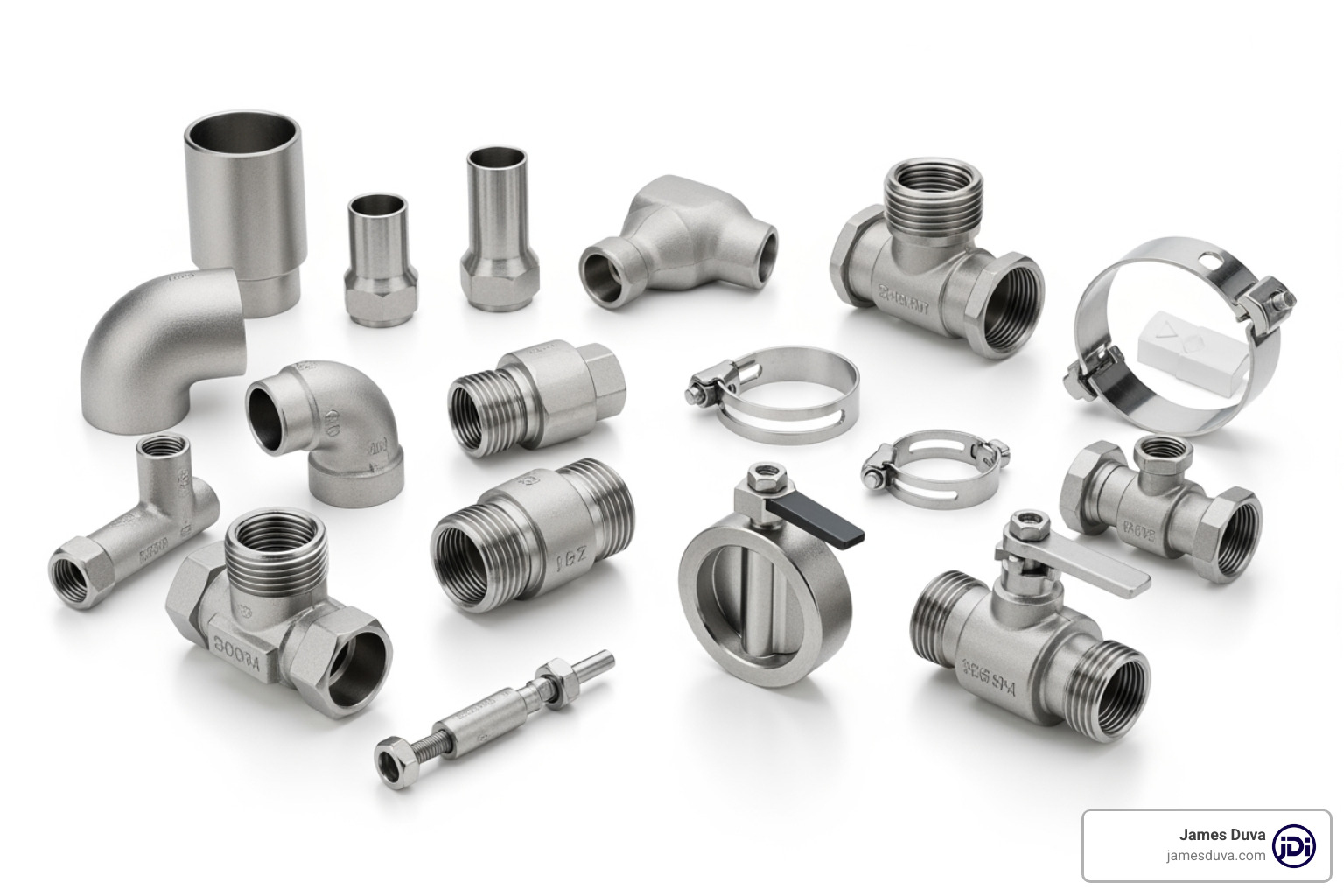
Beverage sanitary fittings are specialized stainless steel components designed to connect pipes, valves, and equipment in beverage production facilities while maintaining the highest standards of hygiene and preventing contamination. These fittings feature smooth, mirror-polished surfaces and no-crevice designs that eliminate bacterial harboring points.
Key Features of Beverage Sanitary Fittings:
- Smooth, polished surfaces that prevent bacterial growth
- Corrosion-resistant materials (typically 304 or 316L stainless steel)
- Easy to clean through manual dismantling or Clean-in-Place (CIP) systems
- No entrapment areas where contaminants could accumulate
- Compliance with industry standards (3-A, FDA, NSF, USDA)
- Multiple connection types including butt weld and sanitary clamp (Tri-Clamp)
In the beverage industry, where product purity directly impacts consumer safety and brand reputation, the choice of fittings is not just a technical decision—it’s a business-critical one. Every elbow, tee, adapter, and coupling in your processing line must meet rigorous sanitary standards. Unlike ordinary industrial fittings with threads and crevices, sanitary fittings are engineered specifically to prevent contamination.
The stakes are high. A single bacterial colony harboring in a poorly designed fitting can compromise an entire production batch. Processing facilities for beer, wine, juice, dairy, and soft drinks all depend on sanitary fittings to maintain product integrity from raw ingredient intake through final packaging.
Modern beverage plants face constant pressure to meet strict regulatory requirements while maintaining operational efficiency. The right sanitary fittings support both goals by enabling automated cleaning processes, reducing downtime, and ensuring consistent product quality batch after batch.
At James Duva Inc., we’ve supplied high-quality stainless steel sanitary fittings and related tube fittings to the process industries since 1978. Our experience shows that the right components—paired with proper installation and maintenance—are key to achieving regulatory compliance and operational excellence across your entire beverage processing line.
The Foundation of Purity: Why Sanitary Fittings are Non-Negotiable
In beverage production, from craft breweries to large-scale juice operations, product integrity hinges on the purity of the processing environment. This is why beverage sanitary fittings are a non-negotiable requirement.
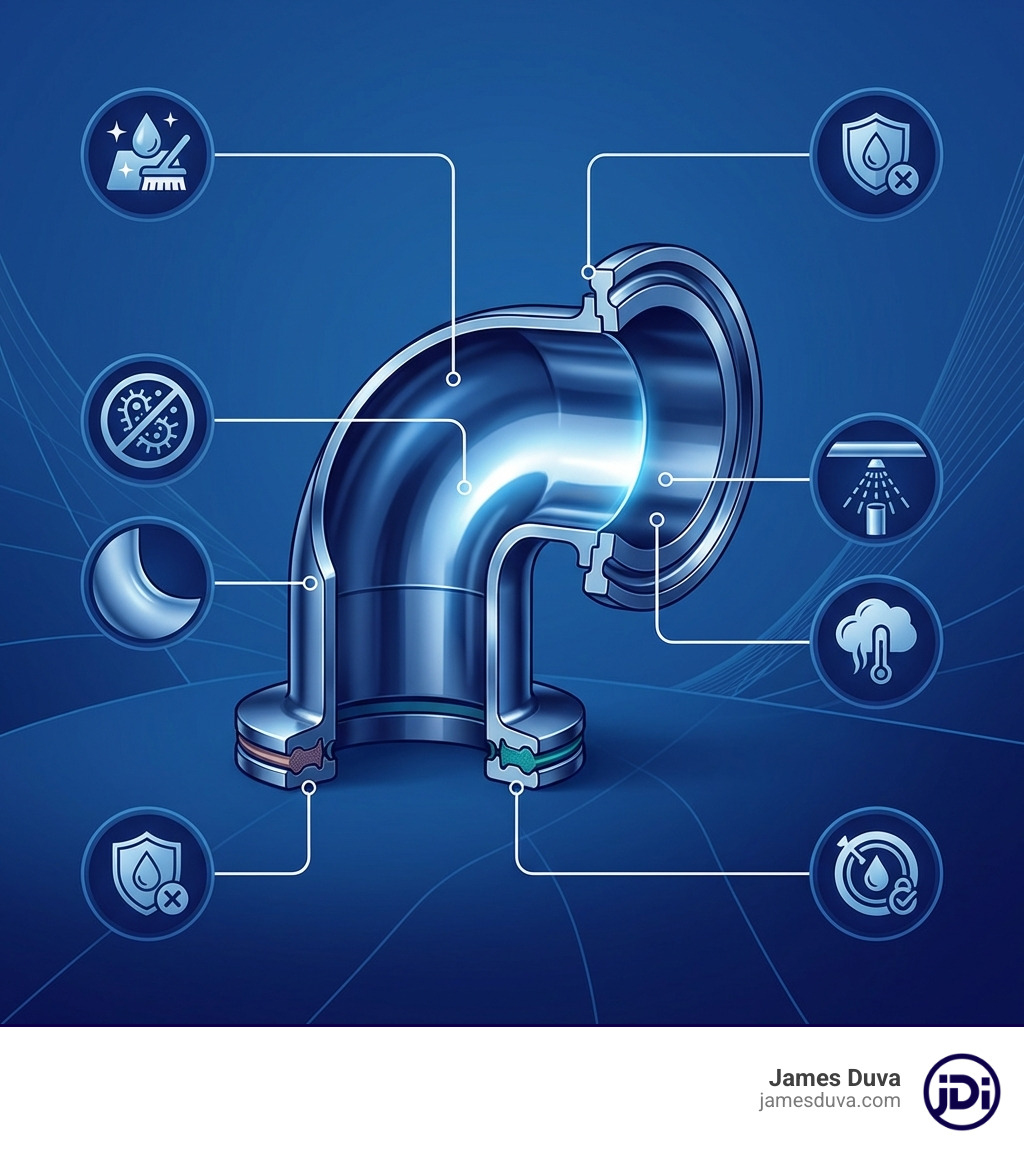
These fittings are specifically designed to prevent contamination. Unlike standard industrial fittings, sanitary fittings are engineered with smooth, non-porous surfaces and precise connections that eliminate the tiny crevices where bacteria can multiply, threatening to spoil a batch and jeopardize consumer health.
The benefits extend beyond hygiene. Our high-grade sanitary fittings are also corrosion-resistant, a critical characteristic when dealing with acidic beverages and various cleaning chemicals. This resistance ensures equipment longevity and prevents material leaching, maintaining your product’s intended purity and taste.
The choice of beverage sanitary fittings directly impacts process integrity, product quality, and safety. By limiting areas where bacteria can form and being easily cleanable (manually or via CIP), they ensure every drop meets the highest standards. Leak-tight connections also make industrial processes safer and more predictable. Investing in superior sanitary fittings is an investment in your brand’s reputation and your customers’ trust. You can explore sanitary solutions tailored to beverage applications in our catalog.
Key Characteristics of Stainless Steel Fittings
When it comes to beverage sanitary fittings, stainless steel is the undisputed champion. Its unique properties make it ideal for the demanding environment of beverage processing. Here’s why:
- Durability: Stainless steel withstands high pressures, temperatures, and frequent cleaning cycles.
- Cleanability: Its smooth, non-porous surface prevents buildup and allows for thorough manual or automated (CIP/SIP) cleaning.
- Inertness: Being chemically inert, it won’t leach flavors or contaminants, preserving product purity.
- Temperature Resistance: It performs reliably across the wide range of temperatures used in beverage production.
- Corrosion Resistance: It resists rust and corrosion from water, product acids, and cleaning agents.
- Polished Finishes: Mirror-polished surfaces reduce microscopic roughness, enhancing cleanability and preventing microbial hiding spots.
This combination of properties makes stainless steel the superior material for reliable beverage sanitary fittings. At James Duva Inc., we stock a wide range of 304 and 316L stainless steel fittings to match your specific process conditions.
Upholding Critical Industry Standards
In the beverage industry, compliance is a legal and ethical imperative to ensure every product is safe and consistent. This is where the adherence of beverage sanitary fittings to critical industry standards becomes paramount.
At James Duva Inc., our commitment is to provide fittings that meet or exceed the rigorous requirements set by leading organizations. These include:
- 3-A Sanitary Standards: Widations specify design criteria for cleanability and product purity. Many of our products meet 3-A Sanitary Standards design criteria.
- FDA Requirements: The FDA regulates materials for food contact. Our fittings and gaskets comply with these regulations to ensure product safety.
- USDA Guidelines: The USDA provides standards for food processing, which often overlap with beverage production requirements.
- NSF Certifications: NSF International develops public health standards for food and water systems. Relevant components may adhere to standards like ANSI/NSF 18 to ensure safety.
- ISO 2852: This international standard specifies dimensions for stainless steel clamp couplings, ensuring interchangeability and proper sealing in food industry equipment.
Adhering to these standards safeguards public health and consumer trust. Selecting certified beverage sanitary fittings is an investment in peace of mind. We invite you to discover our sanitary fittings that meet industry standards and learn more about our company’s quality-focused approach.
Material Matters: Selecting the Right Components
Choosing the right material for your beverage sanitary fittings is a decision that impacts the longevity, performance, and safety of your processing line. It requires careful consideration of factors unique to your operation.
At James Duva Inc., we help clients select materials by considering:
- Beverage Type: Is it highly acidic (citrus juices), alcoholic (beer, wine), or neutral (water)? The product’s chemical composition dictates the required corrosion resistance.
- Processing Conditions: What are the operating temperatures and pressures? Will fittings be subjected to extreme heat or chilling cycles?
- Cleaning Chemicals: The type and concentration of chemicals used in your cleaning processes must be compatible with the fitting material to prevent degradation.
Considering these variables ensures you select fittings that last and maintain product integrity. As specialists in high-grade stainless steel and nickel alloy products, we offer robust solutions. For more details, you can find more info about sanitary fittings materials and how they integrate with sanitary tube systems.
Choosing the Right Grade: 304 vs. 316L Stainless Steel
Within stainless steel, two grades are common for beverage sanitary fittings: 304 and 316L. Understanding their differences is key to optimal selection.
- 304 Stainless Steel: The most common grade, it offers good corrosion resistance and is a cost-effective solution for general beverage processing, such as for water, milk, and non-acidic drinks.
- 316L Stainless Steel: The ‘L’ denotes low carbon for better weldability. The key addition of molybdenum significantly boosts corrosion resistance, especially against chlorides. This makes 316L the preferred choice for:
- Highly acidic beverages (e.g., fruit juices)
- High-chloride environments (e.g., brines, certain cleaning solutions)
- Applications requiring higher temperature resistance or more stringent hygiene
- Pharmaceutical and some dairy applications
While 316L is more expensive, its superior corrosion resistance often justifies the cost in demanding environments. Evaluating your process is key to balancing cost and performance. Our team can help, and you can see our range of stainless steel sanitary fittings and contact us for application-specific guidance.
The Critical Role of Gaskets and Seals
Often overlooked but vital for the integrity of beverage sanitary fittings, gaskets and seals are the silent guardians against leaks and contamination at every connection point.
Gaskets ensure a tight, leak-proof seal. Their effectiveness hinges on several factors:
- Material Compatibility: Gaskets must be compatible with the beverage, cleaning chemicals, and operating temperatures. Common materials include:
- Buna-N (Nitrile): A good general-purpose material with excellent resistance to oils and fats, common in dairy applications.
- EPDM: Excellent resistance to hot water, steam, and many chemicals, making it ideal for CIP/SIP processes.
- FKM (e.g., Viton™): Superior resistance to chemicals, high temperatures, and aggressive cleaning agents.
- Silicone: Offers a wide temperature range and flexibility for high-purity applications, but has lower chemical resistance than FKM.
- Temperature Ratings: Each material has a specific optimal temperature range. Exceeding these limits can compromise the seal.
- FDA Compliance: Gaskets for direct product contact must comply with FDA regulations (e.g., 21CFR 177.2600) to ensure no harmful substances leach into the beverage.
Proper selection, installation, and inspection of gaskets are crucial to prevent leaks and contamination. At James Duva Inc., we offer a comprehensive selection of sanitary gaskets and seals to ensure hygiene and reliability. Browse sanitary gaskets and seals that pair seamlessly with our sanitary clamp and weld fittings.
A Guide to Common Beverage Sanitary Fittings and Connections
Building a robust and hygienic beverage processing line requires a comprehensive array of beverage sanitary fittings to guide your product seamlessly from one stage to the next. These components allow for changes in direction, flow splitting, and equipment integration, all while maintaining strict sanitary conditions.
At James Duva Inc., we provide the full spectrum of sanitary components necessary to construct a complete and reliable system. Explore our range of sanitary fittings to see how we can support your specific requirements and integrate with your existing stainless steel systems.
Essential Fitting Components
To understand the backbone of a beverage plant, we must look at the essential beverage sanitary fittings that make up the piping infrastructure. They are designed with precision to minimize turbulence and facilitate thorough cleaning.
Here are some of the critical components we supply:
- Elbows (45° and 90°): Change flow direction with smooth bends to minimize turbulence and ensure cleanability.
- Tees and Crosses**:** Branch or combine flow paths, with sanitary designs preventing stagnation.
- Reducers (Concentric and Eccentric): Connect different-sized tubes. Eccentric reducers are offset to ensure complete drainage.
- Adapters: Connect different fitting types or equipment for system flexibility.
- Couplings: Join tubing, either permanently (butt-weld) or for disassembly (unions).
- End Caps**:** Seal the end of a tube or port.
These stainless steel components are fundamental to a hygienic, efficient fluid system.
Common End Connection Types
The way beverage sanitary fittings connect is critical for both sanitary integrity and operational flexibility. We encounter several common end connection types, each with its own advantages:
| Connection Type | Ease of Assembly | Permanence | Ideal Use Case |
|---|---|---|---|
| Butt Weld | Requires skilled welding, more involved | Permanent once welded, robust | Long, fixed runs of piping where disassembly is rare, offering the smoothest internal surface for ultimate hygiene and minimal turbulence. |
| Sanitary Clamp (Tri-Clamp) | Quick and easy, tool-free assembly/disassembly | Semi-permanent, allows frequent breaking | Sections requiring frequent cleaning, inspection, or reconfiguration; ideal for connecting equipment, valves, and temporary lines. |
Butt weld fittings are welded for permanent installations, offering the highest sanitary integrity with a seamless internal surface.
Sanitary clamp fittings (or Tri-Clamp) are popular for their flexibility. Consisting of two ferrules, a gasket, and a clamp, they allow for easy, tool-free assembly and disassembly. This simplifies cleaning, inspection, and reconfiguration, reducing downtime.
Sanitary Tube vs. Pipe Fittings
While “tube” and “pipe” are sometimes used interchangeably, in beverage sanitary fittings, they refer to distinct products. Understanding the difference is crucial for proper system design.
The primary distinctions lie in their measurement, wall thickness, and surface finish:
- Sanitary Tube Fittings: Measured by precise Outside Diameter (OD). They have thinner walls and a highly polished interior surface to facilitate cleaning and prevent bacterial growth. They are standard for all product-contact applications and are designed for CIP/SIP.
- Sanitary Pipe Fittings: Measured by Nominal Pipe Size (NPS), an approximate internal diameter. They have thicker walls for higher pressure and structural use. The surface finish is less polished than tubing. They are used for utilities like steam, water, and air lines.
At James Duva Inc., we provide both sanitary tube fittings and pipe fittings to ensure you have the right component for every part of your facility. Read about sanitary tube fittings and explore our broader industrial piping solutions to build a fully integrated beverage system.
Operational Excellence: Installation, Maintenance, and Innovation
The finest beverage sanitary fittings are only as good as their installation and maintenance. At James Duva Inc., we know that operational excellence in beverage production requires selecting superior components, ensuring their correct implementation, and diligently maintaining them. This integrated strategy impacts efficiency, reduces downtime, and ensures the long-term reliability of your fluid system.
Enhancing CIP and SIP Processes
Clean-in-Place (CIP) and Steam-in-Place (SIP) are automated cleaning and sterilization methods that have transformed the beverage industry by allowing for thorough cleaning without disassembly. The design of beverage sanitary fittings is pivotal to their effectiveness.
- Clean-in-Place (CIP): This automated process circulates cleaning solutions. The smooth, crevice-free design of sanitary fittings ensures unimpeded flow, allowing solutions to clean every surface effectively.
- Steam-in-Place (SIP): This process follows CIP, using pressurized steam for sterilization. The design of sanitary fittings ensures steam reaches all surfaces for complete sterilization.
Fittings must withstand CIP/SIP temperatures and chemicals. High-grade stainless steel and compatible gaskets ensure durability. Properly designed fittings improve hygiene, reduce labor, and minimize contamination risk, boosting throughput.
Installation and Maintenance Best Practices
Even high-quality beverage sanitary fittings can underperform if not installed and maintained correctly. Proper practices are your best defense against contamination, leaks, and premature failure.
- Proper Alignment: Align components perfectly before connecting to prevent stress and leaks.
- Correct Gasket Seating: Ensure gaskets are seated correctly, without pinching, and are the right size and material for the application.
- Proper Torque: Follow manufacturer recommendations for tightening clamps. Incorrect torque can damage components or cause leaks.
- Regular Inspection: Routinely inspect fittings and gaskets for wear (cracking, discoloration, deformation) and replace them promptly.
- Maintenance Schedule: Develop a schedule for cleaning, inspection, and part replacement to prevent major issues.
Adhering to these practices ensures your fittings operate as intended, preventing contamination and extending equipment life. For more guidance, check out our maintenance tips for sanitary fittings and consult our engineering support team for project-specific recommendations.
Overcoming Sourcing and Installation Challenges
In the beverage industry, delays are costly. Sourcing and installing beverage sanitary fittings can present unique challenges.
Sourcing Challenges:
- Long Lead Times: Specialized components can have extended lead times, disrupting project timelines.
- Component Traceability: Tracking material origins and specifications is crucial for compliance and quality control.
- Finding Expertise: Not all suppliers understand the stringent requirements of sanitary applications.
Installation Challenges:
- Installation Errors: Improper welding or incorrect gasket seating can lead to leaks and contamination.
- Lack of Specialized Tools: Some connections require specific tools and skilled technicians.
Working with a specialized supplier like James Duva Inc. helps overcome these challenges. Our extensive inventory minimizes lead times, and we provide full material traceability. With expertise since 1978, our team offers solutions, not just products. As a trusted one-stop shop, we ensure you get the right components when you need them. Learn why you should choose James Duva for your sanitary fittings and how we support beverage and process industry projects.
Frequently Asked Questions about Beverage Sanitary Fittings
What is the main difference between a standard fitting and a sanitary fitting?
The main difference lies in their design and intended use. Standard fittings, often used in less critical industrial applications, typically have threads, rougher internal surfaces, and crevices where product can accumulate and bacteria can grow. Beverage sanitary fittings, in contrast, are designed with smooth, mirror-polished interior surfaces and no-crevice joints. This design prevents the harboring of bacteria and allows for easy, thorough cleaning, often through automated Clean-in-Place (CIP) systems, which is essential for product purity in the beverage industry. You can view our sanitary fitting specifications for more technical details.
How often should sanitary gaskets be replaced?
The replacement frequency for sanitary gaskets depends on several factors: the gasket material (e.g., Buna-N, EPDM, FKM, Silicone), the process temperature, the number and type of cleaning cycles (especially CIP/SIP), and exposure to aggressive chemicals. There isn’t a fixed schedule, but rather a best practice of regular visual inspection. Look for signs of wear such as cracking, hardening, softening, discoloration, swelling, or deformation. Any of these indicators mean it’s time for a replacement to prevent leaks and maintain sanitary integrity. Proactive replacement before failure is always recommended.
Can you weld different grades of stainless steel fittings together, like 304 and 316L?
While it is technically possible to weld 304 and 316L stainless steel together, it is generally not recommended for sanitary applications where corrosion resistance is critical. If such a weld is necessary, it must be performed with the correct welding procedure and a specific filler material (often 309L or 316L) to minimize issues. However, welding dissimilar grades can still create a metallurgical discontinuity that may compromise the overall corrosion resistance at the weld joint, making it a potential weak point. For the highest sanitary integrity and consistent corrosion resistance, it is best practice to use consistent material grades throughout a system, ideally 316L for demanding beverage applications. For expert advice on welding, contact our technical team.
Conclusion
The journey of a beverage from raw ingredients to the consumer relies on precision and hygiene. Beverage sanitary fittings are at the heart of this process, ensuring purity, safety, and efficiency. We’ve covered why they’re non-negotiable, the importance of materials like 304 and 316L stainless steel, the function of gaskets, and the different types of components and connections.
Product integrity relies on quality fittings, proper installation, and diligent maintenance. In an industry where hygiene is paramount, making informed choices about your fluid system is critical.
At James Duva Inc., we are more than a supplier; we are your expert partner. Since 1978, we’ve provided high-grade stainless steel and nickel alloy industrial products backed by deep industry knowledge. Partnering with us gives you the components and expertise to achieve unparalleled quality and efficiency in your beverage processing.
We invite you to browse our complete catalog of sanitary fittings to start your project today and connect with our team to discuss how we can support your next beverage processing upgrade or installation.
About James Duva Inc.
Since 1978, James Duva Inc. has been your trusted source for stainless steel and high-nickel alloy industrial products. Whether you’re in the water treatment, process or power industry, we pride ourselves on always having what you need. Say goodbye to your sourcing problems with just one call to James Duva.