
Elbow Room: Everything You Need to Know About 2-Inch Pipe Fittings

Mar 18, 2026
Why the Right 2-Inch Elbow Can Make or Break Your Piping System
A 2 inch elbow is a pipe fitting that redirects flow — typically at 90° or 45° — within a piping system. Here’s a quick look at the most common types and where they’re used:
| Type | Angle | Common Use |
|---|---|---|
| Standard elbow | 90° | Sharp directional changes in tight spaces |
| Standard elbow | 45° | Gradual direction changes, lower pressure drop |
| Street elbow | 90° | Space-saving; one male, one female end |
| Reducing elbow | 90° | Changes direction and pipe size |
| Flush-weld elbow | 90° | Welded assemblies in industrial fabrication |
These fittings are available in materials ranging from PVC and galvanized iron to stainless steel 316 and high nickel alloys — each suited to different pressures, temperatures, and environments.
Choosing the wrong one isn’t just a minor inconvenience. In high-pressure industrial systems — chemical plants, refineries, power generation facilities — the wrong elbow can mean leaks, failures, or costly shutdowns.
That’s where getting the specs right before you order matters most. This guide walks you through everything: types, materials, specs, standards, and how to match the right fitting to your application.
I’m Billy Walker, Vice President of James Duva Inc., where we’ve been supplying specialty stainless steel and high-nickel alloy piping components — including the 2 inch elbow in its many forms — to the power, process, and water treatment industries since 1978. With decades of hands-on sourcing experience, I’ll cut through the noise and help you find exactly what your system needs.
Understanding the 2 Inch Elbow: Types and Configurations
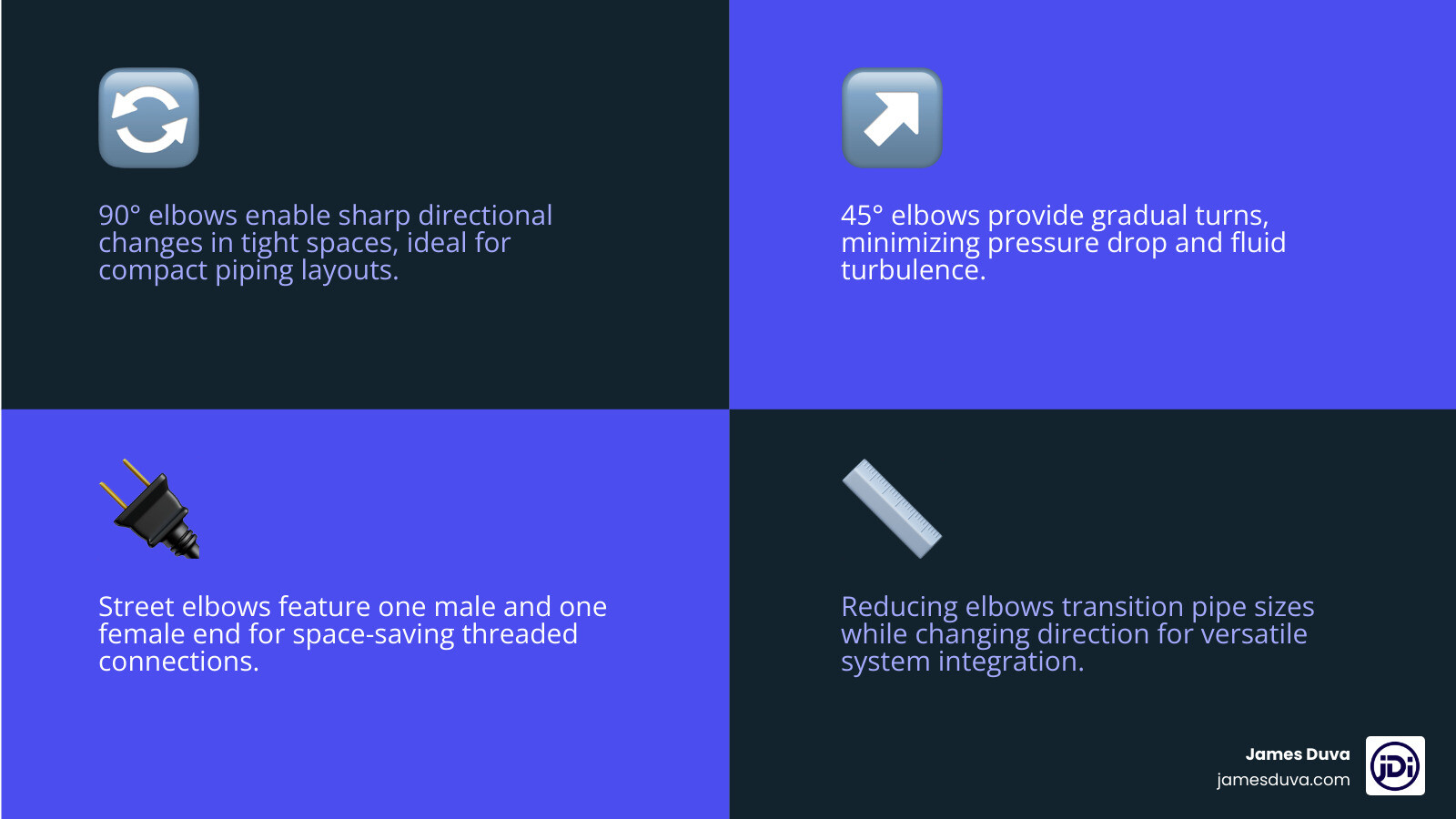
When we talk about a 2 inch elbow, we aren’t just talking about a single piece of hardware. The term covers a vast family of fittings designed to navigate the twists and turns of modern infrastructure. At its core, the primary function of any elbow is “directional change.” By installing an elbow, you allow the fluid or gas within the pipe to turn a corner without losing the integrity of the seal.
The most common configurations you’ll encounter include:
- 90-Degree Elbows: Often called “quarter bends,” these are the workhorses of the industry, creating a sharp right angle. You can find a variety of these 90 degree elbows in our inventory.
- 45-Degree Elbows: These provide a more gradual turn, which is often preferred in high-velocity systems to reduce turbulence and friction.
- Street Elbows: These are unique because they feature a male thread on one end and a female thread on the other. This allows you to connect directly to another fitting without needing a short piece of pipe (a nipple) in between.
- Reducing Elbows: These are clever little components that change direction and pipe diameter simultaneously. For example, you might see a 2-1/2″ x 2″ reducing elbow used to transition flow into a smaller line.
- Flush-Weld Elbows: Used heavily in architectural or precision industrial fabrication, these provide a smooth, “flush” joint when welded. A common example is a steel flush-weld 90° elbow, which is specifically designed for 2-inch pipe with a 2.375″ outside diameter.
For a deeper dive into how these fit into the broader world of plumbing and industrial piping, check out our Quick Start Guide to Pipe Fittings Types.
The Versatility of the 90-Degree 2 Inch Elbow
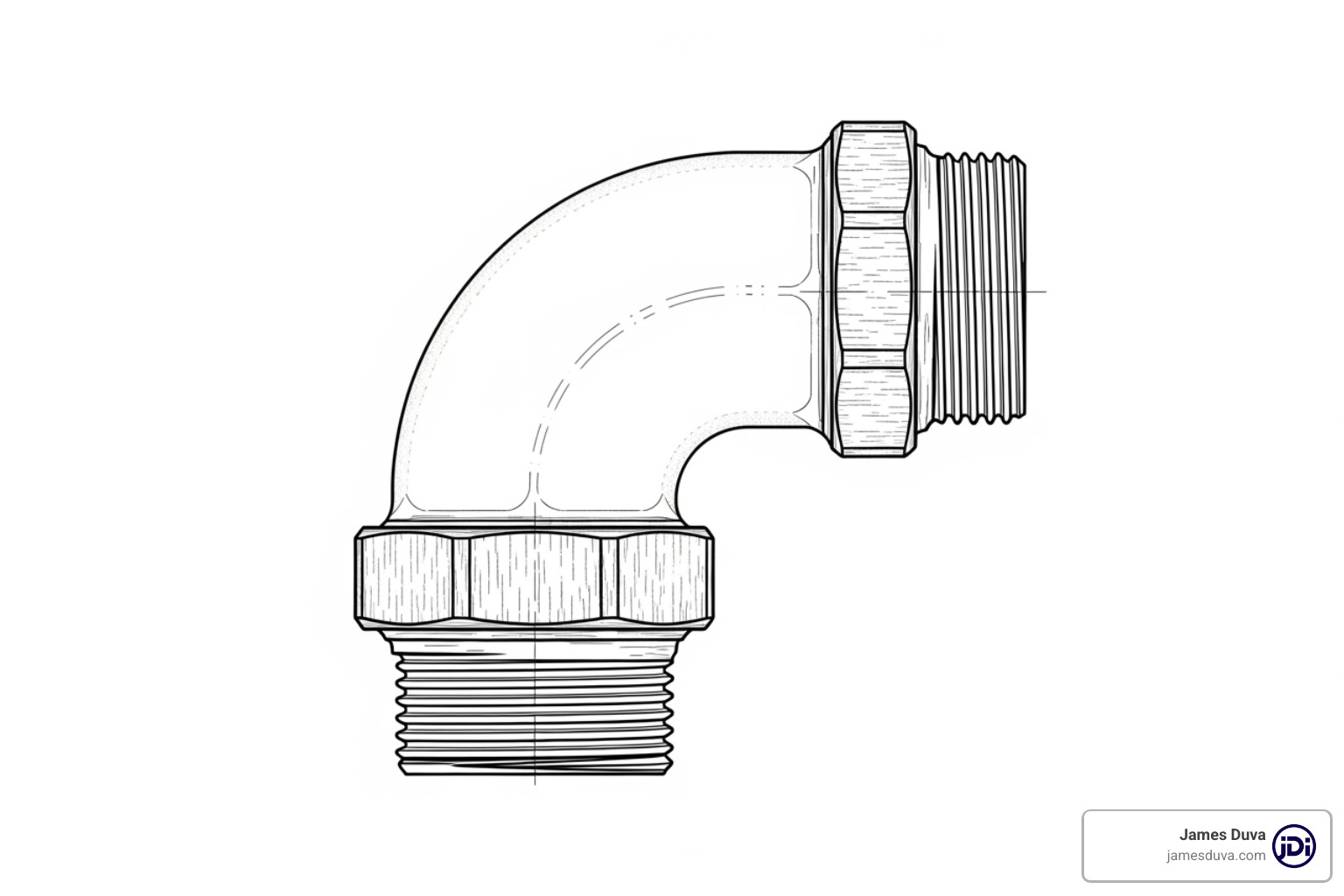
The 90-degree 2 inch elbow is the standard for right-angle turns. In industrial settings, these are frequently manufactured from high-grade materials like stainless steel, carbon steel, and nickel alloys to withstand corrosive environments.
Connection methods vary based on the application’s pressure requirements. For example, in lower-pressure water systems, a 2″ PVC 90-degree elbow with slip connections might suffice. However, in heavy industrial plants, we often lean toward butt weld fittings or socket weld options. Butt welding provides a permanent, leak-proof joint that is as strong as the pipe itself. If you’re deciding on the best welding approach, our guide on selecting butt weld fittings is an excellent resource for engineers.
Specialized 2 Inch Elbow Variants for Unique Angles
Sometimes a 90 or 45-degree turn just doesn’t cut it. In specialized piping runs, particularly in electrical conduit or complex pool systems, you may find elbows with unconventional angles:
- 22-1/2 Degree Elbows: Often used in PVC conduit to make subtle adjustments in direction.
- 15-Degree Elbows: Used for very slight offsets, such as a 2-inch PVC elbow with a belled end often seen in underground utility work.
These specialized angles help maintain flow efficiency and minimize “head loss” (the loss of pressure due to friction) in the system.
Material Comparison: Choosing the Right 2-Inch Elbow for Industrial Applications
The material of your 2 inch elbow is perhaps the most critical decision you’ll make. A mistake here can lead to rapid corrosion or catastrophic pressure failure.
| Material | Best For | Pros | Cons |
|---|---|---|---|
| Stainless Steel (316) | Chemical processing, marine | Exceptional corrosion resistance | Higher initial cost |
| Carbon Steel | Oil, gas, high-temp steam | High strength, cost-effective | Vulnerable to rust if uncoated |
| Nickel Alloys | Extreme heat, acid service | Survives where other metals fail | Expensive, specialty use |
| PVC (Sch 40/80) | Water, pool, low-temp | Cheap, easy to install, no rust | Low pressure/temp limits |
| Galvanized Steel | Water lines, EMT conduit | Good rust protection, durable | Not for underground use |
When we look at butt weld fittings and their industrial applications, we see that material choice dictates the “Schedule” or wall thickness required to handle specific pressures. For instance, a 2″ stainless steel 316 elbow is often rated for Class 150 service, making it a staple in food, beverage, and chemical plants.
Industrial Strength: Stainless Steel and Nickel Alloys
At James Duva Inc., we specialize in the “heavy hitters” of the piping world. Stainless steel 316 is our go-to for customers who need a 2 inch elbow that won’t succumb to the elements. These fittings are essential in New Jersey’s chemical processing corridor and the broader oil and gas industry.
For even more aggressive environments, nickel alloy fittings are the gold standard. They maintain their integrity under extreme heat and in the presence of volatile acids. When you are designing high-performance systems, understanding weld fitting dimensions is vital for ensuring that your 2-inch elbows align perfectly with your specialized alloy piping.
Carbon Steel Options for General Industrial Use
For high-pressure applications where corrosion isn’t the primary threat, carbon steel is a fantastic choice. Materials like A105 (for forged fittings) or A234 WPB (for wrought fittings) offer incredible tensile strength. You’ll find these in steam lines and high-pressure oil piping. They are the “backbone” of many industrial systems, providing a balance between performance and budget. You can browse our carbon steel fittings to see the range of schedules available.
Key Specifications and Installation Methods
Selecting a 2 inch elbow requires looking past the name and into the technical data sheet. The “2-inch” designation refers to the Nominal Pipe Size (NPS), but the actual outside diameter (OD) for a standard 2-inch pipe is 2.375 inches.
Common Installation Methods:
- Threaded (NPT): The ends have tapered threads. You simply screw the elbow onto the pipe. This is common for galvanized and stainless steel fittings in smaller, lower-pressure systems.
- Socket Weld: The pipe slips into a recessed area in the elbow and is then welded around the rim. This is excellent for preventing leaks in high-pressure lines.
- Butt Weld: The elbow and pipe are the same diameter and are welded edge-to-edge. This is the “gold standard” for durable piping systems.
- Slip-on / Solvent Weld: Used primarily for PVC, where a chemical solvent “melts” the two surfaces together to form a bond.
Critical Measurements: Radius and Wall Thickness for a 2 Inch Elbow
Not all 90-degree turns are created equal. The “Radius” of the bend determines how much space the elbow takes up and how much resistance it offers to the flow.
- Short Radius (SR): The radius is equal to the pipe diameter (2 inches). These are used in tight spaces where every inch counts.
- Long Radius (LR): The radius is 1.5 times the pipe diameter (3 inches). These are the industry standard because they provide a smoother flow and less pressure drop.
- Specialty Radii: Some elbows, like EMT conduit elbows, feature a much larger bend radius (e.g., 9-1/2 inches) to make pulling electrical wires easier.
Wall thickness is equally important. Whether you need Schedule 40 (standard), Schedule 80 (extra heavy), or even Schedule 160, the wall thickness must match your pipe to ensure the pressure integrity of the entire system.
Industry Standards and Application Scenarios
When you buy a 2 inch elbow, you aren’t just buying a piece of metal; you’re buying peace of mind backed by international standards.
- ASME B16.9: The standard for factory-made wrought butt-welding fittings.
- ASTM Standards: These define the material properties (e.g., ASTM A403 for stainless steel).
- UL/FM: Crucial for fire protection and electrical conduit systems to ensure the fittings can handle the heat.
- CSA C22.2: Often seen on electrical elbows like a standard 2 inch EMT 90° elbow, ensuring compliance with safety codes.
These standards are the reason a 2 inch elbow purchased in New Jersey will fit a 2-inch pipe manufactured in Texas. Whether you are building a refinery or a water treatment plant, adhering to these specs is non-negotiable. Industries such as chemical processing, oil and gas, power generation, and pulp and paper all rely on standardized butt weld fittings to maintain system integrity.
At James Duva Inc., we ensure that every fitting we supply — from stainless steel fittings to nickel alloy fittings and carbon steel fittings — meets or exceeds these rigorous standards. For more tips on sourcing these correctly, see our ultimate guide to buying fittings online.
Frequently Asked Questions about 2-Inch Elbows
What are the primary considerations when selecting a 2-inch elbow for high-pressure applications?
When dealing with high pressure, the first thing we look at is the connection type. Butt weld fittings are generally preferred because they eliminate the leak paths found in threaded connections. You also need to ensure the material and the “Schedule” (wall thickness) are rated for your specific operating pressure and temperature.
What is the difference between a standard elbow and a street elbow?
The difference is all in the “gender” of the ends. A standard elbow has two female ends (it receives the pipe). A street elbow has one male end and one female end. This makes street elbows incredibly useful in tight spots where you need to connect an elbow directly into another pipe fitting without using a pipe nipple.
How do I determine the correct bend radius for my application?
It’s a balancing act between space and flow. If you have plenty of room, a Long Radius (LR) elbow is almost always better because it reduces fluid friction and pressure drop. However, if you’re working in a cramped engine room or a small enclosure, a Short Radius (SR) or a flush-weld elbow might be your only option.
Conclusion
The humble 2 inch elbow is a masterpiece of engineering. From the galvanized street elbows used in water lines to the high-performance stainless steel butt weld fittings found in chemical plants, these components are vital to the world’s infrastructure.
Choosing the right one requires a clear understanding of your system’s pressure, temperature, and corrosive environment. By matching the right material, schedule, and bend radius, you ensure that your piping system remains durable and efficient for years to come.
At James Duva Inc., we’ve spent over 45 years helping our customers in New Jersey and beyond decode these technical requirements. If you’re ready to find the perfect fit for your next project, explore our full range of industrial fittings or reach out to our team in Branchburg for expert guidance. For more information on sourcing, check out our guide to buying fittings online.
About James Duva Inc.
Since 1978, James Duva Inc. has been your trusted source for stainless steel and high-nickel alloy industrial products. Whether you’re in the water treatment, process or power industry, we pride ourselves on always having what you need. Say goodbye to your sourcing problems with just one call to James Duva.