
Sanitary Fittings Terms Demystified

Feb 12, 2026
Why Sanitary Fittings Matter in High-Purity Industries
Sanitary fittings are specialized piping components designed with smooth, crevice-free surfaces and corrosion-resistant materials. They are essential for maintaining strict hygiene standards in industries where product purity is critical, such as pharmaceuticals, food and beverage, and biotechnology. Unlike standard industrial fittings, their polished finishes and seamless construction prevent contamination and bacterial growth.
Key Characteristics of Sanitary Fittings:
- Materials: Primarily 304 or 316L stainless steel, plus exotic alloys like Hastelloy® and Inconel®
- Surface Finish: Smooth, polished surfaces measured in Ra (roughness average), typically 32Ra, 20Ra, or 15Ra
- Connection Types: Tri-Clamp, Butt Weld, Bevel Seat, I-Line, and Q-Line
- Key Features: Easy to clean, autoclavable, corrosion-resistant, and designed for Clean-in-Place (CIP) and Sanitize-in-Place (SIP) protocols
In high-purity industries, even microscopic contamination can compromise entire batches, trigger recalls, or pose health risks. Sanitary fittings are the critical connection points that ensure process integrity and product safety. Their design eliminates the crevices where bacteria hide in standard fittings, and their high-grade materials withstand the harsh chemicals and extreme temperatures required for sterilization. The difference isn’t just polish—it’s preventing contamination that can halt production and damage reputations.
At James Duva Inc., we have supplied high-quality stainless steel sanitary fittings and specialty piping components since 1978. Our expertise ensures that engineers and contractors in critical industries get the reliable, high-grade sanitary fittings their processes demand.
What Are Sanitary Fittings and Why Are They Crucial?
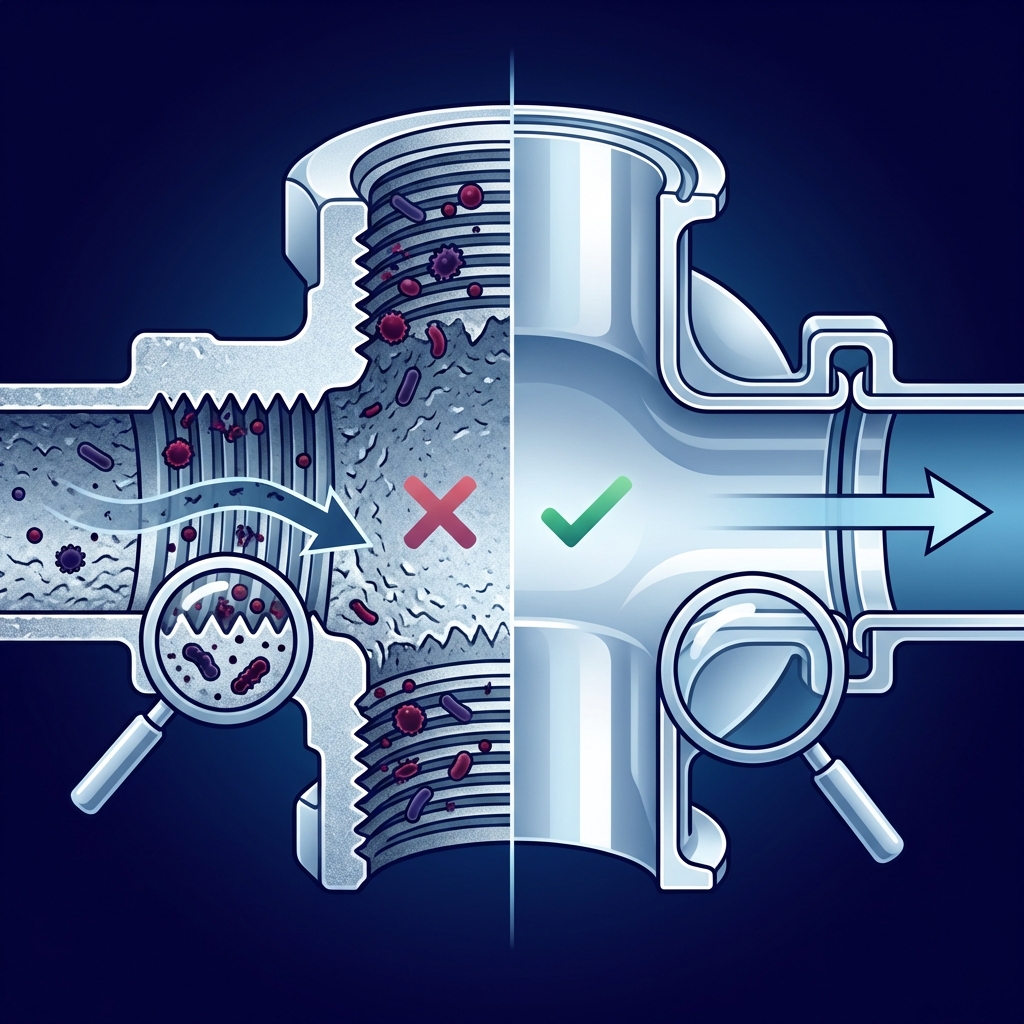
The purpose of sanitary fittings is to safeguard product purity and ensure consumer safety by creating an environment where microbes can’t survive. This commitment to cleanliness is why these components are crucial in sensitive industries. Every part of a fluid handling system must maintain process integrity, and the smooth, non-porous surfaces of sanitary fittings prevent contamination by eliminating traps for bacteria or particulates.
The industries that rely most heavily on sanitary fittings include:
- Pharmaceuticals: Absolute sterility is paramount in vaccine and medication manufacturing to prevent contamination and protect patient health.
- Food and beverage processing: These industries demand equipment that won’t compromise taste, shelf life, or safety.
- Dairy production: Milk products are highly susceptible to bacterial growth, so processing lines must remain immaculate.
- Personal care products: Clean processing environments are required to prevent spoilage and allergic reactions in cosmetics and lotions.
- Hazardous chemical handling: The robust, leak-reducing design of sanitary fittings minimizes the risk of dangerous spills and exposures, improving workplace safety.
The Core Purpose: Ensuring Purity and Safety
The ultimate goal is to prevent problems before they start. This is achieved through several key benefits:
- Ease of cleaning: Smooth, polished surfaces are simple to clean, which is vital for processes requiring frequent sterilization.
- Clean-in-Place (CIP) and Sanitize-in-Place (SIP): Many fittings are designed to be cleaned without disassembly by circulating cleaning and sanitizing solutions, saving time and reducing downtime.
- Leak reduction: Precision machining and secure connections mean fewer leaks, preventing contamination and product loss.
- Smooth, crevice-free surfaces: This is the most critical design element. By eliminating hiding spots, sanitary fittings prevent bacterial growth, biofilm formation, and product adhesion.
Sanitary vs. Standard Industrial Fittings
While both connect pipes, the difference in hygiene is significant. It’s like comparing a surgical instrument to a common wrench.
- Surface finish: Standard fittings often have a rough “mill finish.” Sanitary fittings have highly polished internal surfaces with a low Ra (Roughness Average) value, which prevents microbial adhesion and makes cleaning effective.
- Material requirements: Sanitary fittings almost exclusively use high-grade stainless steel pipe materials (like 304 or 316L) or specialized nickel alloys for their superior corrosion resistance and non-reactive properties.
- Connection design: Standard threaded pipes create crevices. Sanitary connections like Tri-Clamp or Butt Weld offer smooth, flush interfaces that minimize dead spaces.
- Regulatory compliance: Sanitary fittings must comply with stringent standards like 3-A, ASME BPE, and FDA guidelines, which is not typically required for standard industrial fittings.
- Aseptic design principles: Every aspect of a sanitary fitting is engineered to prevent contamination and facilitate thorough cleaning and sterilization.
Understanding the Core of Sanitary Fittings: Materials and Construction
The performance of a sanitary fitting is founded on its materials and construction. Materials are carefully selected for durability, corrosion resistance, and temperature tolerance to withstand demanding industrial processes.
Common Materials and Their Advantages
Stainless steel is the primary material, but we also supply exceptional nickel alloy pipe for the most challenging applications.
- Stainless Steel: The workhorse of the sanitary industry due to its corrosion resistance and durability.
- 304 Stainless Steel: A versatile and cost-effective option offering good corrosion resistance. We stock a broad assortment of 304 stainless steel fittings in sizes from 1/2” through 12”.
- 316L Stainless Steel: The “L” denotes low carbon for better weldability. The addition of molybdenum gives it superior resistance to chlorides and other corrosive agents, making it the preferred choice for pharmaceutical, food, and high-purity applications. We also stock an extensive inventory of 316L options.
- Nickel Alloys: For extreme conditions, we turn to exotic alloys like Hastelloy®, AL6XN, and Inconel®, which offer superior resistance to corrosion, high temperatures, and specific chemicals.
The Role of Gaskets in Sanitary Fittings
Gaskets are the unsung heroes of a leak-free, hygienic connection. They create a secure seal between fitting components, preventing leaks and contamination. Common gasket materials we offer include:
- Silicone (PC and PC Class VI): Flexible and resistant to extreme temperatures.
- EPDM (White, Black, or Class VI): Excellent resistance to heat, steam, and many chemicals.
- Viton® (White or Black): Superior resistance to a wide range of chemicals, oils, and high temperatures.
- Teflon® Envelope (Silicone or Viton™ Insert): Combines the chemical resistance of Teflon® with the elasticity of an inner core.
Surface Finish Explained
The shiny look of sanitary fittings is a critical function. The internal surface finish is measured by its Ra (Roughness Average) value—and lower is better. A low Ra value is important because it:
- Minimizes microbial adhesion: A smooth surface offers no hiding spots for bacteria, yeast, or mold to form biofilms.
- Improves cleaning and sterilization: Cleaning solutions can reach every part of the surface, improving the efficiency of CIP/SIP processes.
- Prevents contamination: By inhibiting microbial growth and enabling thorough cleaning, a superior surface finish is a primary defense against product contamination.
Common Ra finishes include 32Ra (standard for food/beverage), 20Ra (high-purity food/pharma), and 15Ra (critical pharma/biotech). These smooth surfaces are often achieved through electropolishing. Our inventory includes many fittings with a 32Ra ID / 32Ra OD finish.
A Guide to Sanitary Fitting Types and Connections
The world of sanitary fittings is diverse, with a solution for nearly every connection in a hygienic processing line. We stock a broad assortment of shapes, configurations, and sizes, ranging from 1/2” to 12”.
Common Connection Types
The connection type is as important as the fitting itself. Each offers distinct advantages:
- Tri-Clamp (Tri-Clover): The most popular sanitary connection, using two ferrules, a gasket, and a clamp for a quick, secure joint that is easily disassembled for cleaning. We offer hundreds of Tri-Clamp options.
- Butt Weld: The gold standard for permanent, high-integrity connections, offering a seamless, crevice-free flow path. We have hundreds of butt weld connection types available.
- Bevel Seat: A traditional, robust connection using a nut and ferrule to create a strong metal-to-metal contact.
- I-Line & Q-Line: Heavy-duty, interlocking connections designed for applications with high vibration or where a more secure seal is needed.
- Flange connections: Used for larger pipes, vessels, or equipment, these bolted connections are robust and often removable. We stock a variety of industrial flanges suitable for many applications.
Explore our range of connection types to find the perfect fit for your system.
Essential Fitting Shapes and Components
A complete sanitary piping system is built from many different components:
- Ferrules: The foundation for clamp-style connections, welded to pipe ends to provide a sealing surface.
- Clamps: The hardware that secures two ferrules and a gasket together.
- Elbows: Used to change the direction of flow, typically at 45° or 90°.
- Tees and Crosses: Allow for branch connections from a main line.
- Reducers (Concentric & Eccentric): Used to change the pipe diameter.
- End Caps: Seal off the end of a pipe or connection point.
- Adapters: Essential for connecting different types of fittings or pipes. We have a huge variety of adapters available.
We also offer proprietary designs like TCI ClampConnects® and TCI BoltConnects®, which feature aseptic designs for easier SIP/CIP and tool-free installation.
Navigating Industry Standards and Compliance
In high-purity industries, “good enough” is never an option. Adhering to regulatory standards isn’t just about compliance; it’s about guaranteeing the safety and quality of products that impact millions. We provide fittings that meet or exceed these critical industry benchmarks.
Key Standards You Need to Know
Understanding these standards is non-negotiable for ensuring that sanitary fittings meet the rigorous demands of their applications.
- 3-A Sanitary Standards: Voluntary guidelines for the design and fabrication of dairy and food processing equipment to ensure it is easily cleaned and minimizes bacterial growth.
- ASME BPE (Bioprocessing Equipment): A comprehensive standard for the design, materials, and fabrication of equipment used in biopharmaceutical and personal care industries, with extreme detail on surface finish and drainability.
- FDA requirements: The U.S. Food and Drug Administration (FDA) regulates materials that contact food, drugs, and cosmetics. Materials used in sanitary fittings must comply with these regulations.
- EHEDG (European Hygienic Engineering & Design Group): An organization promoting hygiene in food processing, with guidelines that are widely recognized internationally.
For plumbing fixtures and components interacting with potable water, organizations like NSF International provide testing and certification to ensure products meet North American plumbing codes. You can find more information on plumbing component certification on their website.
Selecting the Right Fittings and Maximizing ROI
Choosing the correct sanitary fittings is about optimizing your process and safeguarding your investment. While the initial cost of high-quality fittings may be higher, the long-term return on investment (ROI) is significant, especially when you partner with an experienced supplier.
Key Considerations for Selecting Sanitary Fittings
When selecting fittings, our clients in New Jersey and beyond consider several critical factors to prevent future issues:
- Material grade (304 vs. 316L): While 304 stainless steel is suitable for general use, 316L is the safer choice for processes involving chlorides, aggressive cleaners, or high-purity requirements.
- Connection size and type: Ensure the fitting matches your existing piping infrastructure to avoid leaks and inefficiencies. We offer sizes from 0.5″ to 12″.
- Required surface finish: Specify the internal Ra value based on your industry—pharmaceutical applications often demand 15Ra or 20Ra, while food and beverage may use 32Ra.
- Pressure and temperature ratings: Confirm that fittings can withstand your system’s maximum operating pressure and temperature, including sterilization cycles.
- Chemical compatibility: Ensure the fitting and gasket materials are compatible with your product and all cleaning agents.
The Cost-Effective Aspect of High-Quality Fittings
Investing in high-quality sanitary fittings is a strategic move that pays dividends.
- Durability and longevity: Premium materials like 316L stainless steel resist corrosion and wear, extending the lifespan of your piping system and reducing replacements.
- Lower maintenance costs: Easy-to-clean designs and durable materials simplify maintenance routines and reduce labor.
- Minimized production downtime: Reliable fittings reduce unexpected failures and streamline cleaning, keeping your operations running smoothly and protecting revenue.
- The value of custom fabrication: For unique applications, custom fabrication is invaluable. We offer custom designs and special lengths to ensure you get the exact fitting you need, preventing costly workarounds. This flexibility ensures even specialized requirements are met with precision.
Frequently Asked Questions about Sanitary Fittings
We often hear similar questions from engineers and facility managers in New Jersey and across the country. Here are answers to some common queries about sanitary fittings.
How are sanitary fittings cleaned?
The cleaning method depends on the system and requirements:
- Manual disassembly: Fittings are taken apart and cleaned by hand, allowing for visual inspection.
- Clean-in-Place (CIP): Cleaning solutions are circulated through the intact piping system, cleaning internal surfaces without disassembly.
- Sanitize-in-Place (SIP): Following CIP, sanitizing agents like steam or chemicals are circulated to eliminate remaining microorganisms.
- Autoclaving: Small, critical components are sterilized with steam under pressure.
The smooth, non-porous surfaces of sanitary fittings are essential for all these methods to be effective.
What is the main difference between 304 and 316L stainless steel?
Both are excellent choices, but they have a key difference. 304 stainless steel is a cost-effective, general-purpose option with good corrosion resistance. 316L stainless steel contains molybdenum, which provides superior resistance to chlorides and other corrosive agents. This makes 316L the preferred material for pharmaceutical, biotech, and other high-purity applications where resistance to pitting and harsh chemicals is critical.
Why is surface finish (Ra) so important for sanitary applications?
Surface finish, measured as Ra (Roughness Average), is critical for hygiene. A smoother surface (lower Ra value) has fewer microscopic crevices where bacteria can attach and form hard-to-remove biofilms. This not only prevents contamination but also makes cleaning and sterilization processes like CIP and SIP faster, more effective, and more reliable. A proper surface finish is a fundamental requirement for ensuring product purity and safety.
Conclusion
We’ve explored sanitary fittings, from their specialized materials like 304 and 316L stainless steel to the critical role of surface finish and connection types. These components are more than just connectors; they are guardians of quality, protecting everything from life-saving pharmaceuticals to the food and beverages we consume daily.
Investing in high-quality sanitary fittings is a commitment to superior hygiene, reduced contamination risk, and a more efficient, cost-effective operation. By minimizing downtime and ensuring compliance with standards like 3-A and ASME BPE, these fittings deliver significant long-term value.
As a trusted partner based in Branchburg, NJ, James Duva Inc. provides the expertise and extensive inventory of high-grade sanitary fittings you need. With our stock of 304 and 316L stainless steel fittings in a wide variety of configurations, plus custom machining capabilities, we are equipped to meet your most demanding application needs.
Let us help you ensure your processes meet the highest standards of purity and safety.
About James Duva Inc.
Since 1978, James Duva Inc. has been your trusted source for stainless steel and high-nickel alloy industrial products. Whether you’re in the water treatment, process or power industry, we pride ourselves on always having what you need. Say goodbye to your sourcing problems with just one call to James Duva.