
Where to Find Your Inconel 625 and Other High-Performance Alloys
Mar 11, 2026
Why Finding a Trusted Inconel 625 Supplier Can Make or Break Your Project
If you need an inconel 625 supplier, here are the most important things to know right away:
| What You Need | Quick Answer |
|---|---|
| Material standard | UNS N06625, AMS 5599, ASTM B443/B446 |
| Available forms | Sheet, plate, bar, pipe, tube, forgings, wire |
| Key properties | Corrosion resistant, high strength from cryogenic to 1800°F |
| Main industries served | Oil & gas, aerospace, marine, chemical processing, nuclear |
| What to look for in a supplier | Certified inventory, material test reports, processing services |
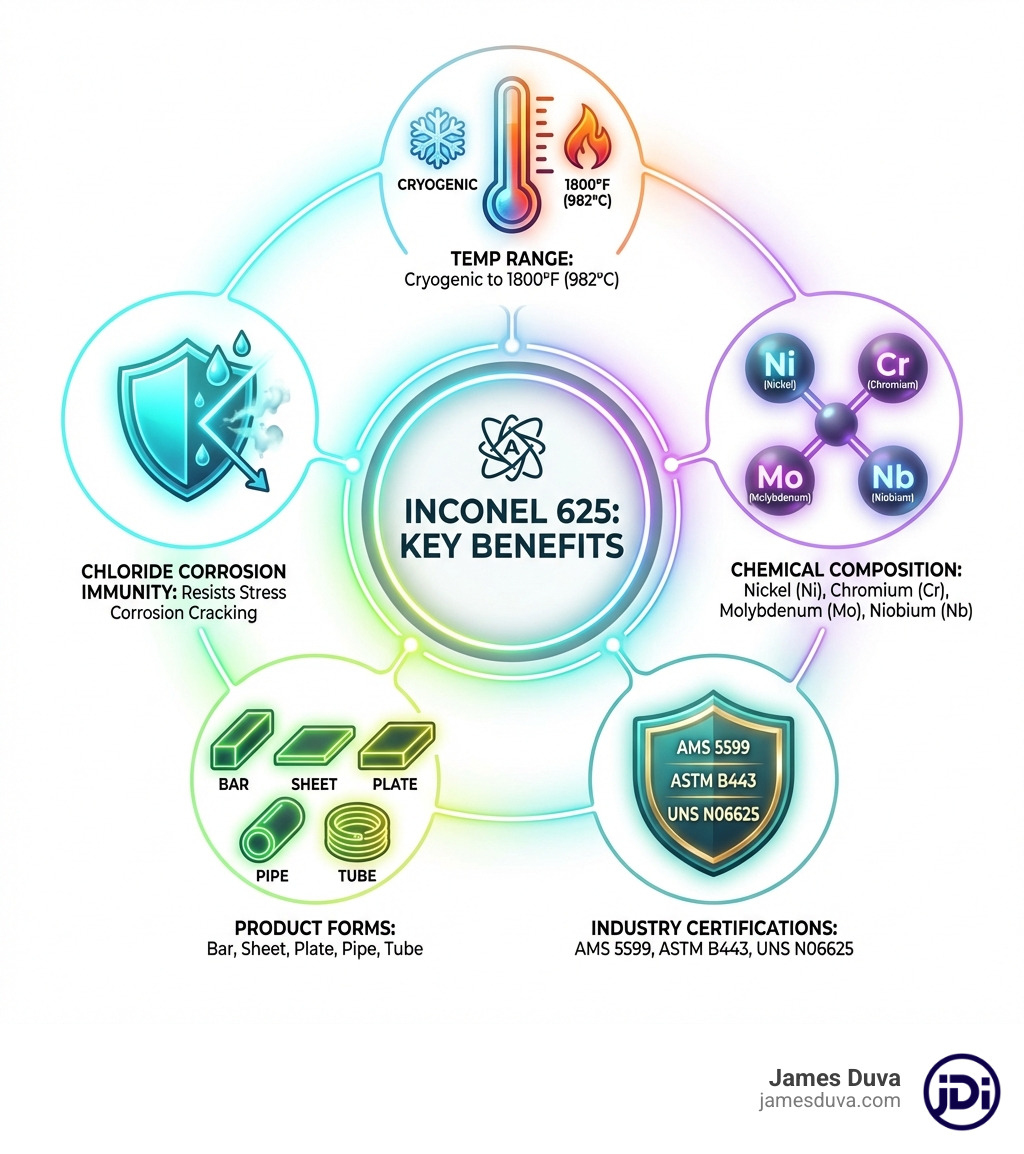
Inconel 625 is one of the most in-demand nickel superalloys in industrial manufacturing — and for good reason. It holds its strength from cryogenic temperatures all the way up to 1800°F (982°C). It resists chloride stress corrosion cracking. It welds cleanly and machines reliably when handled correctly.
But sourcing it? That’s where things get complicated.
Not every supplier carries the right forms, certifications, or inventory depth to keep your project on schedule. For professionals in oil & gas, chemical processing, or power generation, a sourcing gap doesn’t just cost money — it shuts down operations.
This guide cuts through the noise. We’ll show you what to look for in a qualified supplier, what forms and specs matter most, and how Inconel 625 stacks up against other alloys you might be considering.
I’m Billy Walker, Vice President of James Duva Inc., where we’ve been supplying stainless steel and high-nickel alloys — including sourcing for customers who need a reliable Inconel 625 supplier — to power, process, and water treatment industries since 1978. If you’re evaluating your options, contact our experts today.
Technical Properties and Chemical Composition of Alloy 625
When you start looking for an inconel 625 supplier, the first thing you need to verify is that the material meets the strict chemical requirements of UNS N06625. This alloy is a “superalloy” for a reason—its chemistry is a finely tuned balance of elements designed to survive where other metals literally melt or crumble.
According to the composition information provided by Special Metals’ datasheet, the primary ingredients are Nickel (58.0% minimum), Chromium (20.0-23.0%), and Molybdenum (8.0-10.0%). However, the “secret sauce” that sets 625 apart is the addition of Niobium (plus Tantalum), which ranges from 3.15% to 4.15%.
Solid Solution Strengthening
Unlike some alloys that require complex heat treatments to get strong, Inconel 625 gains its high strength through “solid solution strengthening.” The molybdenum and niobium act as stiffening agents within the nickel-chromium matrix. This means the metal is naturally tough without needing precipitation hardening. This characteristic is a major reason why Inconel 625 continues to expand in modern engineering.
Corrosion and Oxidation Resistance
Because of its high nickel and chromium content, Alloy 625 is nearly immune to chloride-ion stress corrosion cracking. It also shows incredible resistance to pitting and crevice corrosion, which is why it’s the gold standard for seawater applications. We often see alloy 625 strength and corrosion resistance unveiled in environments involving mineral acids, such as nitric, phosphoric, and sulfuric acids.
Beyond wet corrosion, it handles the heat. It is oxidation-resistant up to 1800°F (982°C). Even at these extreme temperatures, it maintains high creep-rupture strength. On the flip side, it remains exceptionally tough at cryogenic temperatures, making it a versatile choice for everything from flare stacks to liquid gas transport.
Choosing the Right Inconel 625 Supplier for Industrial Needs
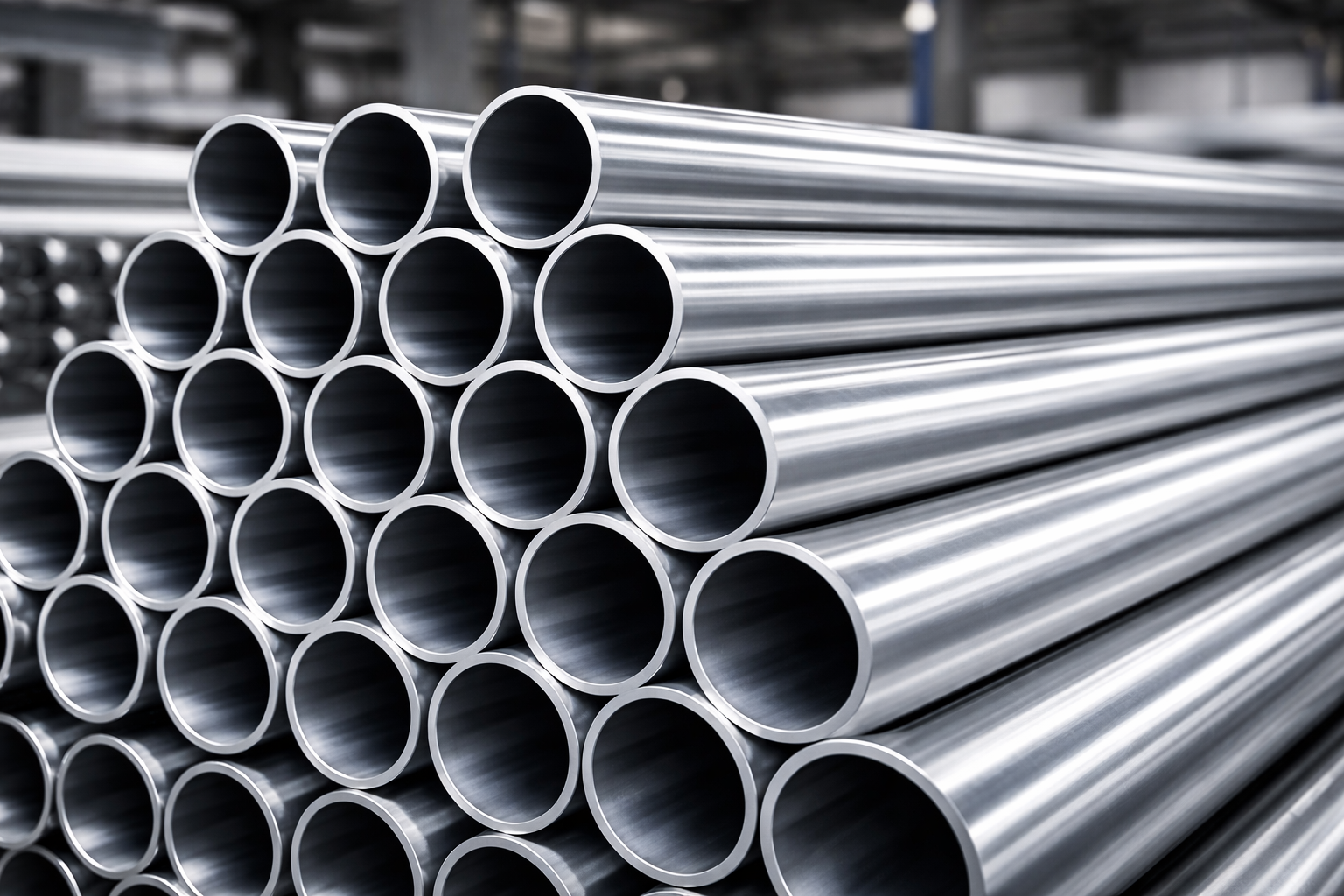
Selecting an inconel 625 supplier isn’t just about finding the lowest price per pound. In our experience at James Duva Inc., it’s about finding a partner who understands the high stakes of your application. If a pipe fails in a chemical plant or a valve sticks in a nuclear reactor, the “savings” from a discount supplier disappear instantly.
Inventory Availability and Sourcing
A top-tier supplier should have a deep inventory of various forms. You shouldn’t have to call five different places to get your bar, plate, and pipe. We’ve found that finding a supplier often starts with checking if the supplier actually stocks what they claim. At our Branchburg, NJ facility, we pride ourselves on being a one-stop solution, ensuring that when you need a specific size, we have it or can get it fast.
Material Certifications and Traceability
In high-performance alloys, paperwork is just as important as the metal itself. Your inconel 625 supplier must provide Material Test Reports (MTRs) that prove the chemistry and mechanical properties meet industry standards. Common specifications include:
- AMS 5599: For sheet, strip, and plate.
- AMS 5666: For bar, forgings, and rings.
- ASTM B446: Standard specification for Nickel-Chromium-Molybdenum-Columbium Alloy Rod and Bar.
- ASTM B443: Standard for Plate, Sheet, and Strip.
Processing Services
Sometimes you don’t need a full 20-foot bar. You might need twelve 6-inch pieces cut to a tight tolerance. A reliable supplier offers in-house processing like saw cutting or centerless grinding. This saves you time and reduces scrap at your own facility. Traceability must be maintained throughout this process—every cut piece should be linkable back to its original heat number.
Common Applications and Available Product Forms
Inconel 625 is a “workhorse” alloy. Because it is so versatile, you’ll find it in almost every “extreme” industry imaginable. When you browse our nickel alloys, you’ll see just how many sectors rely on this material.
Aerospace and Marine
In the sky, Inconel 625 is used for aircraft ducting systems, engine exhaust systems, and thrust-reverser systems. Its ability to handle high heat and fatigue makes it perfect for these high-stress environments.
In the water, it’s a favorite for marine propulsion motors and submarine components. It stays clean in seawater, resisting the “bio-fouling” and pitting that destroys lesser metals. If you are looking for nickel and nickel alloy pipe, you’ll find that 625 is the preferred choice for offshore flare stacks and seawater piping.
Chemical Processing and Nuclear
Chemical plants use 625 for reaction vessels, distillation columns, and bubble caps. It can handle the “nasties”—hydrochloric acid, sulfuric acid, and contaminated nuclear waste. In the nuclear sector, it is used for reactor-core and control-rod components. While Inconel 600 is also common in nuclear applications, 625 is often chosen when higher strength and better pitting resistance are required.
Available Forms and Sizes
Your inconel 625 supplier should be able to provide the material in several formats:
- Round Bar: Commonly stocked from 0.375″ up to 8.750″ in diameter.
- Sheet & Strip: Thicknesses often range from 0.010″ to 0.156″.
- Plate: Available in thicknesses up to 4 inches.
- Seamless Pipe & Tubing: Seamless pipe is available up to 8″ diameter, while tubing is often stocked up to 3″ OD.
Technical Comparison: Inconel 625 vs. Other Alloys
When deciding on a material, it helps to see how 625 compares to its “cousins” and the standard stainless steels. Choosing the wrong one can be an expensive mistake.
| Property | Inconel 625 | Inconel 718 | 304 Stainless Steel |
|---|---|---|---|
| Strengthening Method | Solid Solution | Precipitation Hardening | Cold Work |
| Max Service Temp | 1800°F | 1300°F (for strength) | 800°F (approx) |
| Corrosion Resistance | Excellent (Pitting/Chloride) | Good | Moderate |
| Weldability | Excellent | Fair/Difficult | Excellent |
| Yield Strength (Room Temp) | ~60,000 psi | ~150,000 psi | ~30,000 psi |
Inconel 625 vs. Inconel 718
This is the most common comparison. As noted in Inconel vs Hastelloy Key Differences Applications and Benefits, the main difference is how they get their strength. 718 is a “precipitation hardening” alloy, meaning it is heat-treated to reach incredibly high yield strengths. However, 625 is generally easier to weld and has better resistance to a wider range of corrosive media. If you need pure strength at moderate temperatures, 718 wins. If you need corrosion resistance and ease of fabrication at very high temperatures, 625 is your best bet.
Inconel 625 vs. Stainless Steel
There is really no contest here. While 304 and 316 stainless are great for kitchens and mild industrial use, they fail quickly in hot, chloride-rich environments. Inconel 625 has a lower melting point than 304 stainless, but it can operate at much higher temperatures without losing its structural integrity. As we discuss in Inconel vs Hastelloy, superalloys like 625 are in a completely different league of performance.
Compared to Inconel 600, 625 offers much better resistance to pitting and crevice corrosion thanks to the addition of molybdenum and niobium.
Frequently Asked Questions about Inconel 625
What makes an inconel 625 supplier reliable for aerospace projects?
Reliability in aerospace comes down to three things: Certifications, Traceability, and Quality. An aerospace-grade supplier must provide material that meets AMS (Aerospace Material Specifications) like AMS 5599 or AMS 5666. They must provide full Material Test Reports (MTRs) and have a quality management system that ensures the metal you receive is exactly what was melted at the mill. You can explore more about these standards in our inconel section.
How does an inconel 625 supplier handle custom sizing and processing?
A good supplier acts as a bridge between the mill and your machine shop. At James Duva Inc., we provide one-stop solution by offering services like precision saw cutting and centerless grinding. We manage the tolerances so that when the material arrives at your door, it’s ready for your CNC machines or welding rigs. This reduces your internal labor costs and speeds up production.
What are the primary differences between Inconel 625 and 718?
The biggest difference is the strengthening mechanism. Inconel 625 is solid-solution strengthened (niobium and molybdenum in a nickel-chromium matrix), while 718 is precipitation hardened (using aluminum and titanium to create “gamma prime” precipitates). 625 is generally considered to have better weldability because it isn’t prone to post-weld cracking in the same way 718 can be. For more details on these trade-offs, check out our guide on Inconel vs Hastelloy.
Conclusion
Finding the right inconel 625 supplier is about more than just checking a box on a purchase order. It’s about ensuring the safety and longevity of your industrial systems. Whether you are building a desalination plant, a jet engine, or a deep-sea oil rig, the quality of your Alloy 625 is the foundation of your success.
At James Duva Inc., we’ve spent over 45 years perfecting our inventory and our expertise. Based in Branchburg, NJ, we serve as a trusted partner for industries that cannot afford to fail. From small custom orders to large-scale industrial projects, we provide the traceability, processing, and technical support you need.
If you’re ready to source high-performance alloys with confidence, contact us or explore our full range of products in our stainless steel distribution section. Let’s get your project moving with the world’s best materials.
About James Duva Inc.
Since 1978, James Duva Inc. has been your trusted source for stainless steel and high-nickel alloy industrial products. Whether you’re in the water treatment, process or power industry, we pride ourselves on always having what you need. Say goodbye to your sourcing problems with just one call to James Duva.