
A – Z Guide to Inconel 600 Properties
Jun 19, 2026
What Is Inconel 600? A Quick-Reference Guide to This High-Performance Alloy
Inconel 600 is a nickel-chromium-iron superalloy engineered for extreme environments — where heat, corrosion, and mechanical stress would destroy ordinary metals.
Here’s what you need to know at a glance:
| Property | Value |
|---|---|
| UNS Designation | N06600 |
| Nickel Content | 72% minimum |
| Chromium Content | 14–17% |
| Iron Content | 6–10% |
| Max Oxidation Resistance | 2000°F (1093°C) |
| Melting Range | 2470–2575°F (1354–1413°C) |
| Tensile Strength (annealed) | 80–100 ksi (550–690 MPa) |
| Chloride SCC Resistance | Virtually immune |
| Magnetic? | No |
| Hardenable by heat treatment? | No — cold work only |
Key strengths of Inconel 600:
- Excellent oxidation resistance up to 2000°F
- Virtually immune to chloride-ion stress-corrosion cracking
- Strong from cryogenic temperatures all the way to high heat
- Resistant to dry chlorine and hydrogen chloride up to ~1000°F
- Good resistance to caustic and organic acid environments
- Solid carburization and nitriding resistance
This guide walks through every major property — mechanical, physical, thermal, and chemical — so you can make confident material selection decisions.
I’m Billy Walker, Vice President of James Duva Inc., where we’ve supplied high-nickel alloys including Inconel 600 to the power, process, and water treatment industries since 1978. If you’re sourcing specialty materials and need a reliable, single-source partner, you’re in the right place.
Why Are Alloys So Valuable in Industry?
In industrial materials, pure metals are a bit like unseasoned food—they have potential, but they often lack the “kick” needed for real-world performance. Pure iron, for instance, is surprisingly soft and has a frustrating habit of rusting the moment it sees a drop of moisture. To fix these flaws, we turn to alloys.
An alloy is a mixture of metals (and sometimes other elements) designed to be stronger, tougher, and more durable than the individual parts. Steel is the most famous example, offering a massive leap in durability over raw iron. However, even standard steel has its limits when faced with extreme heat or aggressive chemicals. This is when to choose nickel alloys over stainless steel in industrial applications.
Alloys like Inconel 600 provide an incredible strength-to-weight ratio and survival skills that ordinary metals can’t match. We see these high-performance materials everywhere:
- Construction: Heavy-duty beams and specialized piping.
- Oil & Gas: Critical fittings, flanges, and high-pressure Ball Valves.
- Automotive & Aerospace: Engine frames and turbine components that must stay strong while glowing red-hot.
- Medical & Consumer Goods: Everything from high-precision implants to the kitchenware in your home.
By blending nickel, chromium, and iron, Inconel 600 becomes a “superalloy” capable of handling the toughest jobs on the planet.
Chemical Composition and Standards of Inconel 600
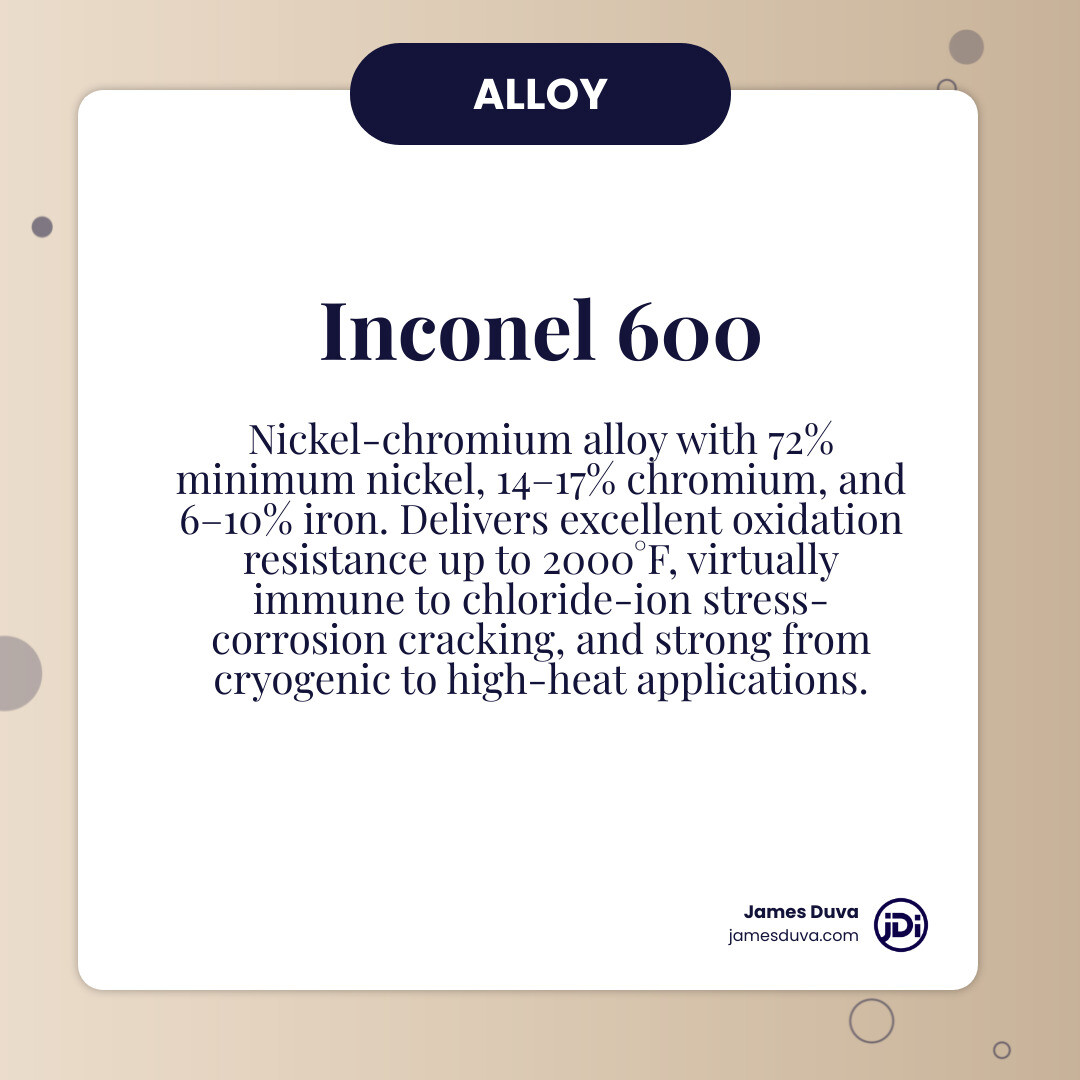
To understand why Inconel 600 (UNS N06600/W.Nr. 2.4816) behaves the way it does, we have to look at its DNA. The secret to its success is the high nickel content—at least 72%. This high concentration of nickel is what makes the alloy virtually immune to chloride-ion stress-corrosion cracking.
According to the Special Metals INCONEL® Alloy 600 technical data, the limiting chemical composition includes:
- Nickel (+ Cobalt): 72.0% minimum
- Chromium: 14.0% – 17.0%
- Iron: 6.0% – 10.0%
- Manganese: 1.0% maximum
- Silicon: 0.5% maximum
- Carbon: 0.15% maximum
- Copper: 0.5% maximum
The chromium content provides resistance to oxidizing conditions and sulfur compounds, while the iron contributes to the overall structural stability. This specific balance is why we often discuss Inconel 600 UNS N06600 Unveiling Its Industrial Prowess in chemical processing circles.
To ensure quality and consistency, Inconel 600 meets several rigorous international standards, including ASTM B166 (bars and shapes), ASME SB-168 (plate, sheet, and strip), and AMS 5540. It also complies with NACE MR-01-75, which is vital for sour gas applications in the oil and gas industry.
Mechanical Properties of Inconel 600
One of the most impressive things about Inconel 600 is its versatility. It maintains excellent mechanical properties from cryogenic temperatures all the way up to 2000°F. Unlike some other superalloys, Inconel 600 is not precipitation hardenable; it is a solid-solution strengthened alloy that can only be hardened through cold work.
| Condition | Tensile Strength (ksi) | Yield Strength (0.2% Offset) (ksi) | Elongation (%) |
|---|---|---|---|
| Annealed | 80 – 100 | 25 – 50 | 35 – 55 |
| Cold-Worked | Up to 220 | Up to 175 | 2 – 10 |
As you can see, cold working can drastically increase the strength, though it reduces the elongation (ductility). The modulus of elasticity sits at a robust 31.1 x 10³ ksi at room temperature. It also boasts impressive fatigue strength and Charpy impact strength (60.8-67.0 ft-lb even at cryogenic temperatures), meaning it won’t become brittle when the temperature drops.
Physical Properties of Inconel 600
Engineers need to know more than just how strong a metal is; they need to know how it reacts to heat and electricity. Inconel 600 has a density of 0.306 lb/in³ (8.47 Mg/m³). Its melting range is 2470-2575°F (1354-1413°C), which provides a comfortable safety margin for high-heat applications.
Other key physical stats for May 2026 projects include:
- Thermal Conductivity: 103 Btu•in/ft²•h•°F at 70°F.
- Electrical Resistivity: 620 ohm-circ mil/ft (1.03 μΩ-m).
- Specific Heat: 0.106 Btu/lb-°F.
- Curie Temperature: -192°F (-124°C).
Crucially, Inconel 600 is non-magnetic at room temperature and stays that way down to very low temperatures, which is essential for certain electronic and specialized industrial equipment.
Performance in High-Temperature and Corrosive Environments
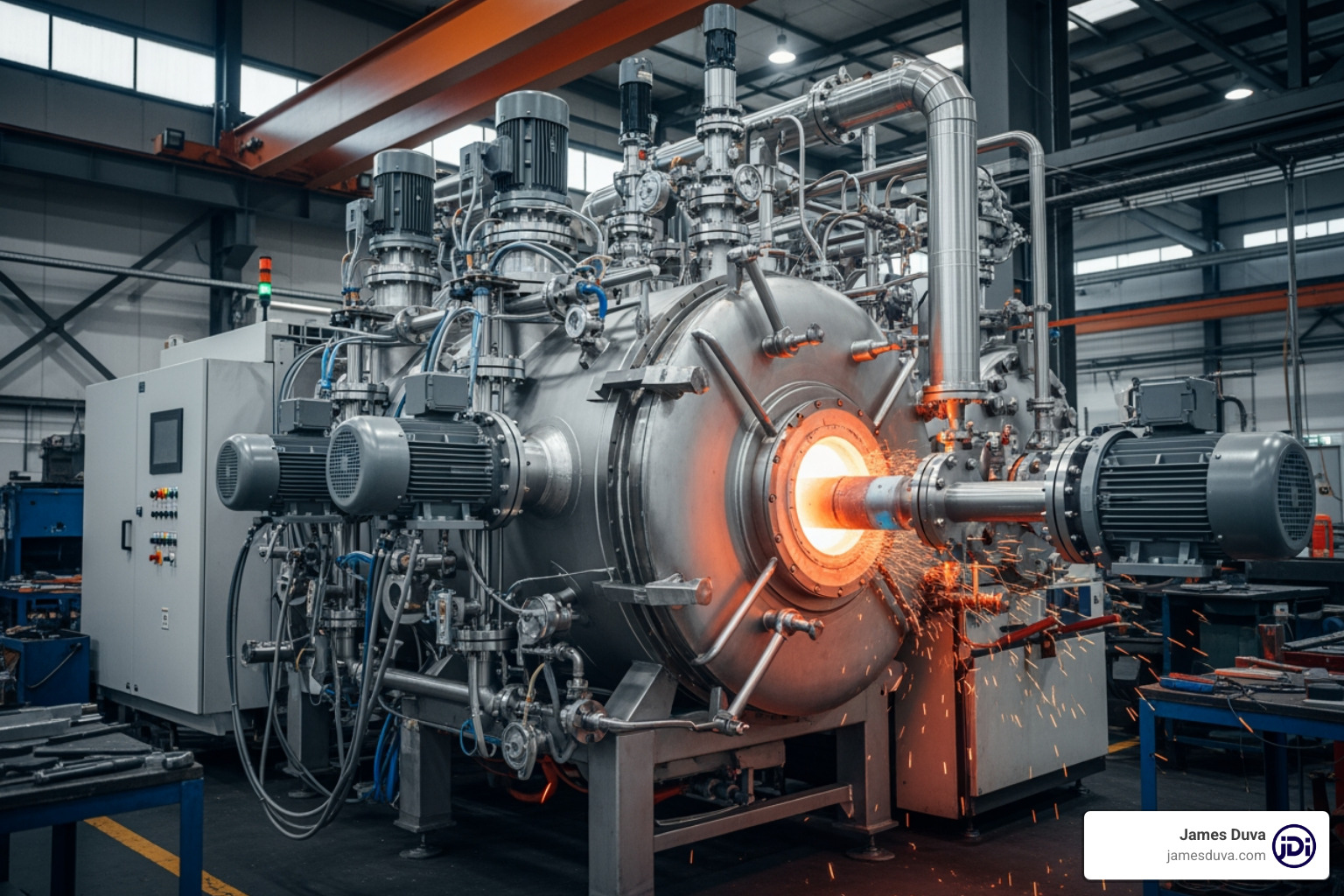
If Inconel 600 had a LinkedIn profile, its “Skills” section would be dominated by oxidation resistance. It can withstand temperatures up to 2000°F without significant scaling. This is largely due to the chromium content, which forms a protective, passivating oxide layer on the surface.
When we look at Inconel vs Hastelloy Which Is Better for Corrosive Environments, we see that Inconel 600 excels in:
- Carburization and Nitriding: It resists the absorption of carbon and nitrogen, which can embrittle other metals in furnace environments.
- Chloride-Ion SCC: It is virtually immune to the stress-corrosion cracking that plagues many stainless steels.
- Dry Chlorine: It remains stable in dry chlorine and hydrogen chloride environments up to approximately 1000°F.
- Caustics: It offers excellent resistance to alkaline solutions, including high-temperature caustic soda.
While it handles organic acids well, if you are dealing with highly aggressive reducing acids, you might find yourself asking Is Hastelloy Better Than Inconel for Acid Environments. Generally, Inconel 600 is the go-to for high-heat oxidation, while other alloys might be preferred for specific chemical baths.
Fabrication, Machining, and Welding Considerations

Working with Inconel 600 requires a bit of finesse. It’s a “tough” material in every sense of the word. Because it work-hardens rapidly, you can’t treat it like carbon steel.
Hot Working and Annealing Hot working should be performed between 1600°F and 2250°F. We recommend avoiding the 1200°F to 1600°F range because the alloy’s ductility drops significantly there—think of it as a “danger zone” where the metal is more likely to crack. For softening, annealing should be done at 1800-1850°F for about 15 minutes. This prevents excessive grain growth while ensuring the material is ready for further processing.
Machining Challenges When machining, use rigid equipment and sharp, carbide-tipped tools. You’ll want to maintain a constant, heavy feed to stay “ahead” of the work-hardening layer. A little secret from the shop floor: always use sulfur-free lubricants. If sulfur remains on the metal during subsequent heating or welding, it can cause intergranular embrittlement.
Welding Procedures Inconel 600 is famously weldable using standard methods like TIG (GTAW) and MIG (GMAW). We typically recommend AWS ERNiCr-3 filler metal. For parts that will see severe service, particularly in caustic environments, we suggest a stress-relief treatment at a minimum of 1650°F to ensure the Inconel 600 UNS N06600 Strength Durability and Versatility is fully realized.
Industrial Applications and Material Comparisons
Because Inconel 600 is such a “jack-of-all-trades” for high temperatures, it shows up in almost every heavy industry.
- Chemical Processing: Used in heaters, bubble towers, and condensers for fatty acids, as well as equipment for producing titanium dioxide.
- Nuclear Engineering: Vital for reactor vessel components and heat exchanger tubing due to its resistance to high-purity water corrosion.
- Heat-Treating Industry: Ideal for muffles, retorts, baskets, and vacuum furnace fixtures.
- Aerospace: Found in exhaust liners, turbine seals, and engine lockwire. This is a staple among Nickel Based Alloys in the Aerospace Industry.
How does it compare to its “siblings”?
- Inconel 600 vs. 601: While 600 is the standard, INCONEL alloy 601 technical data shows that 601 adds aluminum for even better oxidation resistance up to 2200°F.
- Inconel 600 vs. 625: 625 is much stronger due to the addition of molybdenum and niobium, making it the preferred choice for high-strength sea-water applications. If you need 625, check out our Supplier Spotlight Where to Find Your Inconel 625 and Other High Performance Alloys.
Frequently Asked Questions about Inconel 600
Is Inconel 600 magnetic?
No, Inconel 600 is non-magnetic at room temperature. Its Curie temperature—the point where it becomes magnetic—is approximately -192°F (-124°C). This makes it an excellent choice for applications where magnetic interference must be avoided, even in cryogenic environments.
What is the maximum service temperature for Inconel 600?
For oxidation resistance, the limit is generally 2000°F (1093°C). However, the “real” limit depends on the mechanical load. At very high temperatures, the creep-rupture strength becomes the deciding factor. If your component is under heavy stress, the effective service temperature might be lower to prevent gradual deformation over time.
How does Inconel 600 differ from Hastelloy?
As we discuss in Inconel vs Hastelloy Key Differences Applications and Benefits, the main difference lies in the alloying elements. Inconel is a nickel-chromium alloy focused on high-temperature oxidation. Hastelloy is typically a nickel-molybdenum alloy designed specifically to fight off aggressive reducing acids. Inconel is your “heat” specialist; Hastelloy is your “acid” specialist.
Conclusion
At James Duva Inc., we know that choosing the right material is the difference between a project that lasts decades and one that fails in weeks. Since 1978, we’ve used our material selection expertise to help our customers navigate the complexities of high-performance alloys. Whether you are in the chemical process industry, aerospace, or power generation, Inconel 600 remains one of the most reliable tools in your engineering arsenal.
If you need technical guidance or are ready to source high-grade nickel alloys for your next project, our team in Branchburg, NJ, is ready to help.
Request a quote for Inconel 600 and let us help you find the perfect fit for your industrial needs.
About James Duva Inc.
Since 1978, James Duva Inc. has been your trusted source for stainless steel and high-nickel alloy industrial products. Whether you’re in the water treatment, process or power industry, we pride ourselves on always having what you need. Say goodbye to your sourcing problems with just one call to James Duva.