
Nickel Alloy vs Stainless Steel: When to Upgrade Your Metal
Sep 8, 2026
Nickel Alloy vs Stainless Steel: The Quick Decision
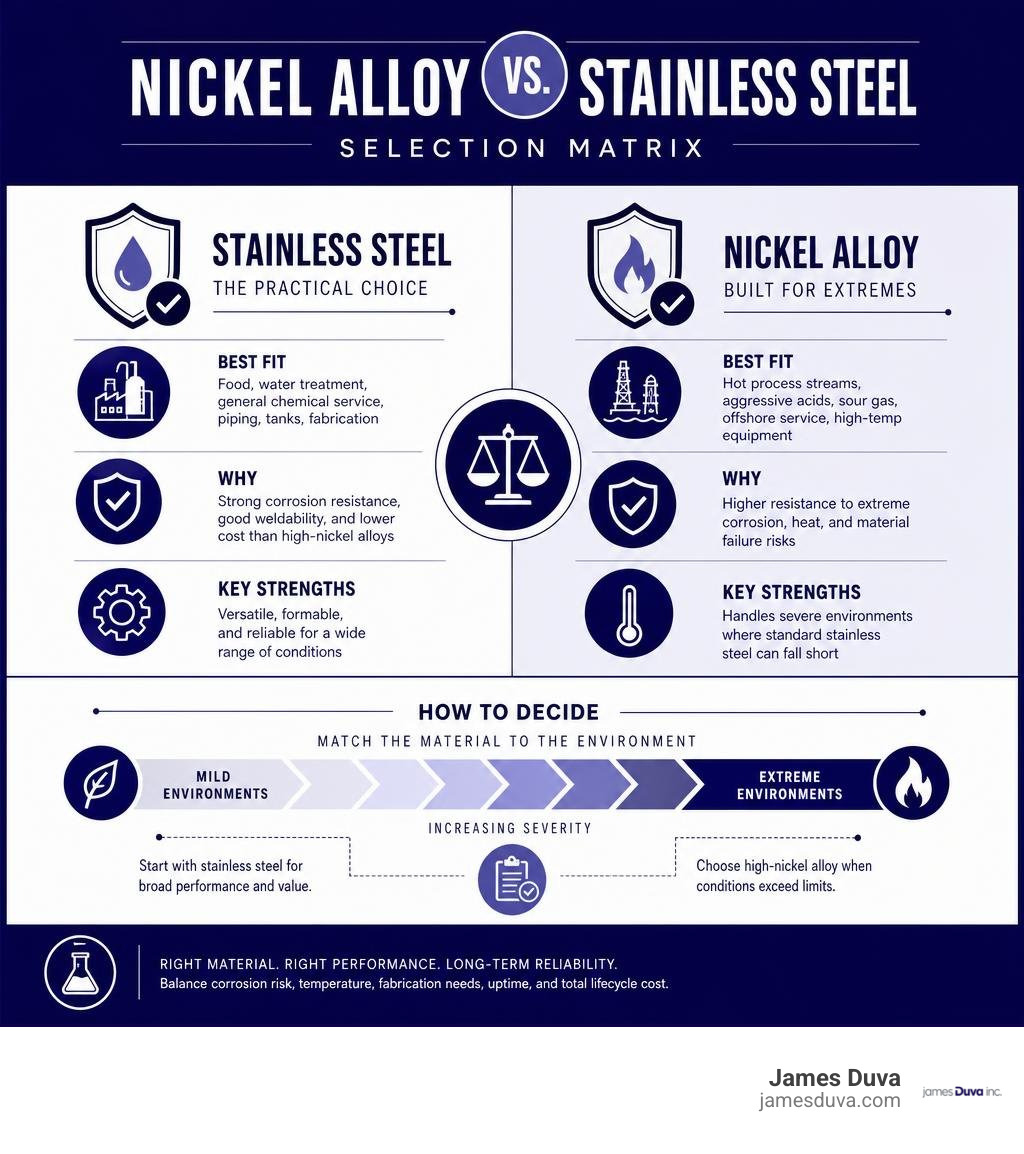
Nickel alloy vs stainless steel comes down to the environment: stainless steel is usually the practical choice for broad corrosion resistance and everyday industrial service, while high-nickel alloys are made for more severe heat, acids, chlorides, and sour-process conditions.
| Choose | Best fit | Why |
|---|---|---|
| Nickel-containing stainless steel | Food, water treatment, general chemical service, piping, tanks, and fabrication | Strong corrosion resistance, good weldability, and lower cost than high-nickel alloys |
| High-nickel alloy | Hot process streams, aggressive acids, sour gas, offshore service, and high-temperature equipment | Higher resistance to extreme corrosion, heat, and material failure risks |
Stainless steel is iron-based and must contain enough chromium to form its protective corrosion-resistant surface. Many common grades also contain nickel. For example, Type 304 has about 8% nickel, while Type 316 has about 11%. That nickel helps create an austenitic structure, improving toughness, forming, and welding performance.
The key is not to treat nickel alloy as an automatic upgrade. It is often a necessary upgrade when standard stainless steel faces conditions it cannot safely handle, but it can also add significant material cost and sourcing complexity. The right selection balances corrosion risk, temperature, fabrication needs, uptime, and total lifecycle cost.
I am Billy Walker, Vice President of James Duva Inc., where I help industrial customers source specialty stainless steel and high-nickel alloy pipe, fittings, and related PVF products for power, process, and water-treatment work. That hands-on experience with nickel alloy vs stainless steel helps frame the material tradeoffs explored in the sections ahead.
Why Are Alloys So Valuable in Industry?
To understand the practical choices between metals, we must first look at why pure elements are rarely used in structural and process applications. Pure metals like raw iron possess inherent material limitations. In its unalloyed state, iron is relatively soft, yields under moderate mechanical loads, and quickly reacts with atmospheric oxygen and moisture to form iron oxide—commonly known as rust. This oxidation destabilizes the material, causing flaking, loss of wall thickness, and eventual structural collapse.
Alloys solve these raw material flaws. By melting and blending iron with alloying additions like chromium, nickel, molybdenum, manganese, and carbon, metallurgists construct materials with tailored mechanical and chemical behaviors. These additions dramatically elevate yield strength, tensile durability, impact resistance, and environmental stability.
For instance, adding at least 10.5% chromium to iron turns standard steel into stainless steel by creating an invisible, self-healing chromium oxide passive film on the surface. When engineers require even greater performance, adding nickel further refines the crystal lattice, eliminating brittleness and reinforcing heat resistance. At James Duva Inc., our work supplying piping systems across major infrastructure sectors reinforces why custom material design is critical. For a deeper dive into elemental behaviors, review our In-Depth Guide to Stainless Steel Alloy Properties.
Across global industry, engineered alloys form the foundation of modern infrastructure:
- Construction: Load-bearing structural beams, reinforcement rods, architectural cladding, and commercial building piping rely on steel and stainless steel alloys to support structural integrity without severe atmospheric degradation.
- Oil & Gas: Heavy-wall pipe, high-pressure fittings, weld neck flanges, and high-integrity Ball Valves depend on specialty stainless steel and nickel alloys to contain hazardous hydrocarbons and sour gas under immense pressure.
- Automotive & Aerospace: High-strength chassis frames, exhaust headers, jet engine combustion liners, and turbine disc assemblies require light, ultra-durable alloys capable of resisting severe thermal cycles.
- Medical & Consumer Goods: Surgical tools, orthopedic joint implants, sanitary food-processing tanks, and everyday kitchenware rely on non-reactive, easily sterilized stainless steel grades.
Metallurgical Breakdown: Nickel Alloy vs Stainless Steel
At the atomic level, the fundamental boundary in the nickel alloy vs stainless steel debate lies in the dominant baseline metal, or matrix.
Stainless steels are fundamentally iron-based alloys. Iron constitutes the primary mass fraction, combined with a minimum of 10.5% chromium to establish passivity. Other elements are blended in smaller quantities to tune specific behaviors.
High-nickel alloys (often referred to as nickel-base alloys or superalloys) shift the balance entirely. In these materials, nickel replaces iron as the primary constituent metal, making up anywhere from 30% to over 70% of the total chemical composition. Elements such as chromium, molybdenum, copper, tungsten, and cobalt are then dissolved into this nickel matrix to produce extraordinary chemical stability.
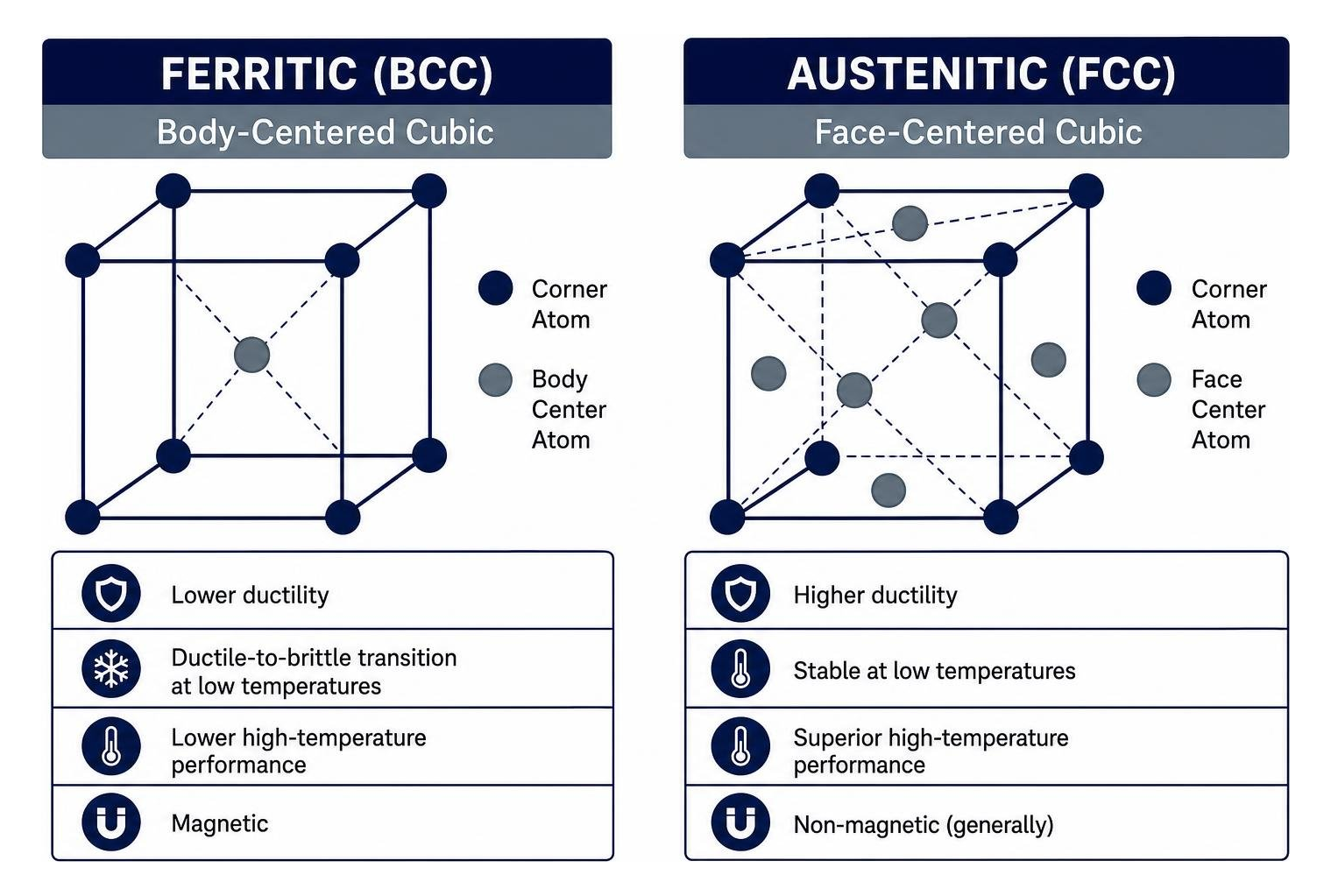
The fundamental difference lies in how nickel stabilizes the crystal lattice. Raw iron at room temperature features a body-centered cubic (BCC) crystalline structure, known as ferrite. While strong, BCC iron undergoes a ductile-to-brittle transition at low temperatures and struggles to retain strength under high heat.
When nickel is added in sufficient quantities, it transforms the crystal structure from body-centered cubic into a face-centered cubic (FCC) lattice, known as austenite. The FCC structure offers higher ductility, elevated impact energy absorption, superior formability, and stable performance across temperature extremes. For a broader look at metallurgical fundamentals, consult A Comprehensive Introduction to Stainless Steel Facts and Industry Insights and the educational resource Stainless steel: The role of nickel.
How Nickel Transforms Stainless Steel Structure
The transformation of steel from ferritic to austenitic is one of the most important concepts in modern metallurgy. Approximately two-thirds of global nickel production is used to manufacture stainless steel, with nickel-containing grades making up roughly 80% of total worldwide stainless steel production.
When nickel is added to an iron-chromium melt, it acts as a powerful austenite stabilizer. While ferritic stainless steels (such as Type 409 or 430) contain zero to minimal nickel and maintain a magnetic body-centered cubic structure, adding sufficient nickel locks the alloy into an austenitic face-centered cubic structure at room temperature and beyond.
The most recognizable examples of this transformation are standard 300-series stainless steels:
- Type 304 Stainless Steel: Contains approximately 18% chromium and 8% nickel. That 8% nickel threshold is the baseline required to convert the crystal structure into stable austenite, providing excellent toughness and deep-drawing capacity.
- Type 316 Stainless Steel: Contains roughly 16% chromium, 11% nickel, and 2% molybdenum. The increased nickel content stabilizes the matrix, while molybdenum significantly enhances resistance to localized pitting and crevice corrosion in chloride environments.
Because of their face-centered cubic lattice, standard 300-series austenitic stainless steels are non-magnetic in their fully annealed state. They do not suffer from sudden brittle failure at freezing temperatures, making them versatile workhorses across piping and equipment fabrication. To evaluate specific grade compositions, explore our Detailed Guide to Stainless Steel Types.
Performance Advantages of Nickel-Containing Stainless Steels
Integrating nickel into stainless steel delivers major operational benefits over non-nickel (ferritic or martensitic) alternative metals:
- Cryogenic Toughness: Non-nickel steels become dangerously brittle as temperatures drop below zero. Austenitic nickel-bearing stainless steels maintain exceptionally high impact toughness down to liquid helium temperatures (-270°C). This makes Type 304 and 316 essential for liquefied natural gas (LNG) storage, cryogenic piping, and aerospace fluid handling.
- Superior Formability: The FCC atomic structure allows atom layers to slide past one another easily during cold working. This grants nickel-containing stainless steels remarkable ductility, allowing deep drawing into complex shapes like kitchen sinks, vessel heads, and drawn tubing without cracking.
- Enhanced Weldability: Nickel-containing austenitic stainless steels are far easier to weld than ferritic grades. They resist heat-affected zone embrittlement, retain grain toughness post-weld, and do not require complex pre-heating or post-weld heat treatment in most structural thicknesses.
- Elevated Temperature Creep Resistance: Operating non-austenitic steels above 300°C often triggers phase transformations, scaling, and accelerated creep deformation under load. Nickel stabilizes the matrix at elevated temperatures, preserving tensile yield and mechanical fatigue strength in steam lines, heat exchangers, and industrial furnaces.
For more technical data on environmental endurance, review our guide on 316 Stainless Steel Corrosion Resistance In-Depth Guide to Performance.
Performance Comparison: Formability, Weldability, and Extreme Environments
When comparing standard austenitic stainless steel to high-nickel superalloys, physical properties change significantly based on the total nickel content. High-nickel alloys offer superior performance under extreme heat and corrosive stress, but require special handling during fabrication.
| Performance Metric | Standard Austenitic Stainless Steel (e.g., 304 / 316) | High-Nickel Alloy (e.g., Inconel 625 / Hastelloy C-276) |
|---|---|---|
| Primary Base Element | Iron (~65–74%) | Nickel (~50–70%+) |
| Typical Nickel Content | 8% to 11% | 30% to over 70% |
| Crystal Lattice | Austenitic (Face-Centered Cubic) | Solid-Solution Austenitic Superalloy Matrix |
| Yield & Tensile Strength | Moderate (200–300 MPa yield) | High to Very High (400–850+ MPa yield) |
| Cryogenic Service Limit | Down to -270°C (-454°F) | Down to cryogenic levels with high shock resistance |
| Upper Temperature Limit | ~800°C (Oxidation limits structural load) | Up to 1000°C–1150°C (Resists high-temperature creep) |
| Acid / Chloride Pitting Resistance | Moderate; vulnerable to hot concentrated acids | Exceptional; immune to pitting & stress-corrosion cracking |
| Cold Formability | Excellent (High ductility, low work-hardening) | Good to Moderate (Requires higher force; work-hardens fast) |
| Weldability Profile | Excellent; routine industry welding procedures | Very Good; requires precise thermal and contamination control |
Key Property Differences: Nickel Alloy vs Stainless Steel
While 300-series stainless steels offer high versatility, severe chemical environments can breach their protective passive layer. In applications involving hot concentrated sulfuric acid, hydrofluoric acid, boiling hydrochloric acid, wet chlorine gas, or sour gas (H2S), high-nickel alloys provide a vital upgrade path.
High-nickel alloys use a solid-solution matrix reinforced with additional heavy elements to handle severe industrial service:
- Inconel Alloys (e.g., Inconel 600, 625, 718): Nickel-chromium superalloys engineered for intense thermal stability and oxidation resistance up to 1100°C. They resist thermal creep, carburization, and chloride stress-corrosion cracking (SCC), making them ideal for aerospace jet engine turbines and high-temperature chemical crackers.
- Hastelloy Alloys (e.g., Hastelloy C-276, C-22): Nickel-chromium-molybdenum alloys built for extreme chemical corrosion. The high molybdenum content (up to 16%) combined with low carbon prevents grain-boundary precipitation during welding, delivering exceptional resistance to boiling mineral acids, wet chlorine, and strong oxidizing salts.
- Monel Alloys (e.g., Monel 400, K-500): Nickel-copper alloys designed for aggressive marine environments, hydrofluoric acid, and alkalis. Monel resists rapid sea-water bio-fouling and high-velocity marine erosion where standard stainless steel faces localized pitting.
For a direct breakdown between top superalloy families, see our article Inconel vs Hastelloy Which Is Better for Corrosive Environments.
Sustainability and Recyclability in Alloy Production
Sustainability is a major operational driver across modern industrial supply chains. Nickel is a valuable, highly recyclable metal, making both nickel-containing stainless steel and high-nickel alloys prime examples of circular economy materials.
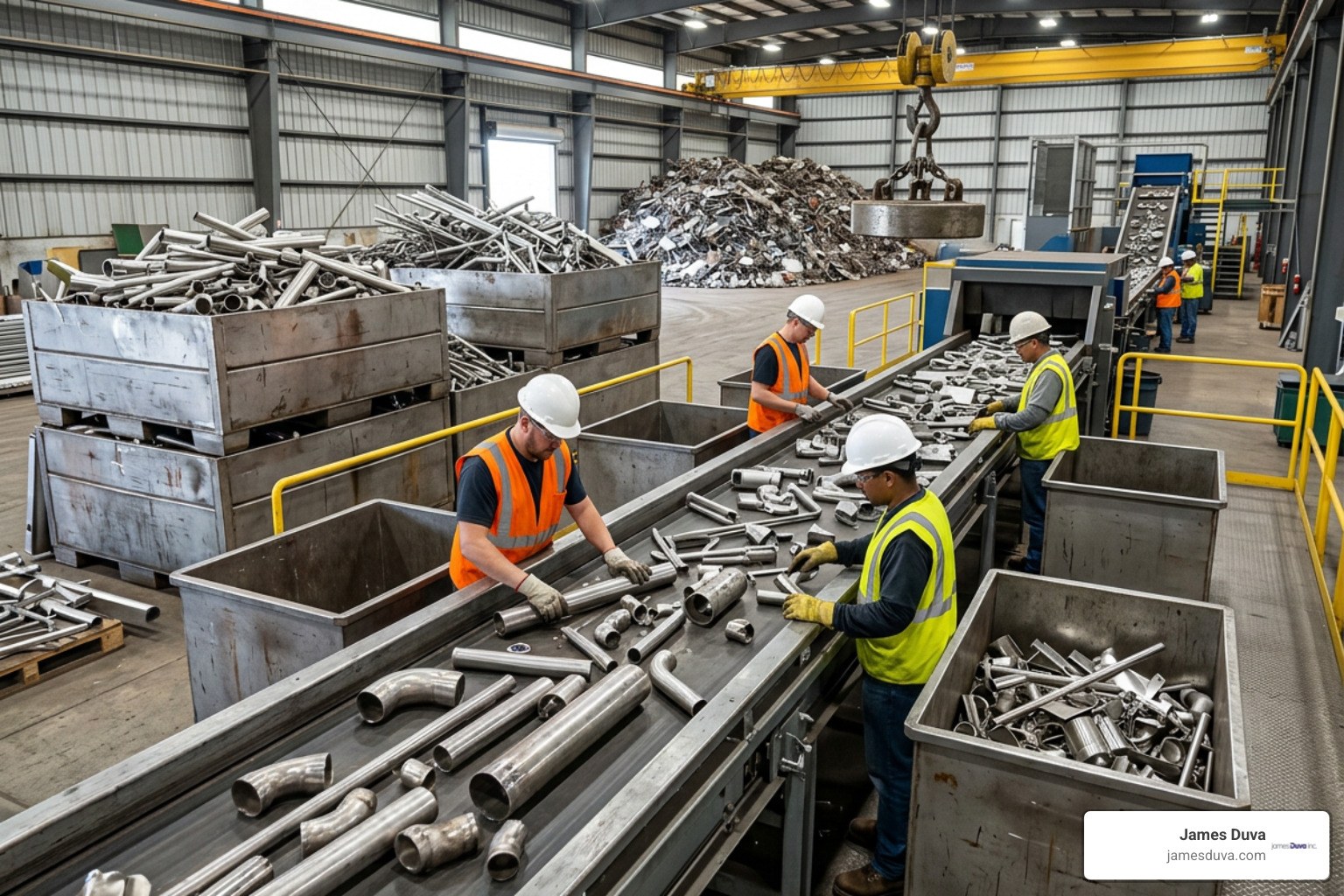
Key sustainability advantages include:
- Reduced Energy Footprint: Manufacturing stainless steel using recycled scrap metal cuts the energy required for alloy production by approximately one-third (33%) compared to refining 100% virgin raw materials.
- High End-of-Life Recyclability: Austenitic stainless steel and nickel superalloy scrap retain high economic value. Virtually 100% of industrial scrap metal generated during manufacturing, pipe cutting, or decommissioned plant teardowns is collected, sorted, and remelted into high-grade raw alloys.
- Extended Infrastructure Longevity: Choosing the right nickel-bearing alloy prevents premature corrosion failures, equipment replacements, and fluid leaks. This reduces overall lifecycle material consumption, waste, and maintenance overhead across decades of operation.
When to Upgrade: Industry Applications and Material Selection
Deciding between standard stainless steel and a high-nickel alloy involves evaluating operating pressure, fluid temperature, chemical concentration, thermal shock, and potential downtime risks.
Here is how engineers evaluate material choices across major industrial sectors:
- Chemical & Petrochemical Processing: Standard Type 316 stainless steel works well for mild acids, organic compounds, and ambient storage. However, when processes involve boiling sulfuric, nitric, or hydrochloric acid concentrations, upgrading to Hastelloy C-276 or Inconel 625 is necessary to prevent rapid wall thinning and catastrophic fluid release.
- Oil & Gas (Upstream and Offshore): Deepwater extraction and sour oil wells present high levels of hydrogen sulfide (H2S), carbon dioxide, and elevated chlorides at high downhole pressures. While duplex stainless steels handle moderate service, sour gas environments require high-nickel alloys like Inconel 718 or Monel K-500 to eliminate sulfide stress cracking (SSC).
- Aerospace & Power Generation: Gas turbines and jet engines operate under high thermal stress and mechanical vibration. Stainless steels lose structural creep strength above 650°C, whereas nickel superalloys retain high tensile strength and oxidation resistance at temperatures exceeding 1000°C.
- Marine & Desalination Facilities: Seawater reverse osmosis (SWRO) systems and subsea valves face continuous high-velocity chloride exposure. While Type 316 stainless steel is suitable for freshwater handling, subsea components and high-pressure brine pumps often upgrade to high-nickel alloys or super-duplex grades to eliminate pitting and crevice corrosion.
To evaluate detailed real-world engineering scenarios, review When to Choose Nickel Alloys Over Stainless Steel in Industrial Applications and community discussions at What are the differences between stainless steel and nickel alloy?.
Cost, Availability, and Upgrading: Nickel Alloy vs Stainless Steel
Upgrading from stainless steel to a high-nickel alloy involves clear economic trade-offs:
- Procurement Cost Differential: Raw nickel commands a significantly higher market price than iron. Depending on global market conditions, high-nickel superalloys can cost 3 to 8 times more per pound than standard 300-series stainless steel.
- Sourcing and Lead Times: Standard Type 304 and 316 pipe, fittings, and flanges are mass-produced commodities available in broad inventory sizes. High-nickel alloys require specialized vacuum induction melting (VIM) and powder metallurgy processes, leading to longer manufacturing lead times for non-standard wall thicknesses or custom forgings.
- Total Cost of Ownership (TCO) Optimization: While high-nickel alloys increase upfront capital expenditure (CapEx), they drastically cut operational expenditure (OpEx) in aggressive chemical environments. Eliminating unplanned plant shutdowns, unexpected pipe bursts, and frequent maintenance rebuilds easily offsets the initial material investment over a multi-year service cycle.
For guidance on sourcing specialty fittings and piping components, explore Why Nickel Alloy Fittings Are Essential for Demanding Environments.
Frequently Asked Questions About Nickel Alloys and Stainless Steel
What is the main composition difference between nickel alloys and stainless steel?
The primary baseline element defines the fundamental difference. Stainless steels are iron-based alloys containing at least 10.5% chromium and moderate nickel additions (typically 0% to 20%). High-nickel alloys use nickel as their dominant base metal (30% to over 70%), combined with chromium, molybdenum, copper, or cobalt to withstand severe heat and corrosion.
Why is nickel added to 300-series stainless steels like Type 304 and 316?
Nickel acts as an austenite stabilizer, changing the crystal structure of steel from body-centered cubic (ferritic) to face-centered cubic (austenitic). This transformation prevents room-temperature brittleness, improves deep-drawing formability, enhances weldability, and ensures high impact toughness down to cryogenic temperatures (-270°C).
When should an engineer upgrade from stainless steel to a nickel alloy?
An upgrade is recommended when operating conditions exceed the performance limits of standard 300-series or duplex stainless steels. Common triggers include continuous service temperatures above 650°C, exposure to boiling concentrated mineral acids (sulfuric, hydrofluoric, hydrochloric), wet chlorine gas, severe chloride-induced stress-corrosion cracking risk, or high hydrogen sulfide (sour gas) concentrations.
Conclusion
Choosing between nickel alloy vs stainless steel relies on a clear understanding of process chemistry, thermal cycles, mechanical stress, and long-term lifecycle budget. Standard nickel-containing stainless steels like Type 304 and 316 provide the ideal blend of strength, formability, corrosion resistance, and economy for broad commercial and industrial service. However, when process environments push beyond standard limits—introducing severe acids, intense thermal oxidation, or severe chloride stress—upgrading to high-nickel superalloys guarantees essential operational safety and long-term reliability.
At James Duva Inc., based in Branchburg, NJ, we have supplied process industries with high-performance piping products, fittings, flanges, and valves since 1978. Whether you need standard 300-series stainless steel components or specialized nickel alloy piping, our team delivers reliable technical support and fast turnaround times.
Contact our material experts today or browse our full line of High-Performance Nickel Alloy Solutions to specify the right materials for your next project.
About James Duva Inc.
Since 1978, James Duva Inc. has been your trusted source for stainless steel and high-nickel alloy industrial products. Whether you’re in the water treatment, process or power industry, we pride ourselves on always having what you need. Say goodbye to your sourcing problems with just one call to James Duva.