
Why Incoloy 825 Beats Incoloy 800 in Aggressive Acid Environments
Oct 29, 2026
Why Are Alloys So Valuable in Industry?
Incoloy 825 outperforms Incoloy 800 in aggressive acid environments because its higher nickel content and additions of molybdenum, copper, and titanium provide stronger resistance to sulfuric acid, pitting, and chloride stress corrosion cracking. This makes it the preferred choice for chemical processing equipment exposed to reducing acids and halide-rich streams.
Pure metals serve important foundational roles, but in demanding operating conditions, pure elements like unalloyed iron fall short. Pure iron is comparatively soft and oxidizes rapidly when exposed to moisture and oxygen. Engineering teams developed metallic alloys to overcome these limitations. By combining base metals with elements such as chromium, nickel, molybdenum, and carbon, metallurgists produce materials that exhibit superior mechanical strength, thermal stability, and corrosion resistance.
Industrial sectors rely on specialized materials categorized across distinct operating environments:
- Construction: Structural steel beams, high-strength reinforcement bars, and building piping rely on carbon and low-alloy steels for load-bearing capacity.
- Oil & Gas: Severe downhole conditions, offshore platforms, and refinery piping require specialized nickel and stainless fittings, flanges, and valves engineered against sour gas and saltwater.
- Automotive & Aerospace: Lightweight aluminum alloys, advanced high-strength steels, and high-nickel superalloys form vehicle frames, structural airframes, and jet turbine engines that handle mechanical stress and extreme thermal cycling.
- Medical & Consumer Goods: Biocompatible titanium and surgical-grade stainless steels supply orthopedic implants, while corrosion-resistant formulations provide durable food-grade kitchenware and commercial processing vessels.
When operations shift toward extreme temperatures or severe chemical degradation, standard carbon steels and entry-level stainless grades fail. Engineers then turn to metals that can take the heat and the rust. Among these high-performance materials, the iron-nickel-chromium alloy family—specifically Incoloy 800 (UNS N08800) and Incoloy 825 (UNS N08825)—offers targeted performance profiles for process equipment.
Chemical Composition and Mechanical Properties: Incoloy 800 vs 825
The performance differences between Incoloy 800 and Incoloy 825 stem directly from their chemical formulations. Both belong to the austenitic nickel-iron-chromium family, yet their alloying additions target distinct failure mechanisms.
Incoloy 800 features a balanced matrix of 30.0% to 35.0% nickel and 19.0% to 23.0% chromium, with iron forming the remaining balance. This baseline provides structural stability and resistance to oxidation and carburization at elevated temperatures.
Incoloy 825 builds upon this base by increasing the nickel content to 38.0%–46.0% and introducing 2.5% to 3.5% molybdenum, 1.5% to 3.0% copper, and 0.6% to 1.2% titanium. The elevated nickel and molybdenum improve resistance to reducing chemicals and chloride stress corrosion cracking, while copper provides resistance to sulfuric acid solutions. Titanium acts as a stabilizing element, binding carbon to prevent chromium carbide precipitation at grain boundaries during thermal exposure and welding.
| Element / Property | Incoloy 800 (UNS N08800) | Incoloy 825 (UNS N08825) | Metallurgical Function in Alloy Matrix |
|---|---|---|---|
| Nickel (Ni) | 30.0% – 35.0% | 38.0% – 46.0% | Stabilizes austenite; resists chloride stress cracking |
| Chromium (Cr) | 19.0% – 23.0% | 19.5% – 23.5% | Forms protective passive oxide film (chromium oxide); resists oxidizing media |
| Iron (Fe) | Balance (at least 39.5%) | Balance (at least 22.0%) | Forms primary matrix; controls raw material economics |
| Molybdenum (Mo) | — | 2.5% – 3.5% | Resists localized pitting and crevice corrosion |
| Copper (Cu) | 0.75% max | 1.5% – 3.0% | Improves passivity in sulfuric and reducing acids |
| Titanium (Ti) | 0.15% – 0.60% | 0.60% – 1.20% | Stabilizes carbon; inhibits intergranular sensitization |
| Carbon (C) | 0.10% max | 0.05% max | Governs creep strength vs. intergranular corrosion resistance |
| Tensile Strength (min) | 450 MPa (65 ksi) or higher | 550 MPa (80 ksi) or higher | Measures ultimate load-bearing threshold |
| Yield Strength (0.2% min) | 170 MPa (25 ksi) or higher | 220 MPa (32 ksi) or higher | Measures threshold of permanent plastic deformation |
| Elongation at Break (min) | 30% or higher | 30% or higher | Reflects room-temperature ductility and formability |
| Density | 7.94 g/cm³ | 8.14 g/cm³ | Physical weight factor for component engineering |
Evaluating Strength and Tensile Limits in Incoloy 800 vs 825
At ambient and intermediate temperatures, Incoloy 825 delivers higher mechanical strength than Incoloy 800. Solid-solution strengthening from its molybdenum and higher nickel additions gives Alloy 825 an ultimate tensile strength of at least 550 MPa, roughly 22% higher than Alloy 800’s minimum of 450 MPa. Similarly, Alloy 825’s minimum yield strength of 220 MPa surpasses Alloy 800’s 170 MPa by approximately 29%.
Both alloys maintain minimum elongation values of 30%, giving them the ductility needed for standard cold-forming methods, bending, and deep drawing. However, because Incoloy 825 exhibits higher yield strength, forming equipment requires greater initial force. For piping, vessels, and structural components subjected to internal pressure or mechanical loading up to 540°C (1000°F), Incoloy 825 permits thinner wall designs under ASME Section VIII pressure vessel design rules. To review other alloys engineered for aggressive operational demands, explore corrosion-resistant nickel alloys.
High-Temperature Limits and Thermal Stability in Incoloy 800 vs 825
While Incoloy 825 demonstrates higher tensile properties at ambient conditions, Incoloy 800 is the better choice for high-temperature thermal stability.
Incoloy 800 maintains continuous mechanical integrity up to 1100°C (2012°F) in non-reducing, thermally active environments. Its austenitic structure resists phase embrittlement, carburization, and thermal fatigue during repeated thermal cycles. For high-stress applications above 600°C (1112°F), modified variants such as Incoloy 800H (UNS N08810) and Incoloy 800HT (UNS N08811) utilize controlled carbon ranges (0.05%–0.10%) and specialized coarse-grain annealing treatments to boost creep and stress-rupture strength.
In contrast, Incoloy 825 has a maximum continuous design temperature of 870°C (1598°F), with ASME Boiler and Pressure Vessel Code design limits typically capped around 540°C (1000°F). Sustained exposure to temperatures between 540°C and 760°C can cause intermetallic phase precipitation (such as sigma phase and complex carbides), which reduces ductility and compromises ambient-temperature corrosion resistance. Consequently, high-temperature petrochemical cracking, industrial furnace retorts, and power generation superheaters rely primarily on the Incoloy 800 series.

Corrosion Resistance in Acidic and Marine Environments
In aqueous and chemical media, Incoloy 825 outperforms Incoloy 800 across both reducing and oxidizing environments.
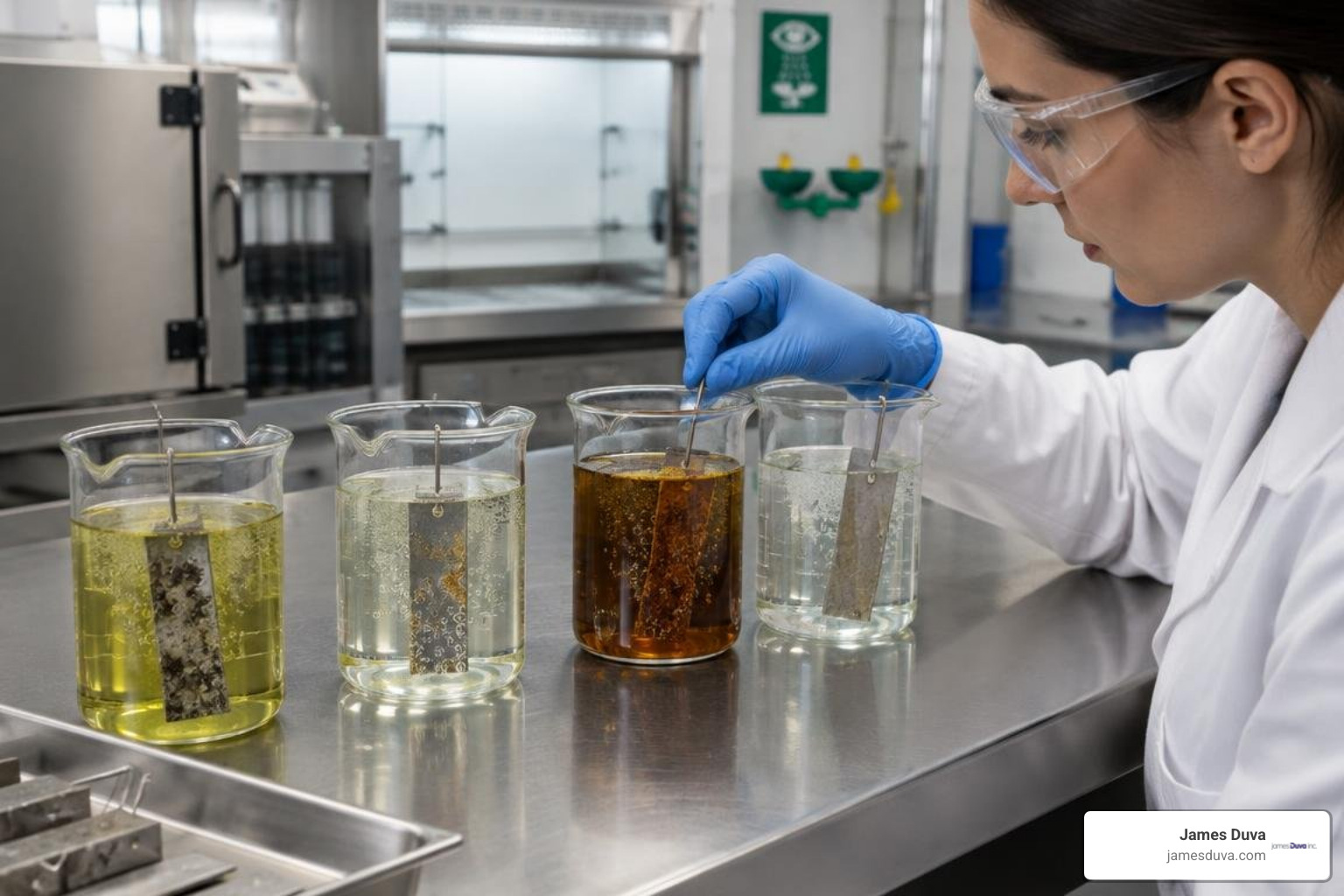
Incoloy 825 provides strong resistance against several severe industrial corrosion mechanisms:
- Sulfuric Acid Service: Pure nickel-chromium alloys corrode rapidly in moderate concentrations of reducing acids. The 1.5% to 3.0% copper in Incoloy 825 works alongside molybdenum to lower corrosion rates in boiling sulfuric acid solutions up to 40% concentration, as well as in handling phosphoric acid streams.
- Pitting and Crevice Corrosion: Molybdenum and chromium improve localized corrosion resistance in halide-rich streams. The Pitting Resistance Equivalent Number (PREN) of Alloy 825 is approximately 31, higher than that of Alloy 800 at approximately 21, helping protect heat exchanger tubing from localized pitting under stagnant flow conditions.
- Chloride Stress Corrosion Cracking (CSCC): Austenitic stainless steels fail rapidly when chloride ions combine with tensile stress and elevated temperatures. Alloy 825’s 38% to 46% nickel content makes it virtually immune to chloride-induced cracking in industrial service.
- Intergranular Corrosion Resistance: Titanium stabilization binds carbon, preventing the formation of localized chromium-depleted zones along grain boundaries during welding or hot forming.
For engineers determining component specifications for chemical handling, review alloy selection for chemical processing to evaluate fluid chemistry and process temperatures against specific alloy matrices.
Performance Against 316L Stainless Steel and Upgrades
Standard austenitic stainless steels like AISI 316L (UNS S31603) often serve as baseline materials in industrial piping. However, when fluid temperatures increase or chloride concentrations rise, 316L can fail due to localized pitting, crevice attack, or stress corrosion cracking.
Incoloy 825 provides roughly 30% higher pitting resistance in chloride environments than 316L stainless steel. While 316L contains 10%–14% nickel and 2%–3% molybdenum, its lower nickel content leaves it vulnerable to chloride stress corrosion cracking above 60°C (140°F). Upgrading to Incoloy 825 prevents premature stress cracking in offshore piping, marine cooling loops, and sour oil wells containing hydrogen sulfide. For a detailed evaluation of when project parameters justify upgrading from stainless grades, see nickel alloy vs stainless steel.
Fabrication, Welding, and Industrial Applications
Both Incoloy 800 and Incoloy 825 can be machined, formed, and welded using standard fabrication practices for high-nickel alloys, provided that appropriate heat inputs and tooling are maintained.
For welding Incoloy 800, matching filler metals or overmatched nickel-based consumables are typically selected:
- GTAW/GMAW: ERNiCr-3 (Inconel 82) or ERNiCrFe-7
- SMAW: ENiCrFe-2 or ENiCrFe-3 (Inconel 182)
These filler metals produce weld deposits that match the oxidation resistance and thermal expansion characteristics of the parent material. Post-weld heat treatment is generally unnecessary for Incoloy 800 unless required by specific design codes for stress relief.
When welding Incoloy 825, fabricators must use low-to-moderate heat inputs and maintain clean joint preparations to protect its corrosion resistance:
- GTAW/GMAW: ERNiCrMo-3 (Inconel 625)
- SMAW: ENiCrMo-3 (Inconel 112)
Using Inconel 625 filler metal provides a weld deposit enriched with molybdenum (8%–10%) and niobium (3.15%–4.15%), ensuring the as-welded joint matches the base metal’s pitting and crevice corrosion resistance without requiring post-weld annealing. When designing severe-service process lines, pairing correctly welded piping with nickel alloy fittings and compatible quarter-turn Ball Valves maintains system integrity and minimizes localized galvanic cells.
To review general fabrication guidelines and metallurgical standards, technical publications from industry resources such as the Nickel Institute offer detailed best practices for welding and handling nickel-chromium alloys in severe operating environments.
Frequently Asked Questions about Incoloy Alloys
What is the primary difference in corrosion resistance between Incoloy 800 and 825?
Incoloy 825 contains intentional additions of 2.5%–3.5% molybdenum, 1.5%–3.0% copper, and higher nickel (38%–46%) with titanium stabilization. This composition provides superior resistance to localized chloride pitting, crevice attack, chloride stress corrosion cracking, and reducing acids such as sulfuric and phosphoric acid. Incoloy 800 lacks molybdenum and copper, making it better suited for high-temperature oxidation and carburization environments rather than aggressive acid immersion.
What is the maximum continuous service temperature for Incoloy 800 compared to 825?
Incoloy 800 can operate continuously up to 1100°C (2012°F) under oxidizing conditions, maintaining creep resistance and thermal-cycling stability. In contrast, Incoloy 825 is designed for lower temperatures; its continuous service is limited to 870°C (1598°F), with most ASME pressure vessel design limits capped around 540°C (1000°F) to avoid intermetallic embrittlement and loss of corrosion resistance.
How do Incoloy 800 and 825 compare in price and procurement lead times?
Due to its higher nickel content and the addition of molybdenum, Incoloy 825 typically commands a 15% to 25% price premium over standard Incoloy 800. For procurement through North American supply routes, common product forms such as seamless pipe, round bar, flanges, and plate in standard schedules generally ship from warehouse inventory within 15 to 25 days. Non-standard dimensions, heavy forgings, or specialized mill orders typically require 30 to 45 days, depending on raw material sourcing and testing requirements.
Conclusion
Material selection between Incoloy 800 and Incoloy 825 requires evaluating operating temperatures against fluid chemistry. When process streams contain sulfuric acid, phosphoric acid, chlorides, or sour gas, Incoloy 825’s molybdenum and copper additions protect equipment from localized pitting and stress corrosion cracking. Conversely, when equipment must maintain structural integrity under high temperatures, carburization, or thermal fatigue up to 1100°C, Incoloy 800 (or its 800H/800HT variants) remains the more reliable and cost-effective choice.
Since 1978, James Duva Inc. has provided technical support and material sourcing from Branchburg, NJ, supplying critical projects across the chemical processing, energy, and marine industries. Our team maintains extensive inventories of seamless pipe, fittings, flanges, and valves to help you select and source the right materials for your operating environment. Contact our materials specialists today to review your project specifications and source fully certified high-grade nickel alloy piping and components.
About James Duva Inc.
Since 1978, James Duva Inc. has been your trusted source for stainless steel and high-nickel alloy industrial products. Whether you’re in the water treatment, process or power industry, we pride ourselves on always having what you need. Say goodbye to your sourcing problems with just one call to James Duva.