
A Comprehensive Guide to 3A Sanitary Standards
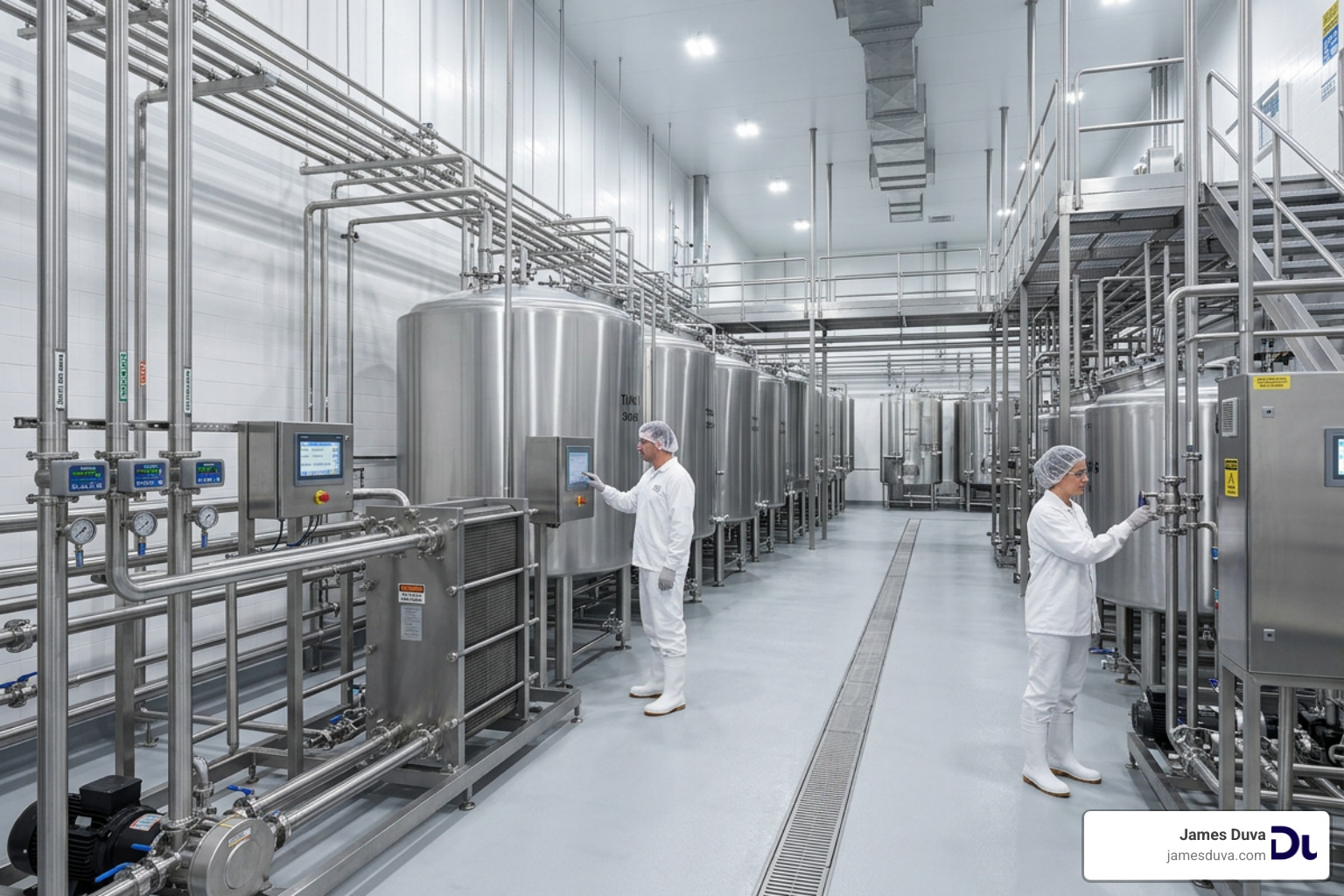
Oct 29, 2026
Why 3A Sanitary Standards Stainless Steel Requirements Matter for Food Safety
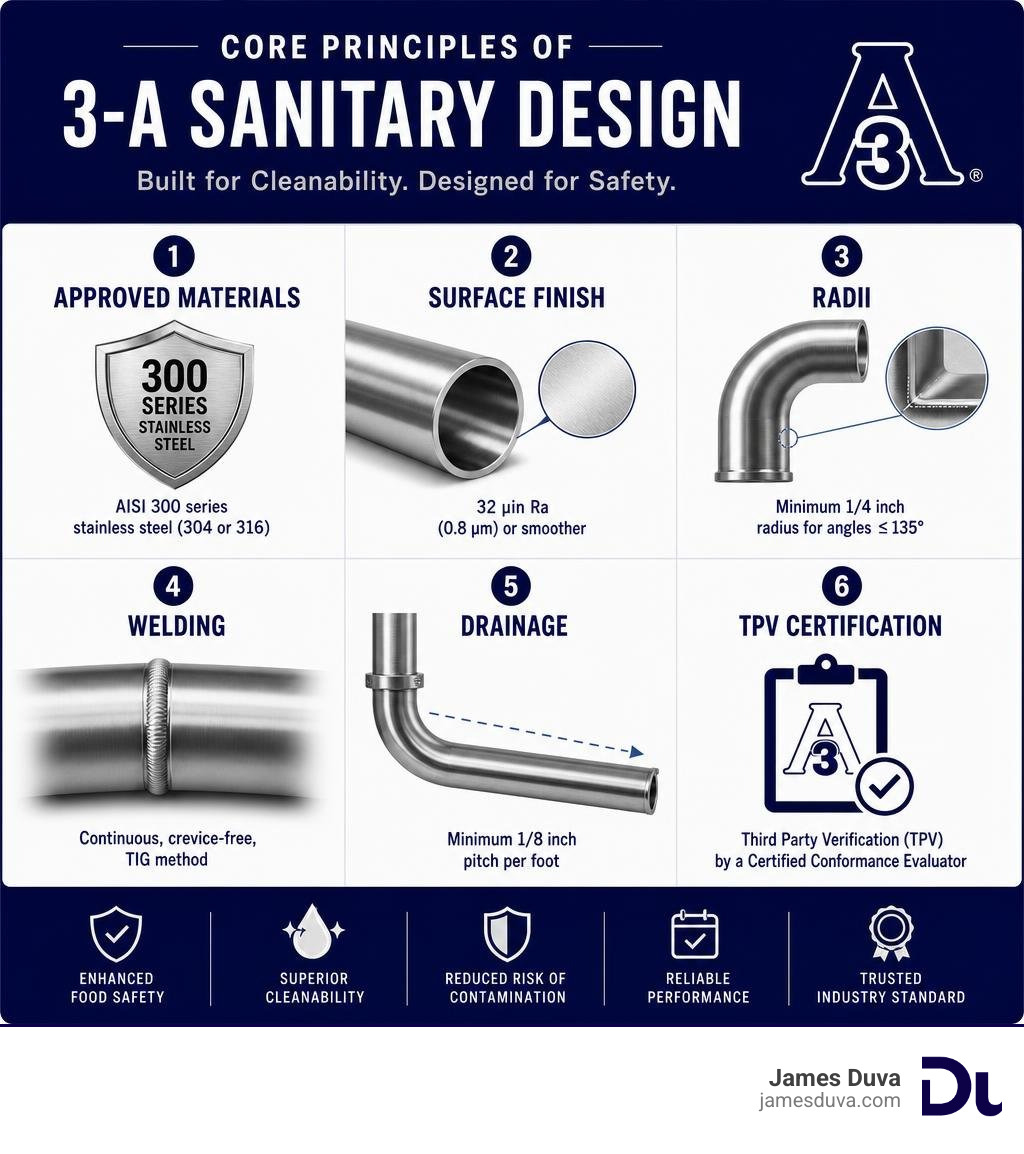
3a sanitary standards stainless steel equipment define the gold standard for hygienic design in food, dairy, and pharmaceutical processing. If you need a quick answer, here’s what these standards require:
| Requirement | Specification |
|---|---|
| Preferred material | AISI 300 series stainless steel (304 or 316) |
| Surface finish (product contact) | 32 µin Ra (0.8 µm) or smoother |
| Internal angle radii | Minimum 1/4 inch for angles ≤ 135° |
| Welds | Continuous, crevice-free, TIG method |
| Gasket flush tolerance | No more than 1/32 inch offset |
| Draining pitch (tubing) | Minimum 1/8 inch per foot |
| Verification | Third Party Verification (TPV) by a Certified Conformance Evaluator |
Every day, food and dairy processors rely on equipment built to these standards to keep products safe from contamination. The standards were first developed in the 1920s — originally for milk pipe fittings — and have grown into a library of over 70 individual standards covering everything from tanks and pumps to valves and heat exchangers.
3-A Sanitary Standards are voluntary, but they carry real weight. Regulatory bodies like the FDA and USDA routinely treat them as de facto requirements. Equipment that doesn’t meet them can be rejected outright at startup — causing costly delays.
Understanding these standards is critical for anyone sourcing stainless steel components for hygienic processing systems.
I’m Billy Walker, Vice President of James Duva Inc., where we’ve supplied specialty stainless steel and high-nickel alloy piping components since 1978 — including materials that meet 3a sanitary standards stainless requirements for demanding food, dairy, and process industry applications. In the sections below, I’ll walk you through everything you need to know to source and specify compliant stainless equipment with confidence.
Understanding the 3a Sanitary Standards Stainless Requirements
When evaluating equipment for food, dairy, beverage, or pharmaceutical production, “cleanability” is the ultimate measure of success. If a system cannot be thoroughly sanitized, bacteria will colonize microscopic imperfections, leading to biofilm formation, product spoilage, and catastrophic recall risks. This is where 3-A Sanitary Standards, Inc. (3-A SSI) steps in to provide a rigorous, universally accepted framework for hygienic design.

What Are 3-A Sanitary Standards?
The origins of the “3-A” designation date back to the 1920s. At the time, the dairy industry faced severe public health challenges due to contaminated milk supply chains. To address this, three distinct interest groups joined forces: professional sanitarians (public health officials), equipment fabricators, and dairy processors. This tripartite collaboration gave birth to the “3-A” name.
The core mission of the early committees was to establish basic design rules for milk pipe fittings, ensuring they could be easily disassembled and manually cleaned. Over the decades, this initiative evolved. Today, 3-A SSI is an ANSI-accredited Standards Developer Organization (SDO) that maintains a robust catalog of more than 70 distinct sanitary standards and 12 accepted practices.
According to A Primer for 3-A Standards Practices, the modern standards are designed with two overarching goals:
- To protect public health by ensuring food products are shielded from microbiological, chemical, and physical contamination.
- To ensure that all product contact surfaces can be effectively cleaned (either mechanically in place or via easy disassembly for manual sanitization) and fully inspected.
To explore the entire library of guidelines, you can view the active catalog directly on the 3-A Standards page.
The Role of FDA and USDA in Enforcing Hygienic Design
Although 3-A standards are developed by a non-profit, voluntary organization, they are heavily integrated into state and federal regulatory frameworks.
The Food and Drug Administration (FDA) heavily references 3-A criteria within the Grade “A” Pasteurized Milk Ordinance (PMO). The PMO serves as the regulatory bible for dairy safety across the United States. If a dairy processing plant installs equipment that does not conform to the sanitary design principles outlined by 3-A, state inspectors operating under FDA oversight have the authority to halt operations or refuse to permit the facility.
Similarly, the United States Department of Agriculture (USDA) Dairy Grading Branch relies on these standards. In past decades, the USDA conducted its own extensive equipment inspections. Today, the USDA officially recognizes the 3-A Symbol on equipment as a primary indicator of sanitary compliance, significantly streamlining the plant survey and approval process.
Under modern regulations like the Food Safety Modernization Act (FSMA) and Hazard Analysis Critical Control Point (HACCP) protocols, processors must prove that their equipment prevents contamination. Conforming to 3a sanitary standards stainless requirements is the most straightforward pathway to demonstrating this preventive control. For a detailed breakdown of how these private guidelines interface with federal law, see the article on the Fundamental Requirements of the 3-A Standards and their Relationship with Regulations | Food Safety Magazine.
Materials, Surface Finishes, and the Value of Alloys
In a sanitary processing environment, the materials of construction are constantly subjected to aggressive cleaning chemicals (such as nitric acid, phosphoric acid, and sodium hydroxide), high-pressure steam, and abrasive food products. Sourcing the right material is not just a matter of structural integrity; it is a fundamental safety requirement. For a deeper look into what qualifies these materials, read What Makes a Fitting Food Grade? Your Guide to Sanitary Standards.
Material Grades Approved Under 3a Sanitary Standards Stainless Guidelines
To meet 3-A specifications, metals used for product contact surfaces must be corrosion-resistant, non-toxic, non-absorbent, and durable enough to withstand repeated cleaning cycles without pitting or cracking.
The benchmark material for 3-A compliance is AISI 300 Series Stainless Steel (excluding AISI 301). Wrought grades like 304 and 316 are the industry standards. When cast metals are required for components like pump impellers or valve bodies, corresponding Alloy Casting Institute (ACI) grades are used:
- CF-8 (the cast equivalent of wrought 304)
- CF-8M (the cast equivalent of wrought 316)
- CF-16F (the cast equivalent of wrought 303)
For applications involving welding, 3-A standards dictate that the carbon content of the stainless steel must not exceed 0.08% to prevent carbide precipitation and subsequent intergranular corrosion at the weld zones. This is why low-carbon variants, such as 304L and 316L, are highly favored by fabricators. You can learn more about how these grades are formed into piping components in our guide on What Are Sanitary Fittings?.
Surface Finish Specifications for 3a Sanitary Standards Stainless Equipment
Having the right grade of stainless steel is only half the battle; the surface must also be incredibly smooth. Even the highest-grade 316L stainless steel can harbor bacteria if the surface is covered in microscopic peaks and valleys.
3-A Sanitary Standards require all product contact surfaces to have a surface roughness of 32 microinches (0.8 micrometers) or smoother. This finish must be uniform across all contact zones, including welded, brazed, or soldered joints.
An unpolished mill finish leaves micro-crevices that trap bacteria and organic soils. A 32 microinch Ra finish creates a smooth plane that allows easy soil release during Clean-In-Place (CIP) cycles.
To achieve this level of smoothness, manufacturers employ several techniques:
- Mechanical Polishing: Using progressively finer abrasives to grind down surface imperfections. This is typically referred to as a No. 4 mill finish.
- Electropolishing: An electrochemical process that selectively removes high points from the metal’s surface, leaving a mirror-like, ultra-passive finish. Electropolishing can easily reduce a standard 2B mill finish from roughly 17 microinches Ra down to a highly cleanable 8 microinches Ra or lower.
- Verification: Quality control teams use a calibrated profilometer to measure surface roughness across the grain of the metal to ensure absolute compliance.
Understanding these technical surface terms is vital when ordering parts. For a comprehensive translation of these parameters, refer to our guide on Sanitary Fittings Terms Demystified.
Product Contact vs. Non-Product Contact Surfaces
A key distinction within 3-A standards is how different zones of a machine are treated. Equipment design is divided into two primary areas:
- Product Contact Surfaces: Any surface that directly touches the food, beverage, or pharmaceutical product. It also includes any surface from which condensation, chemicals, or residues can drip, drain, or be drawn directly into the product stream. These surfaces must strictly adhere to the 32 microinch Ra finish, use approved 300-series stainless steel, and feature fully continuous, polished welds.
- Non-Product Contact Surfaces: External housings, legs, support frames, and structural brackets. While they do not touch the food, they must still be designed for cleanability. They must be corrosion-resistant, free of pockets where water can pool, and smooth enough to prevent mold or bacterial growth from spreading to the product zone.
To understand how these zones dictate piping and connection layouts, explore The Ultimate Guide to Sanitary Tube Fittings: Types, Applications, and Benefits.
Why Are Alloys So Valuable in Industry?
To understand why stainless steel is so dominant in sanitary design, it is helpful to look at the chemistry of metals. Pure metals, like pure iron, are rarely suitable for industrial applications. They are often too soft, structurally weak, and highly prone to oxidation (rusting) when exposed to oxygen and moisture.
An alloy is a mixture of chemical elements, where at least one is a metal. By combining iron with chromium, nickel, and carbon, metallurgists create steel. Adding a minimum of 10.5% chromium to steel creates stainless steel. The chromium reacts with oxygen to form an invisible, self-healing chromium oxide layer on the metal’s surface. This passive layer blocks oxygen from reaching the underlying iron, preventing rust.
| Material | Composition | Key Strengths | Primary Weakness in Food Processing |
|---|---|---|---|
| Pure Iron | 100% Fe | Highly ductile, magnetic | Rusts rapidly; highly reactive to acids |
| Carbon Steel | Iron + Carbon (<2%) | Extremely strong, cheap | Corrodes easily; requires painting or plating |
| 304 Stainless Steel | Iron + 18% Cr + 8% Ni | Corrosion-resistant, tough, highly formable | Vulnerable to chloride pitting (salty foods) |
| 316 Stainless Steel | Iron + 16% Cr + 10% Ni + 2% Mo | Outstanding acid and chloride resistance | More expensive than 304 |
The addition of molybdenum to 316 stainless steel dramatically increases its resistance to chloride attack, making it the preferred choice for salty foods, tomato sauces, and acidic beverages. For examples of how these alloys are utilized in real-world food production, see Sanitary Tri-Clamp Fittings in Food & Beverage Industry: Use Cases.
Key Industrial Applications of Alloys
Because alloys can be tailored for specific mechanical and chemical properties, they are the backbone of modern global infrastructure:
- Construction: Heavy structural steel beams, high-strength reinforcing bars, and architectural cladding rely on alloys to support skyscrapers, bridges, and industrial warehouses.
- Oil & Gas: High-nickel alloys and duplex stainless steels are utilized for subsea piping, high-pressure flanges, and downhole fittings where they must withstand sour gas, high temperatures, and extreme mechanical stress.
- Automotive & Aerospace: Advanced titanium alloys, aluminum-lithium alloys, and superalloys are used for jet engine turbines, structural frames, and exhaust systems to reduce weight while maintaining high-temperature strength.
- Medical & Consumer Goods: Biocompatible cobalt-chrome and titanium alloys are used for joint replacements and implants, while 304 stainless steel is the standard for surgical instruments, commercial kitchenware, and household appliances.
To see how these high-strength materials are shaping modern processing systems, check out Why Sanitary Fittings Are the Unsung Heroes of Clean Tech in 2025.
Fabrication, Design, and Cleanability Criteria
Even if you use the finest 316L stainless steel, poor fabrication can completely ruin the sanitary integrity of a system. The way components are joined, welded, and sloped determines whether a system is truly hygienic.
Welds, Joints, and Gaskets
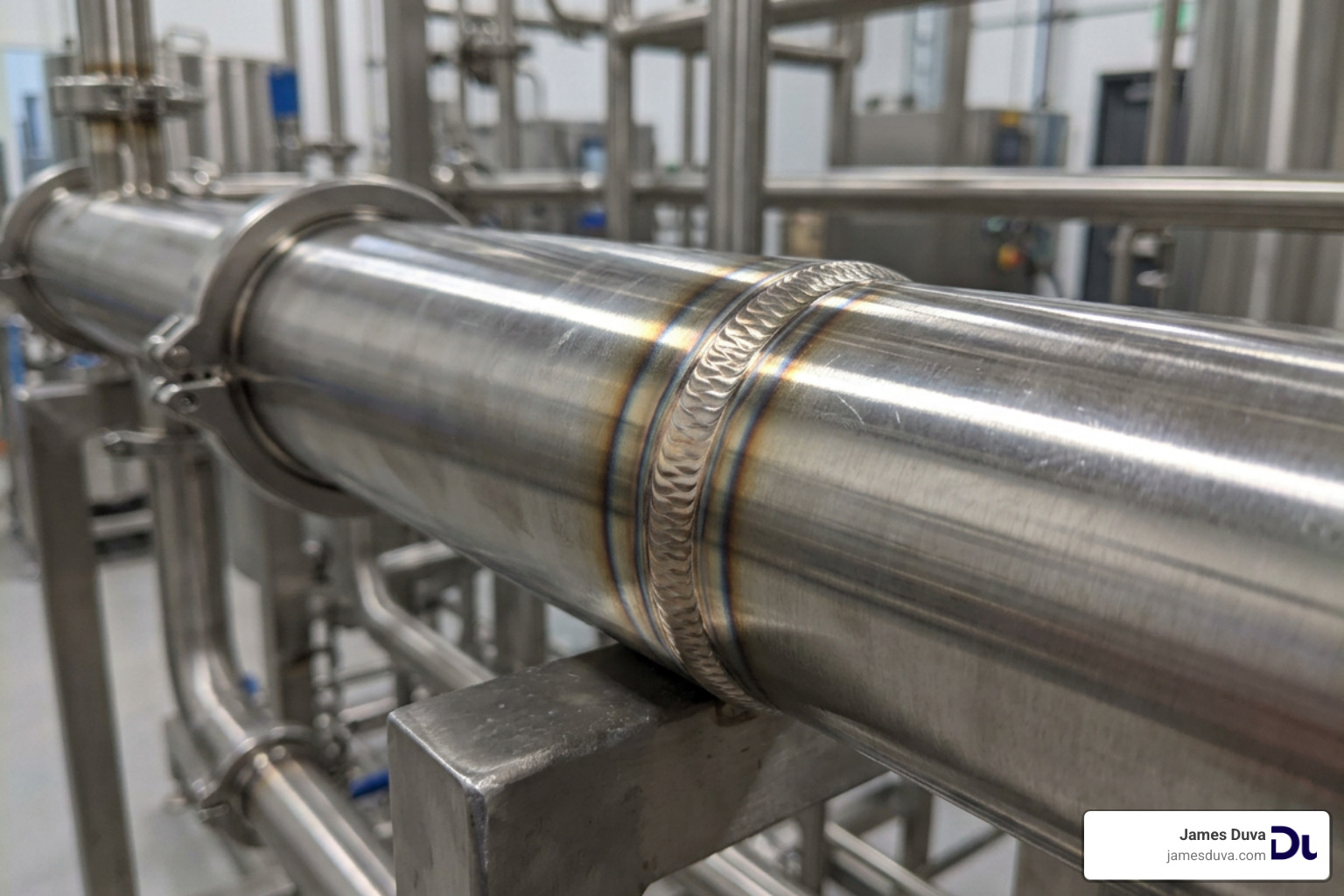
When joining stainless steel tubes, threaded connections are strictly prohibited on product contact surfaces. Threads create microscopic crevices that are impossible for cleaning solutions to reach. Instead, 3-A standards require permanent joints to be welded.
Sanitary welding must be performed using the Gas Tungsten Arc Welding (GTAW/TIG) method, utilizing an inert backing gas (such as argon) to protect the inside of the tube from oxidation (often called “sugarization”). The welds must comply with standards like AWS D18.1. They must be continuous, fully penetrating, and ground smooth to match the surrounding 32 microinch Ra finish.
Where lines must be disassembled for cleaning or inspection, sanitary clamp joints (such as Tri-Clamp fittings) are used. These joints rely on elastomeric gaskets to seal the connection. 3-A standards require these gaskets to fit substantially flush, with a maximum offset tolerance of 1/32 inch (0.79 mm). If a gasket protrudes into the flow path, it creates turbulence and a flow restriction; if it is recessed, it leaves a dead space where bacteria can multiply.
For high-purity control, selecting the right valve is equally critical. For instance, our Ball Valves are designed with flush-fitting cavity fillers to prevent product entrapment behind the ball. For a closer look at fluid control design, read Pouring Perfection: A Deep Dive into Beverage Sanitary Fittings.
Cleanability, Inspectability, and Drainage
A fundamental rule of 3-A design is that all product contact surfaces must be self-draining. Standing liquid is a breeding ground for bacteria.
- Tubing Pitch: Horizontal lines must have a minimum downward pitch of 1/8 inch per foot to ensure gravity drains all liquid.
- Flat Surfaces: Flat plates or vessel bottoms must pitch at a minimum of 1/4 inch per foot.
- Internal Radii: Sharp 90-degree internal corners are impossible to clean. 3-A standards require all internal angles of 135 degrees or less to have a minimum radius of 1/4 inch (6.35 mm). This gentle curve ensures that Clean-In-Place (CIP) spray balls can directly impact and scrub the surface.
A sharp 90-degree corner causes CIP fluid to bypass the corner, allowing soil to accumulate and fail inspection. A 1/4 inch curved radius lets CIP fluid smoothly sweep the corner, making it fully cleanable and compliant.
By eliminating “dead legs” (stagnant areas of piping where fluid does not circulate) and ensuring clear access for physical inspection, processors can minimize manual scrubbing. For details on sourcing compliant tubing, see our Product Categories: Sanitary Tubing section.
Parts Washing and Sanitization Equipment Applications
Sanitary standards do not just apply to the vessels that hold food; they also apply to the equipment used to clean those components. Industrial parts washers, COP (Clean-Out-of-Place) tanks, and automated sanitization cabinets must be fabricated to the same high standards.
According to research from 3-A Sanitary Standards: Requirements, Benefits, and Their Role in …, automated parts washing systems designed for food and pharmaceutical plants must utilize self-cleaning work tanks that completely drain and refill between wash and rinse stages. This prevents cross-contamination. The floors of these washing chambers must be sloped toward the drain to eliminate standing water, and the wash manifolds must feature sanitary spray jets that are easily removable for routine inspection.
3-A Certification, Accepted Practices, and the 3-A Symbol
To help processors quickly identify compliant equipment, 3-A SSI administers a strict licensing program.
3-A Sanitary Standards vs. Accepted Practices
It is important to understand the difference between the two primary types of documents published by 3-A SSI:
- 3-A Sanitary Standards: These apply to individual, specific pieces of equipment. They dictate how a pump, a valve, a tank, or a flow meter must be designed and fabricated.
- 3-A Accepted Practices: These apply to entire processing systems and installations. They cover how individual components are integrated, operated, and cleaned. Examples include accepted practices for High-Temperature Short-Time (HTST) Pasteurizer Systems, Clean-In-Place (CIP) Systems, and Culinary Steam Production.
A plant might buy 3-A certified valves and tubing, but they must still install and operate them in accordance with 3-A Accepted Practices to maintain regulatory compliance. For a step-by-step breakdown of how these standards are met, read What are 3-A Sanitary Standards and How to Meet Them.
P3-A Pharmaceutical Standards
In 2008, recognizing that the pharmaceutical industry had unique hygienic requirements that differed slightly from the dairy industry, 3-A SSI introduced the P3-A Pharmaceutical Standards.
These standards (such as ANSI/3-A P3-A 002 for materials) were specifically designed for equipment used in the manufacture of Active Pharmaceutical Ingredients (APIs). While they utilize the core cleanability principles of dairy standards as a baseline, P3-A standards place a much heavier emphasis on material traceability, cleaning validation protocols, and compatibility with aggressive organic solvents and high-temperature sterilization cycles.
Frequently Asked Questions about 3-A Sanitary Standards
What is the difference between 304 and 316 stainless steel in 3-A standards?
Both are approved AISI 300-series alloys, but 316 contains 2% to 3% molybdenum, whereas 304 does not. This extra element gives 316 vastly superior resistance to chloride pitting and acidic environments. In dairy processing, 304 is often perfectly adequate. However, for foods with high salt content, acidic juices, or systems cleaned with aggressive sanitizing chemicals, 316 (or its low-carbon version, 316L) is highly recommended. You can browse our complete valve offerings in our Product Categories: Sanitary Valves section.
Is 3-A certification mandatory for food processing equipment?
Technically, 3-A certification is voluntary. However, because state and federal inspectors (such as the FDA and USDA) use 3-A criteria to evaluate plants during inspections, using certified equipment is the most reliable way to guarantee your facility will pass regulatory audits. Sourcing non-certified equipment often leads to lengthy inspection delays and potential rejections.
What surface roughness (Ra) is required for 3-A compliance?
The baseline requirement for all product contact surfaces is a surface roughness of 32 microinches (0.8 micrometers) or smoother. This applies not just to the raw sheet metal or tubing, but also to all welded, ground, and polished joints within the product zone.
Conclusion
Navigating hygienic design can be challenging, but adhering to 3a sanitary standards stainless steel guidelines is the most effective way to ensure product safety, protect your brand, and maintain regulatory compliance.
At James Duva Inc., based in Branchburg, NJ, we have been helping companies solve complex piping and material challenges since 1978. Whether you are building a new food processing line, upgrading a chemical plant, or sourcing high-purity components, our team has the deep technical expertise and inventory to deliver the exact alloys you need. Ready to source compliant, high-grade components for your next project? Explore our full inventory in our Product Categories: Sanitary Fittings section or contact us today.
About James Duva Inc.
Since 1978, James Duva Inc. has been your trusted source for stainless steel and high-nickel alloy industrial products. Whether you’re in the water treatment, process or power industry, we pride ourselves on always having what you need. Say goodbye to your sourcing problems with just one call to James Duva.