
Finding Industrial Grade Metals That Will Not Melt Under Chemical Pressure
Oct 29, 2026
Why Are Alloys So Valuable in Industry?
Finding industrial-grade metals that will not melt under chemical pressure starts with selecting the right alloy class and a certified chemical resistant metal supplier. Austenitic and duplex stainless steels, along with high-performance nickel alloys, provide the mechanical strength and passive corrosion resistance needed for aggressive acids, chlorides, and high-temperature process streams. Sourcing these materials with full mill test reports and traceable heat numbers helps prevent premature wall thinning, deformation, and containment failures.
Pure metals straight from nature rarely have the exact mechanical and chemical profile needed for demanding commercial work. Unalloyed iron, for instance, is soft, malleable, and quickly oxidizes into hydrated iron oxides—commonly known as rust—when exposed to atmospheric moisture and oxygen. In a plant environment, relying on pure elements would result in rapid wall thinning, mechanical deformation, and sudden catastrophic containment failures.
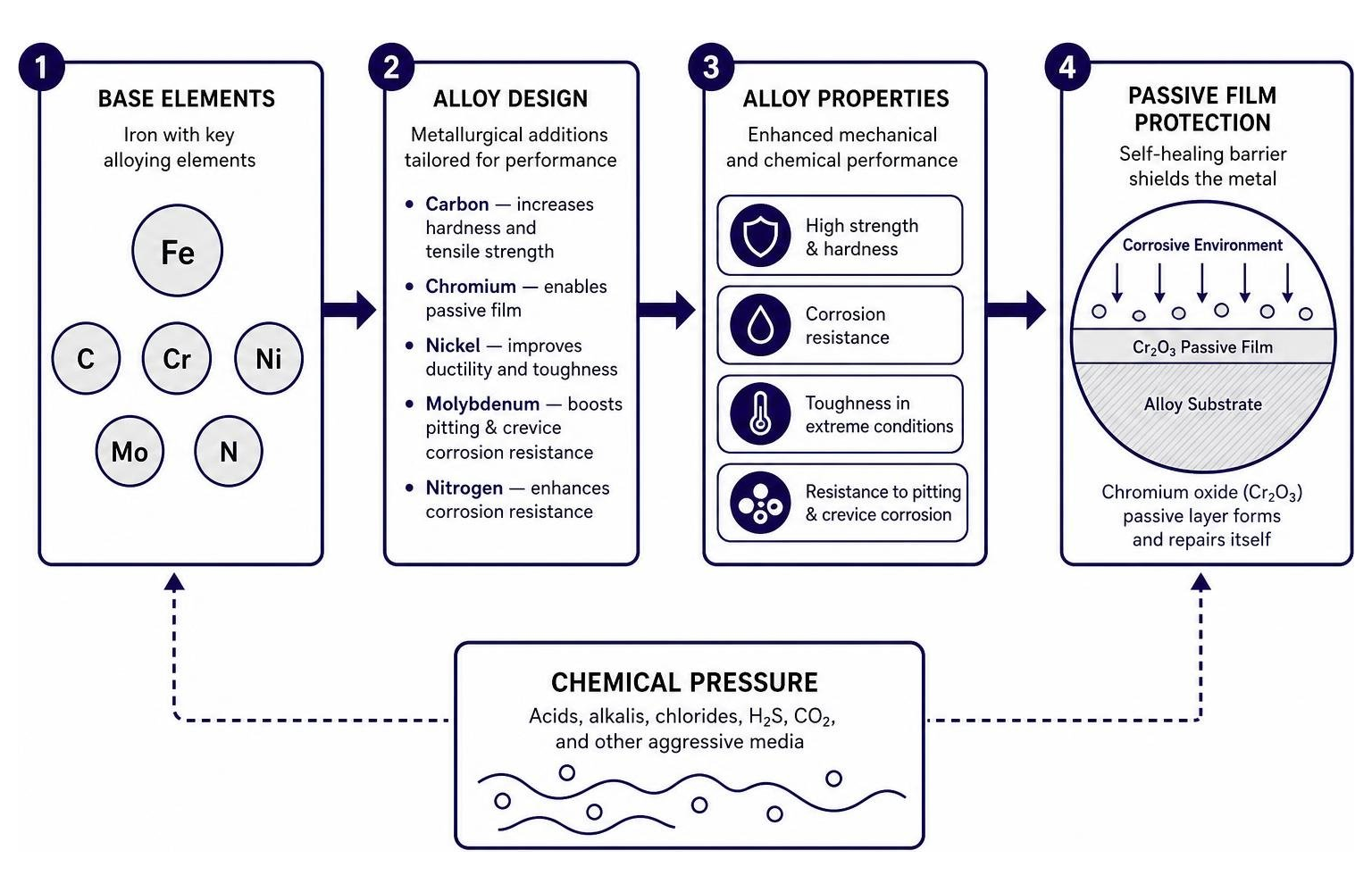
Alloying transforms these base elements into robust industrial materials. By introducing specific elements into an iron base, metallurgists manipulate the crystalline lattice to enhance yield strength, hardness, and chemical stability:
- Carbon: Increases hardness and tensile strength in standard carbon steels, though it requires protective coatings to prevent rapid oxidation in wet environments.
- Chromium: The cornerstone of stainless steel. When added at concentrations above 10.5%, chromium reacts spontaneously with oxygen to form an invisible, self-healing chromium oxide passive layer that shields the underlying metal from corrosive media.
- Nickel: Stabilizes the austenitic crystal structure, boosting ductility, toughness at cryogenic temperatures, and resistance to reducing acids.
- Molybdenum and Nitrogen: Enhance localized resistance against pitting and crevice corrosion, particularly in high-chloride solutions.
Engineers rely on The Definitive Guide to Alloy Selection for Chemical Processing to evaluate these metallurgical additions across diverse sectors:
- Construction: Structural beams, architectural facades, and reinforced piping systems require alloys that handle high mechanical loads without atmospheric degradation.
- Oil & Gas: High-pressure subsea fittings, downhole tubulars, and flanges demand alloys that resist hydrogen sulfide sour gas, carbon dioxide, and high-salinity brines.
- Automotive & Aerospace: Structural frames, turbine exhausts, and engine components need high strength-to-weight ratios and resistance to combustion byproducts at elevated temperatures.
- Medical & Consumer Goods: Surgical implants, sanitary process piping, and commercial kitchenware depend on non-reactive, biocompatible alloys that resist aggressive sterilization chemicals and organic acids.
Top Industrial Alloys for Extreme Chemical Resistance
When chemical processes subject piping, vessels, and valves to corrosive acids, caustic alkalis, and cyclic thermal stresses, picking the proper alloy classification is the primary line of defense.
Austenitic and Super Austenitic Stainless Steels
Standard austenitic stainless steels, such as Grade 304, provide solid baseline performance in mild environments, light washdowns, and atmospheric handling. However, when process streams introduce organic solvents, sulfuric acid, or trace chlorides, standard grades rapidly suffer localized pitting.
Upgrading to molybdenum-bearing grades resolves these vulnerabilities. Understanding 316 stainless steel corrosion resistance is essential for operators handling moderate acids and agricultural feedstocks. For operations working with aggressive chemical inputs—such as hot organic acids, phosphoric acid, and solvent mixtures like those supplied by GJ Chemical – NJ Chemical Supplier – Solvents, Acrylates, Monomers and More—super austenitic grades like 254SMO (6% molybdenum) provide an effective shield against chloride-induced stress corrosion cracking without the need to immediately transition to high-nickel materials.
Duplex and Super Duplex Stainless Steels
Duplex stainless steels feature an engineered 50/50 two-phase microstructure consisting of alternating grains of austenite and ferrite. This balance gives duplex alloys roughly double the yield strength of standard austenitic grades while delivering exceptional resistance to chloride stress corrosion cracking (CSCC).
Comparing Duplex 2205 vs super duplex stainless steel performance reveals clear operational boundaries. Standard 2205 duplex delivers outstanding performance in chemical tanker holds, pulp and paper bleaching lines, and flue-gas desulfurization (FGD) scrubbers. In extreme seawater cooling loops, offshore topside piping, and high-pressure reverse osmosis systems, super duplex grades (such as 2507) leverage higher Pitting Resistance Equivalent Numbers (PREN $ge 42$) to prevent localized breakdown under stagnant chloride conditions.
High-Performance Nickel Alloys
When process conditions combine boiling mineral acids (hydrochloric, hydrofluoric, sulfuric), severe oxidizing salts, and high operating pressures, iron-based alloys reach their chemical limits. In these extreme environments, corrosion resistant nickel alloys are the industry benchmark.
Reviewing Hastelloy C-276 properties shows why this nickel-molybdenum-chromium alloy is an essential workhorse in severe chemical processing. Its high molybdenum (16%) and tungsten (3.5%) concentrations offer resistance to wet chlorine gas, hypochlorite, and chlorine dioxide solutions. For marine exhausts and high-stress piping exposed to cyclic thermal shock and pitting, Inconel 625 uses a nickel-chromium matrix strengthened with molybdenum and niobium to maintain mechanical integrity up to 1800°F (982°C).
Additionally, specialized spinodal-hardened copper-nickel-tin alloys, such as High-Strength ToughMet Alloys for Demanding Applications, provide unique mechanical solutions. For example, ToughMet 3 AT delivers a tensile strength up to 140 ksi while retaining its mechanical capacity at elevated temperatures. ToughMet 3 CX provides tensile strength up to 120 ksi and a hardness of HRC 34 with high machinability, while ToughMet 3 TS offers tensile strength up to 150 ksi for extreme wear conditions. These non-magnetic, lead- and beryllium-free alloys resist galling, saltwater corrosion, hydrogen embrittlement, and sulfide stress cracking better than traditional bronzes or standard steels.
Comparing Chemical Resistant Metals to Alternative Materials
Engineers evaluating process piping systems often weigh high-performance metallic alloys against non-metallic alternatives such as fluoropolymers (PTFE, PVDF), fiberglass-reinforced plastics (FRP), and industrial ceramics. While plastics offer low initial material costs and high chemical inertness to specific room-temperature acids, they suffer from mechanical creep, low pressure thresholds, and vulnerability to catastrophic thermal shock.
| Material Class | Typical Grades / Types | Corrosion Resistance Spectrum | Maximum Operating Temperature | Mechanical Ductility & Shock Resistance | Total Lifecycle Cost Factor |
|---|---|---|---|---|---|
| Austenitic Stainless | 304L, 316L, 317L | Moderate; excellent for atmospheric, food, and mild organic acids. Vulnerable to hot chlorides. | 1500°F (815°C) structural; 1000°F (538°C) corrosive | High ductility; exceptional impact resistance across temperatures. | Low to Moderate (Standard availability) |
| Super Austenitic | 254SMO, AL-6XN | High; resists localized pitting and crevice corrosion in chloride/bleach streams. | 800°F–1000°F (427°C–538°C) | High ductility; superior elongation and formability. | Moderate to High (Capital-efficient nickel alternative) |
| Duplex Stainless | Duplex 2205, Super Duplex 2507 | Very High; excellent against chloride stress corrosion and erosion-corrosion. | -58°F to 572°F (-50°C to 300°C) | High strength; good toughness, but subject to 475°C embrittlement. | Moderate (Down-gauging wall thickness cuts weight) |
| Nickel-Base Alloys | Hastelloy C-276, Inconel 625, Alloy 20 | Exceptional; resists hot mineral acids, wet chlorine, sour gas, and oxidizing media. | 1800°F–2100°F (982°C–1149°C) | Superior ductility, thermal stability, and cyclic fatigue resistance. | High Initial / Very Low Lifecycle (Prevents plant downtime) |
| Engineered Plastics | PTFE, PVDF, FRP | High against specific room-temperature acids; poor against solvents and high friction. | 250°F–300°F (121°C–149°C) | Low ductility; prone to thermal expansion, creep, and brittle rupture. | Low Initial / High Lifecycle (Frequent gasket/line replacement) |
| Technical Ceramics | Alumina, Silicon Carbide | Extreme chemical inertness and hardness; completely immune to acid oxidation. | >2500°F (1370°C) | Zero ductility; highly brittle, susceptible to mechanical shock. | High (Complex fabrication and high installation fragility) |
Metals provide unmatched mechanical ductility, allowing process lines to absorb hydraulic hammer, rapid pressure spikes, and broad thermal expansion cycles without brittle fracturing.
Key Criteria When Choosing a Chemical Resistant Metal Supplier
A failure in a chemical process line causes downtime, environmental hazards, and severe safety risks. Sourcing fluid-handling components requires partnering with an established, quality-focused distributor who understands the metallurgical demands of severe operating environments.
How a Chemical Resistant Metal Supplier Verifies Material Certifications
A dependable specialty alloy distributor backs every inventory item with verifiable documentation. When vetting stainless steel and alloy suppliers, confirm that their quality management program includes:
- Complete Certified Material Test Reports (CMTRs / MTRs): Full chemical composition and mechanical test results (tensile, yield, elongation, hardness) tied directly to the production melt.
- Positive Material Identification (PMI): Utilizing portable X-ray fluorescence (XRF) or optical emission spectrometry (OES) to verify alloy composition on incoming and outgoing stock.
- Traceable Heat Numbers: Every length of pipe, tube, flange, and fitting must bear permanent, legible heat numbers that trace directly back to the original mill test reports.
- Specification Adherence: Documented compliance with ASTM, ASME, NACE/ISO 15156 (for sour gas service), and AMS specifications.
Vetting Your Chemical Resistant Metal Supplier for Harsh Environments
Beyond test reports, evaluate the supplier’s technical depth, inventory breadth, and logistics management:
- Inventory Depth Across Product Forms: A dependable supplier stocks matched components—seamless and welded pipe, plate, round bar, fittings, and flanges—eliminating metallurgical mismatches between interconnected piping items.
- Critical Fluid Control Integration: Ensure the distributor provides industrial-grade flow-control components, such as high-integrity Ball Valves, built from compatible corrosion-resistant alloys to prevent galvanic attack across valve seats and line connections.
- Traceable Sourcing: Reliable distributors maintain strict supply-chain controls, ensuring metals are sourced from vetted domestic and international mills with verified quality systems.
Maintenance and Failure Mitigation Strategies for Process Equipment
Even high-performance alloys require proper operational and maintenance practices to achieve their full service life. Installing the right alloy is only the first step; maintaining its passive protective state prevents premature localized failure.
- Post-Fabrication Pickling and Passivation: Welding leaves heat tint and iron contamination on the metal surface that depletes local chromium levels. Chemical pickling baths (hydrofluoric/nitric acid) strip away scale, followed by citric or nitric acid passivation to restore the protective chromium oxide layer.
- Galvanic Isolation: When joining dissimilar metals (e.g., standard stainless steel to high-nickel alloys), use non-conductive dielectric flange isolation kits and bolt sleeves to prevent galvanic corrosion driven by electrochemical potential differences.
- Elimination of Crevices: Minimize sharp 90-degree internal corners, threaded joints in high-particulate lines, and poor gasket seating where stagnant fluids concentrate chlorides and deplete local oxygen levels.
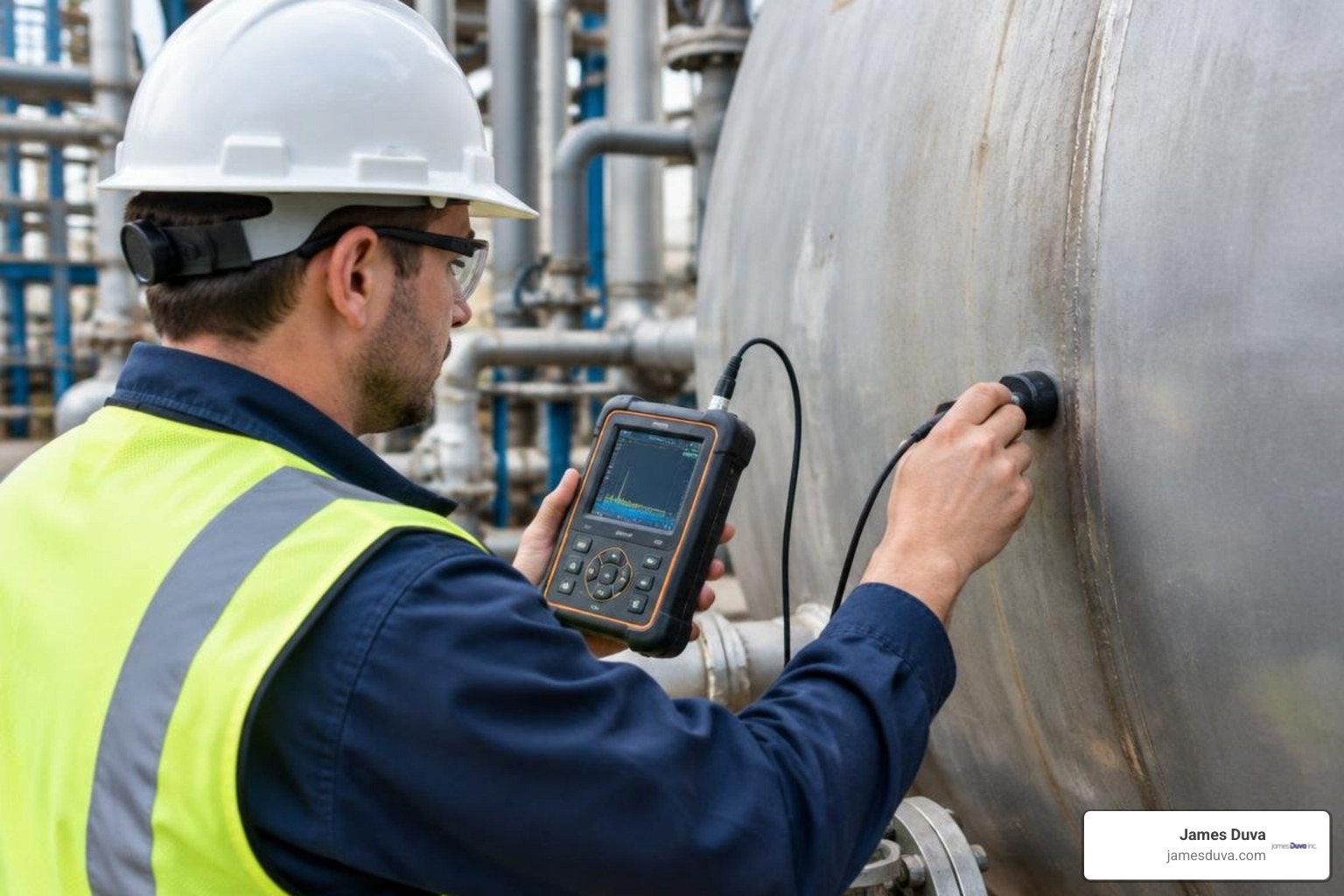
- Scheduled Non-Destructive Testing (NDT): Implement routine ultrasonic wall-thickness scanning, dye-penetrant surface checks on high-stress weld joints, and eddy-current inspections to catch subsurface micro-fissuring and pitting before wall breach occurs.
Frequently Asked Questions About Chemical Resistant Metals
How do operating temperature and pH accelerate metal corrosion?
Corrosion is an electrochemical process governed by chemical thermodynamics and kinetics. As operating temperatures increase, the activation energy for oxidation drops, accelerating corrosion rates. Extreme pH levels attack the metal’s passive oxide barrier: highly acidic environments with a pH below 3 supply high concentrations of hydronium ions that dissolve the passive film, while highly caustic environments with a pH above 12 strip protective oxides through caustic gouging and induce caustic embrittlement under mechanical stress.
What causes stress corrosion cracking in high-pressure chemical systems?
Stress Corrosion Cracking (SCC) occurs from the simultaneous interaction of three factors:
- Sustained tensile stress (either operating hoop stress from high pressure or residual stress from cold bending and welding).
- A specific corrosive environment (such as aqueous chlorides or hydrogen sulfide).
- A susceptible alloy microstructure (such as standard 304 or 316 austenitic stainless steels operating above 140°F / 60°C).
The corrosive media exploits micro-defects, causing cracks to propagate rapidly along grain boundaries (intergranular) or through the metal grains (transgranular), often resulting in sudden, catastrophic failure without prior visible thinning.
Why is material traceability critical when purchasing chemical resistant alloys?
Without end-to-end heat-number traceability linked to verified Mill Test Reports, operators risk installing substandard or misidentified materials. In high-pressure, acidic, or sour gas systems, an unverified fitting made from a lower-grade stainless steel can dissolve, stress-crack, or rupture within days. This can trigger hazardous fluid releases, OSHA violations, unplanned plant shutdowns, and serious personnel risks.
Conclusion
Safeguarding process operations against chemical corrosion, thermal cycling, and high operating pressures begins with intelligent metallurgical selection. Whether your application demands the balanced strength of duplex stainless steels, the deep acid resistance of Hastelloy and Inconel, or the high-wear capability of specialized copper alloys, selecting the right material is essential for safe, long-term plant operations.
At James Duva Inc., our team has provided dedicated specialty metal distribution, technical guidance, and reliable inventory management from Branchburg, NJ since 1978. Source your high-integrity fluid-handling components directly from our comprehensive James Duva stainless steel inventory and our complete line of severe-service corrosion resistant industrial valves to keep your critical systems operating safely under chemical pressure.
About James Duva Inc.
Since 1978, James Duva Inc. has been your trusted source for stainless steel and high-nickel alloy industrial products. Whether you’re in the water treatment, process or power industry, we pride ourselves on always having what you need. Say goodbye to your sourcing problems with just one call to James Duva.