
Hastelloy vs Inconel: Choosing the Right High-Performance Alloy
Sep 1, 2026
When Standard Metals Fail: Understanding Hastelloy vs Inconel
When engineers face the hastelloy vs inconel decision, the stakes are high — the wrong choice can mean catastrophic failure in extreme heat, aggressive acids, or corrosive marine environments.
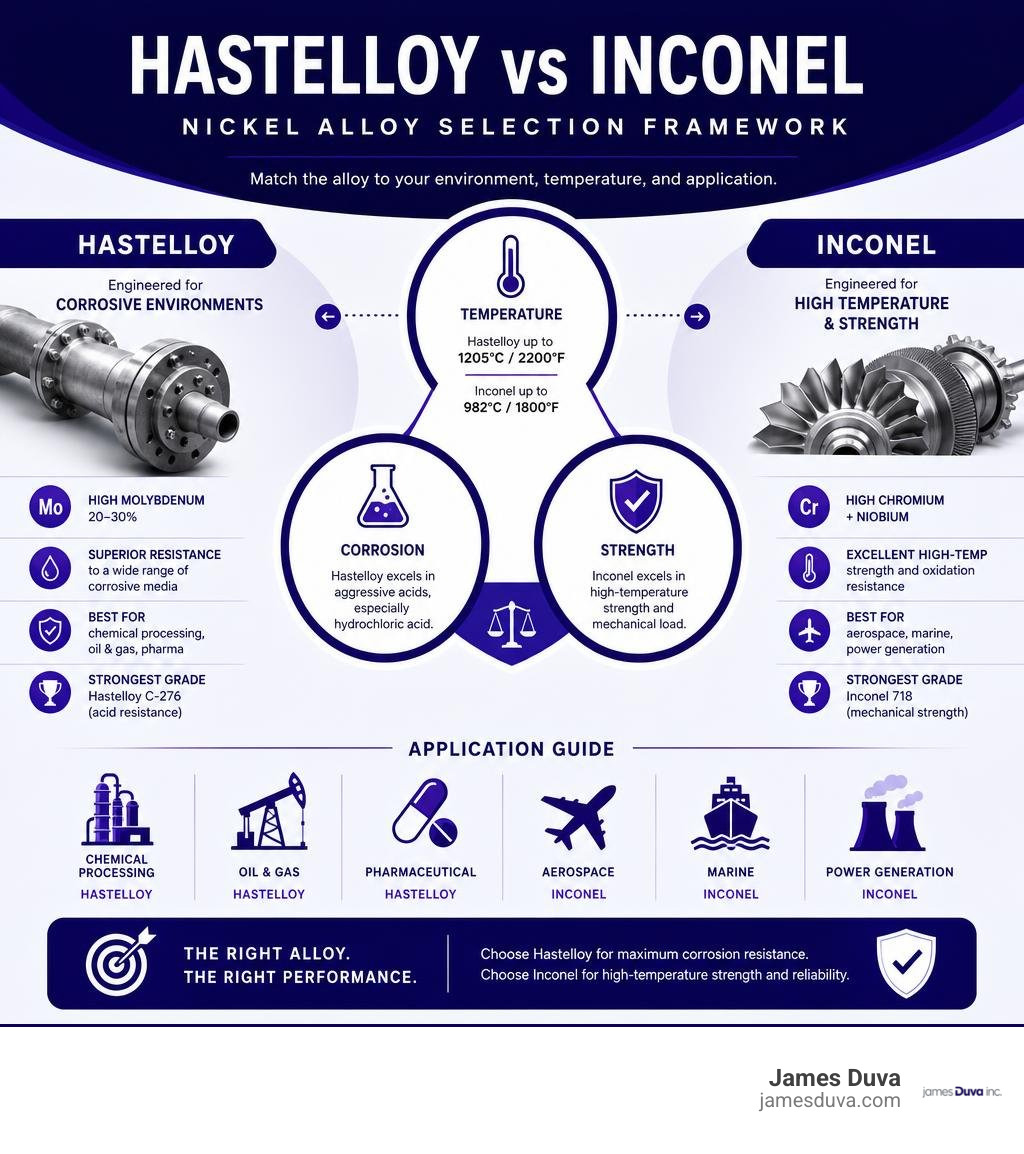
Here is a quick-reference comparison to help you decide:
| Factor | Hastelloy | Inconel |
|---|---|---|
| Best for | Corrosive chemical environments | High-temperature structural applications |
| Key element | High molybdenum (20-30%) | High chromium + niobium |
| Max service temp (example grades) | Up to 1205°C / 2200°F (Hastelloy X) | Up to 982°C / 1800°F (Inconel 625) |
| Strongest grade | Hastelloy C-276 (acid resistance) | Inconel 718 (mechanical strength) |
| Typical industries | Chemical processing, oil & gas, pharma | Aerospace, marine, power generation |
| Relative machinability | More difficult | Slightly easier |
Both are nickel-based superalloys that far outperform standard stainless steel in demanding conditions. But they are not interchangeable. Hastelloy excels where aggressive acids — especially hydrochloric acid — would destroy other metals. Inconel excels where extreme heat and mechanical load must be handled simultaneously.
Choosing the wrong one is a costly mistake. This guide breaks down exactly where each alloy wins, grade by grade.
I’m Billy Walker, Vice President of James Duva Inc., where we’ve been supplying high-nickel alloys — including both hastelloy vs inconel grades — to chemical processing, power, and water treatment industries since 1978. If you want to skip straight to sourcing the right material, our team is ready to help.
Why Are Alloys So Valuable in Industry?
To appreciate why superalloys exist, we must first look at the basic limitations of pure metals. Elemental metals like pure iron are often too soft for heavy structural duty, and iron is notoriously susceptible to atmospheric moisture and oxygen, leading to destructive rusting. Even basic carbon steel, while immensely strong, succumbs quickly to severe corrosion when exposed to salt, acids, or ambient humidity.
By combining pure metals with precise ratios of other elements, engineers create alloys that deliver exceptional structural integrity and chemical immunity. For example, adding chromium to steel creates stainless steel, forming a protective chromium oxide layer that stops rust in its tracks. However, as operating environments push into severe thermal and chemical regimes, conventional stainless steels reach their mechanical and corrosion limits.
High-performance alloys are critical across major global sectors:
- Construction: Heavy structural beams, high-strength tension cables, and critical architectural piping rely on customized metallic alloys to resist weather and maintain yield strength over decades.
- Oil & Gas: Severe downhole conditions involve hydrogen sulfide, chlorides, high pressure, and heat. Heavy-duty pipe fittings, flanges, and high-pressure Ball Valves require specialized nickel alloys to avoid stress corrosion cracking and localized pitting.
- Automotive & Aerospace: Lightweight structural frames, jet engine turbines, rocket combustion chambers, and exhaust manifolds depend on heat-resistant alloys that maintain high tensile strength under extreme cyclic stresses.
- Medical & Consumer Goods: Bio-compatible metallic alloys power orthopedic implants, surgical tools, and durable commercial kitchenware where resistance to sanitizing chemicals and bodily fluids is non-negotiable.
When standard materials reach their breaking point, engineers turn to nickel-based superalloys like Hastelloy and Inconel. To learn more about how metals manage hostile conditions, explore our guide on Metals That Can Take the Heat and the Rust: A Comprehensive Guide.
Hastelloy vs Inconel: Key Differences in Chemical Composition
While both Hastelloy and Inconel belong to the austenitic nickel-based alloy family, their elemental recipes are optimized for distinct physical threats. The core difference boils down to how each alloy family uses alloying additions like molybdenum, chromium, iron, niobium, tungsten, and cobalt to manipulate atomic structures.
Hastelloy alloys are formulated with heavy concentrations of molybdenum (often 16% to 30%), combined with nickel and chromium. This high molybdenum ratio imparts extraordinary resistance to reducing chemicals and acid media. In contrast, Inconel alloys prioritize high chromium content (typically 20% to 30%) paired with high nickel, supplemented by strengthening agents like niobium, aluminum, and titanium. Chromium forms an adherent, self-healing chromium oxide film that shields the underlying substrate against high-temperature oxidation and scaling.
The matrix below illustrates the chemical differences between representative grades:
| Elemental Component | Hastelloy C-276 | Hastelloy X | Inconel 625 | Inconel 718 |
|---|---|---|---|---|
| Nickel (Ni) | Balance (~57%) | ~47% | Balance (~58%) | 50.0 – 55.0% |
| Chromium (Cr) | 14.5 – 16.5% | 20.5 – 23.0% | 20.0 – 23.0% | 17.0 – 21.0% |
| Molybdenum (Mo) | 15.0 – 17.0% | 8.0 – 10.0% | 8.0 – 10.0% | 2.8 – 3.3% |
| Iron (Fe) | 4.0 – 7.0% | 17.0 – 20.0% | 5.0% max | Balance (~17%) |
| Niobium (Nb) / Ta | — | — | 3.15 – 4.15% | 4.75 – 5.50% |
| Tungsten (W) | 3.0 – 4.5% | 0.2 – 1.0% | — | — |
| Cobalt (Co) | 2.5% max | 0.5 – 2.5% | 1.0% max | 1.0% max |
These additions govern solid solution strengthening — a metallurgical process where foreign atoms sit within the nickel gamma face-centered cubic (FCC) lattice, distorting the structure and preventing crystal planes from sliding past each other under stress. For a deeper breakdown of chemical matrices, read our article Comparing Hastelloy X and Inconel 625: Comprehensive Guide.
Hastelloy Composition and Microstructure
The microscopic design of Hastelloy centers on molybdenum richness. In grades like Hastelloy C-276 and Hastelloy B-3, molybdenum atoms fit tightly within the nickel gamma matrix, stabilizing the microstructural grain boundaries. This microstructural arrangement offers unmatched protection against active reducing acids.
In addition, Hastelloy grades utilize small, controlled additions of tungsten and cobalt to promote carbide dispersion along grain boundaries. These fine secondary-phase carbides prevent grain boundary sliding at elevated temperatures, maintaining structural coherence in hot, active chemical environments. For instance, Hastelloy B-3 is specially tailored with low carbon and silicon levels to eliminate damaging microstructural intermetallic phase precipitation during welding and thermal processing. You can review more on these specific properties in our overview of Hastelloy C-276 101: Key Alloy Properties Compared.
Inconel Composition and Microstructure
Inconel relies heavily on high chromium concentrations paired with niobium, titanium, and aluminum to establish exceptional high-temperature stability. In solid-solution grades like Inconel 625, niobium works alongside molybdenum to distort the atomic matrix, delivering high room-temperature and elevated-temperature strength without requiring precipitation heat treatment.
In age-hardenable superalloys like Inconel 718, niobium forms coherent, metastable gamma double prime ($gamma”$) body-centered tetragonal precipitates ($Ni_3Nb$) within the matrix. These fine sub-micron precipitates act as obstacles to dislocation movement, enabling Inconel 718 to achieve tensile strengths up to 1375 MPa (200 ksi) at room temperature. The stable gamma matrix and oxidation-resistant oxide scale keep Inconel structural components intact under thermal stress. Read more about these microstructural characteristics in our guide on Inconel 625 UNS N06625: Properties, Applications, and Future Innovations.
High-Temperature Performance and Mechanical Properties
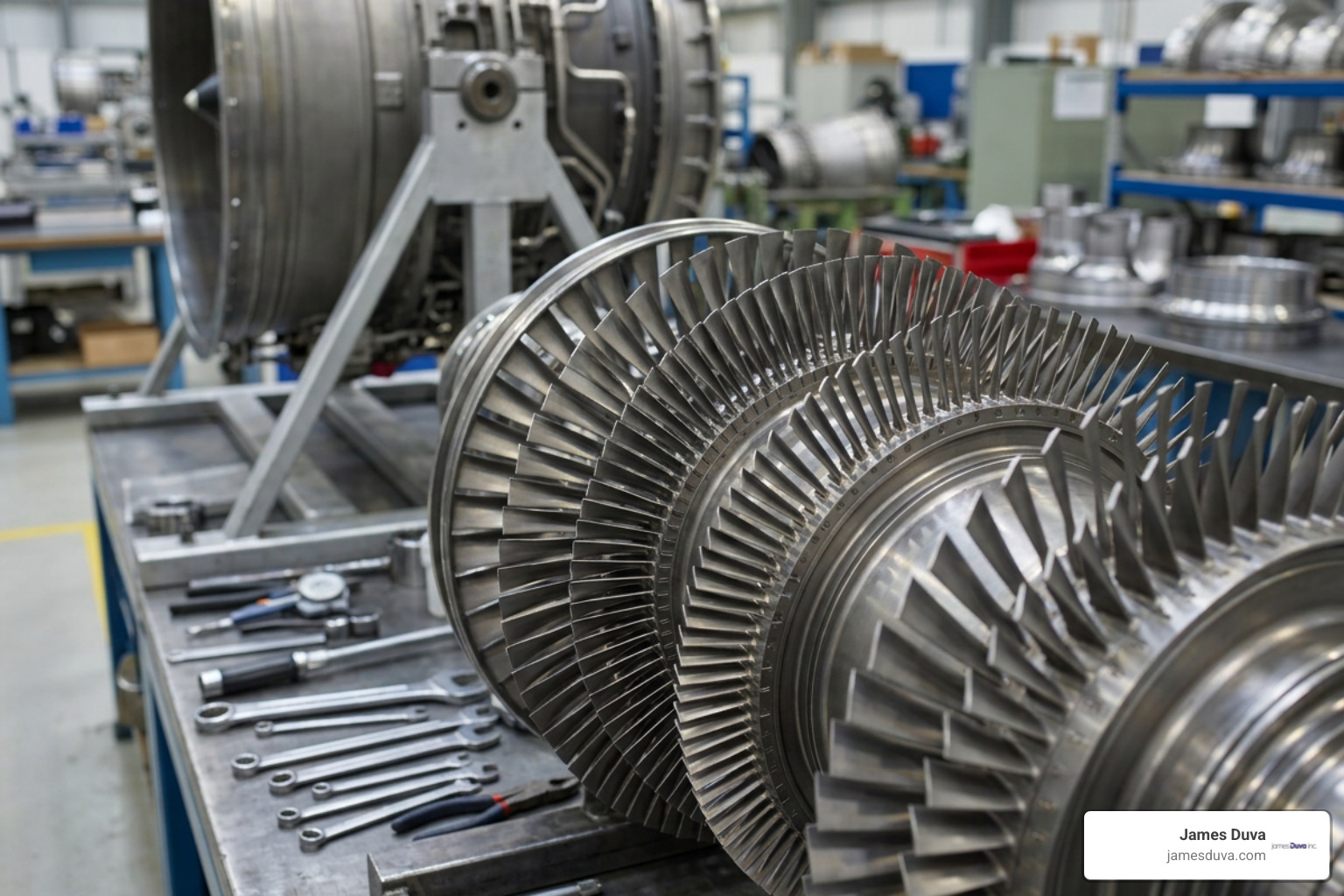
When selecting between hastelloy vs inconel for elevated-temperature service, engineers must evaluate yield strength retention, creep resistance, oxidation resistance, and scaling threshold. Creep is the tendency of a solid material to slowly deform permanently under persistent mechanical stress at elevated temperatures, while scaling refers to the continuous formation and flaking of surface oxides.
Inconel alloys are renowned for mechanical load-bearing capacity under high thermal loads. However, specific Hastelloy grades, such as Hastelloy X, offer continuous oxidation and thermal stability at temperatures that exceed the service envelope of many Inconel alloys.
Comparing Hastelloy vs Inconel at High Temperatures
A direct thermal comparison highlights key mechanical differences between representative grades:
- Hastelloy X can operate in continuous service at temperatures up to approximately 1205°C (2200°F), offering excellent oxidation resistance, carburization defense, and resistance to thermal shock in furnace and turbine environments.
- Inconel 625 maintains structural integrity up to a maximum service temperature of roughly 982°C (1800°F) for oxidation resistance, though its optimal mechanical strength envelope peaks near 650°C to 816°C (1200°F – 1500°F).
- Inconel 718 delivers maximum mechanical load capacity up to 700°C (1300°F). Beyond 700°C, its gamma double prime precipitates begin to over-age and coarsen, leading to a loss of yield strength.
- Inconel X-750 provides structural spring and fastener capability up to 816°C (1500°F).
Mechanical strength metrics at room temperature demonstrate distinct design trade-offs:
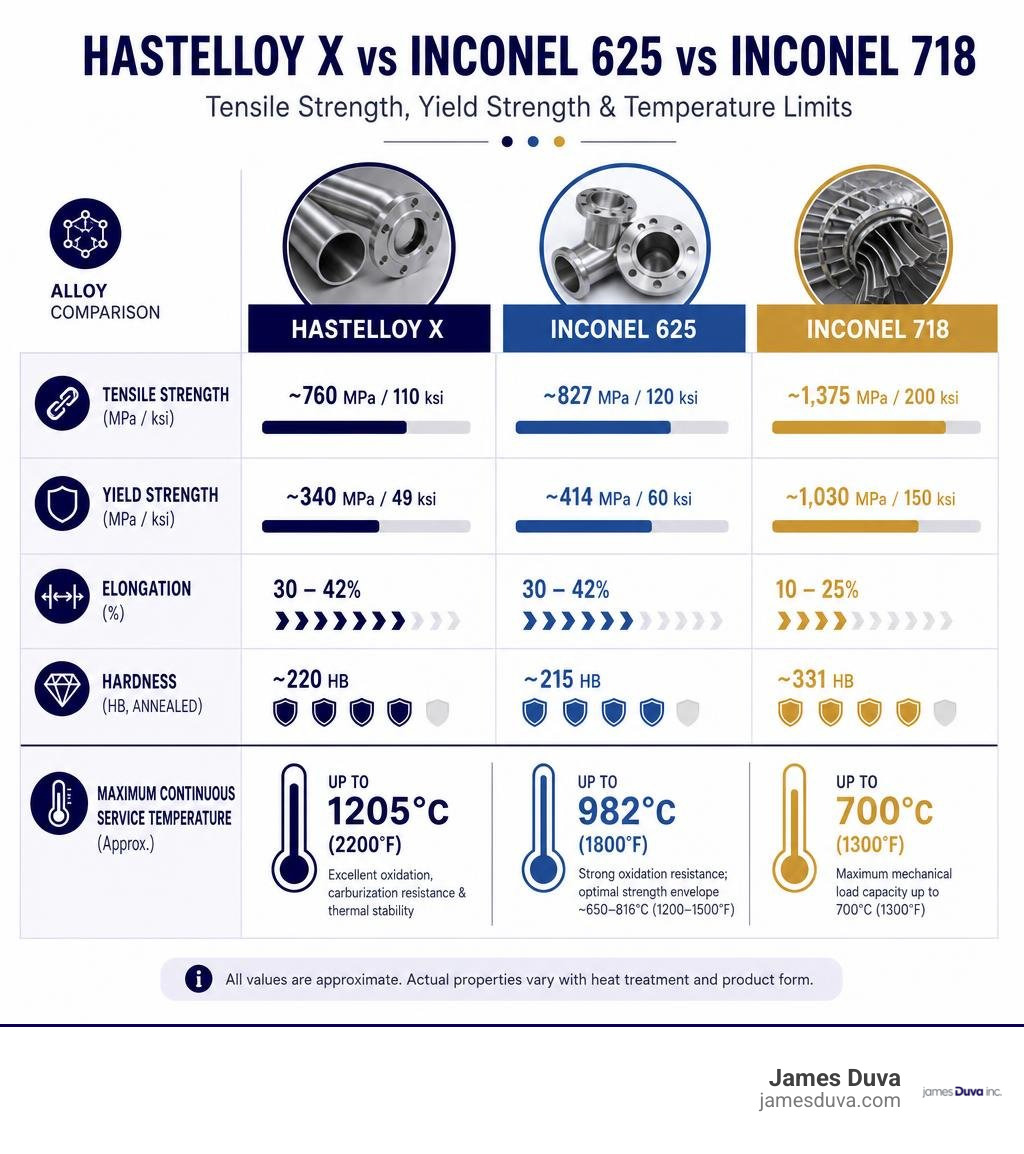
Inconel 625 exhibits a higher room-temperature tensile strength (~827 MPa / 120 ksi) compared to Hastelloy X (~760 MPa / 110 ksi), alongside a higher yield strength (~414 MPa vs ~340 MPa). Both Hastelloy X and Inconel 625 showcase comparable elongation values of around 30% to 42%, reflecting excellent inherent ductility.
In terms of material hardness, annealed Hastelloy X measures slightly harder (~220 HB) than annealed Inconel 625 (~215 HB or ~190 HB depending on heat treatment state). For an in-depth discussion on high-temperature behavior, see the external analysis High-Temperature Alloy Dilemma: Weighing Inconel vs Hastelloy.
Corrosion Resistance in Acidic and Marine Environments
Corrosion mechanisms fall into two primary chemical categories: reducing environments and oxidizing environments. Reducing media (such as pure hydrochloric acid, dilute sulfuric acid, and organic acids) lack oxygen, preventing standard stainless steel from forming a protective oxide layer. Oxidizing environments (such as nitric acid, ferric chloride, and hot chromic acid) contain oxygen or oxidizing species that readily promote passive oxide film formation.
Understanding the difference between reducing and oxidizing attacks is essential when choosing between hastelloy vs inconel.
Chemical Performance in Hydrochloric Acid and Reducing Media
When managing severe reducing acids, Hastelloy is the industry standard. This performance stems directly from its high molybdenum content. Molybdenum resists localized breakdown in non-oxidizing acid solutions, preventing severe uniform thinning and localized pitting attack.
Hastelloy B-3 is specifically optimized for aggressive reducing media. It demonstrates immunity to hydrochloric acid across all concentrations and temperatures, up to boiling points. While standard alloys dissolve rapidly in hot hydrochloric acid, Hastelloy B-3’s high molybdenum architecture remains stable.
Similarly, Hastelloy C-276 incorporates 16% molybdenum alongside 16% chromium and 4% tungsten, making it exceptionally versatile in chemical processing equipment, flue gas desulfurization (FGD) scrubbers, and industrial waste treatment vessels where wet chlorine gas, hypochlorites, and chlorine dioxide are present. Explore further details in our technical article Is Hastelloy Better than Inconel for Acid Environments?.
Seawater and Chloride Resistance in Marine Applications
In marine and offshore environments, metals face pitting, crevice corrosion, and chloride-induced stress corrosion cracking (SCC). Pitting occurs when chloride ions penetrate weak points in passive films, causing rapid localized cavity formation. Crevice corrosion occurs in shielded gaps, such as under gaskets or thread joints, where stagnant liquid depletes oxygen.
Inconel 625 excels in marine applications due to its balanced combination of nickel (~58%), chromium (~22%), molybdenum (~9%), and niobium (~3.5%). Its high Pitting Resistance Equivalent Number (PREN) enables Inconel 625 to withstand continuous immersion in stagnant seawater, splash zones, and hot marine exhaust systems without suffering pitting or crevice attack. Subsea wellheads, offshore platform piping, propeller blades, and marine umbilical lines frequently specify Inconel 625.
While Hastelloy C-276 also handles marine environments effectively, Inconel 625 is typically more cost-effective for general marine duty where extreme reducing acid performance is unnecessary. For a direct comparison, review our guide on Inconel vs Hastelloy: Which is Better for Corrosive Environments?.
Fabrication, Machinability, and Industry Applications
Because both Hastelloy and Inconel are high-alloy superalloys, fabricating, welding, and machining them requires strict adherence to specialized procedures. Both material families work-harden rapidly, generate high tool temperatures, and exert heavy cutting forces on machine tools.
Machinability and Weldability Considerations
Machining Hastelloy or Inconel requires heavy-duty machine setups, ultra-rigid tooling, high-torque spindles, and abundant high-pressure coolant supply. To manage rapid work-hardening, machinists should use lower cutting speeds, positive rake tooling, and continuous, heavy feed rates to ensure the cutting tool stays beneath the work-hardened surface layer.
- Machinability: Inconel 625 is slightly easier to machine than Hastelloy X or Hastelloy C-276 due to its lower relative hardness and stable matrix structure. Hastelloy’s high molybdenum content accelerates carbide tool wear, requiring conservative speed adjustments.
- Weldability: Inconel alloys (such as Inconel 600 and 625) offer good weldability using Gas Tungsten Arc Welding (GTAW/TIG) or Gas Metal Arc Welding (GMAW/MIG) with matching ERNiCrMo-3 filler metals. Inconel 718 features outstanding resistance to post-weld strain-age cracking, which is rare for a precipitation-hardened superalloy.
- Hastelloy Welding: Hastelloy alloys, particularly C-276 and C-22, can be successfully welded using matching filler wire (e.g., ERNiCrMo-4). However, precise heat input control is vital to minimize heat-affected zone (HAZ) grain growth. Solution annealing heat treatment at 1150°C (2100°F) followed by rapid quenching is often recommended after heavy forming to restore maximum ductility and corrosion resistance.
To source solid stock for turned components, consult our inventory guide on Nickel Alloy Round Rod and Bar: Inconel, Hastelloy, and Beyond.
Hastelloy vs Inconel Grade Selection Criteria
Selecting between specific grades requires evaluating primary environmental threats against component mechanical demands:
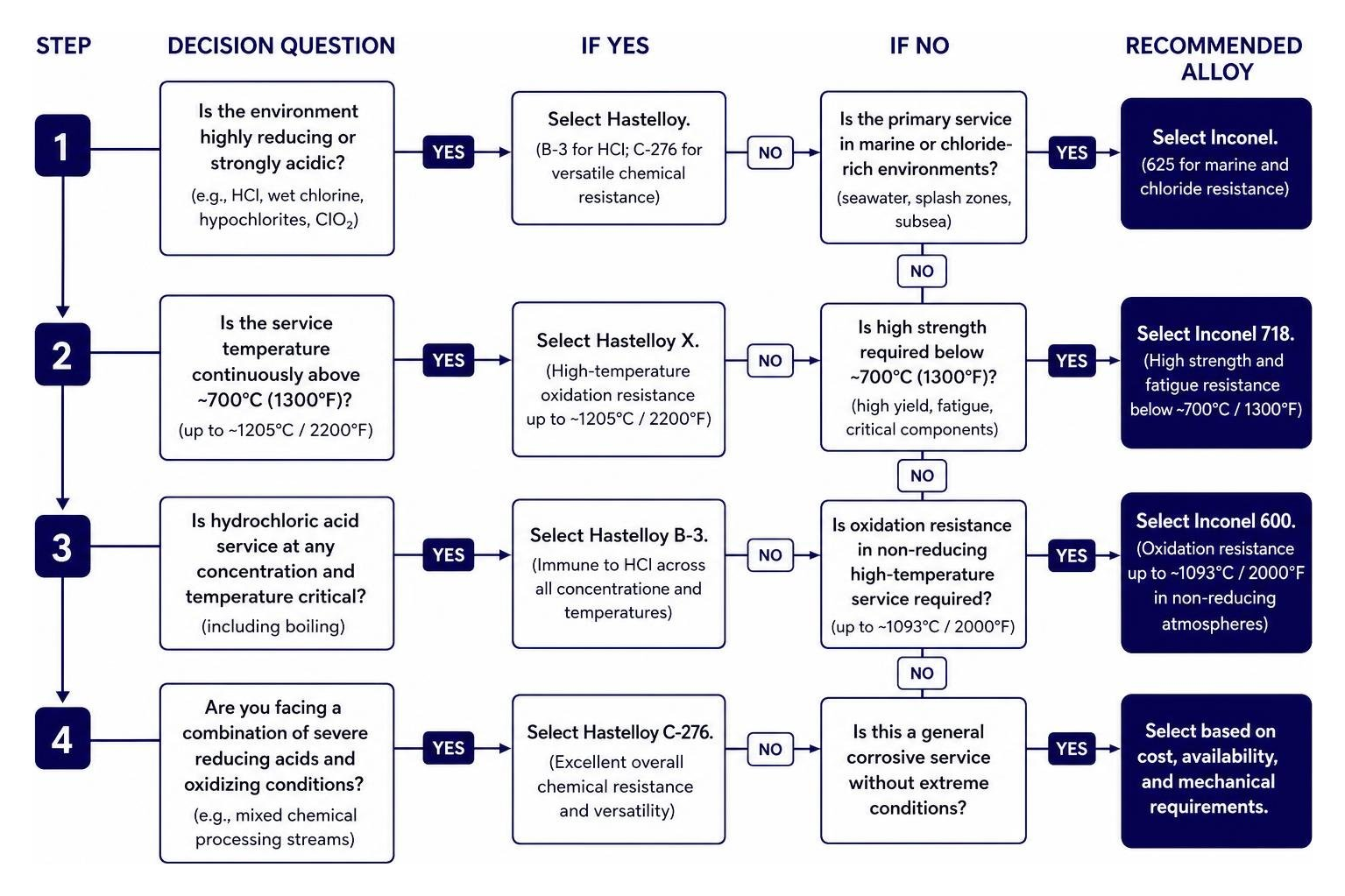
- Hastelloy C-276 vs. Inconel 625: Select Hastelloy C-276 when dealing with severe reducing acids, wet chlorine gas, or aggressive chemical processing streams. Choose Inconel 625 when operating in marine environments, high-temperature exhaust ducting, or high-pressure offshore subsea systems where elevated yield strength and marine pitting resistance are required.
- Hastelloy X vs. Inconel 718: Choose Hastelloy X for combustion liners, afterburners, and industrial furnace components that experience continuous temperatures up to 1205°C (2200°F) in moderate mechanical stress environments. Select Inconel 718 for jet engine turbine disks, high-strength bolting, and rocket engines operating below 700°C (1300°F) that demand high yield strength and fatigue endurance.
- Hastelloy B-3 vs. Inconel 600: Specify Hastelloy B-3 for reboilers and piping handling hydrochlorination processes across all acid concentrations. Use Inconel 600 for primary nuclear steam generator tubing and heat-treating baskets where oxidation resistance up to 1093°C (2000°F) is required in non-reducing atmospheres.
For a broader breakdown of these high-performance materials, review the industry comparative analysis Monel vs. Hastelloy vs. Inconel: Choosing the Right High-Performance Nickel Alloy.
Frequently Asked Questions
Which alloy is better for hydrochloric acid, Hastelloy or Inconel?
Hastelloy is significantly better suited for hydrochloric acid than Inconel. Grades like Hastelloy B-3 and Hastelloy C-276 contain high concentrations of molybdenum (up to 30% in B-3), which provides exceptional resistance to reducing acids. In contrast, Inconel relies primarily on chromium for oxidation defense; when exposed to aggressive hydrochloric acid, Inconel’s passive oxide layer rapidly breaks down, resulting in swift metal loss and pitting.
What is the maximum operating temperature difference between Hastelloy X and Inconel 625?
Hastelloy X can withstand maximum continuous service temperatures up to approximately 1205°C (2200°F) while retaining structural stability and scaling resistance. Inconel 625 features a lower continuous maximum service temperature limit of about 982°C (1800°F). This gives Hastelloy X a thermal headroom advantage of over 220°C (400°F) for ultra-high-temperature combustion and furnace applications.
Why is Inconel 718 preferred for high-stress aerospace parts?
Inconel 718 is preferred for high-stress aerospace components — such as gas turbine rotors, shafting, and engine fasteners — because of its precipitation-hardening mechanism. The addition of niobium creates gamma double prime ($gamma”$) phase precipitates that enable the alloy to maintain high yield strength (~1100 MPa / 160 ksi) and fatigue endurance at temperatures up to 700°C (1300°F). Additionally, Inconel 718 possesses resistance to post-weld strain-age cracking, allowing complex structural fabrications without thermal tearing.
Conclusion
Making the right choice between hastelloy vs inconel requires evaluating your application’s operating conditions. If your primary threat is aggressive reducing chemical attack — such as hydrochloric acid, wet chlorine gas, or organic acids — Hastelloy is the premier material choice. If your primary failure threats are extreme mechanical loads at elevated temperatures, thermal fatigue, or high-temperature scaling up to 1093°C, Inconel provides the required performance.
At James Duva Inc., our team in Branchburg, New Jersey has helped engineering teams select and source the ideal nickel alloys for severe industrial service since 1978. Whether you need seamless pipe, tubing, flanges, fittings, or valves in Hastelloy or Inconel, we maintain inventory ready for immediate shipment.
Contact our material experts today or browse our complete Nickel Alloys Product Catalog to get quote support for your project.
About James Duva Inc.
Since 1978, James Duva Inc. has been your trusted source for stainless steel and high-nickel alloy industrial products. Whether you’re in the water treatment, process or power industry, we pride ourselves on always having what you need. Say goodbye to your sourcing problems with just one call to James Duva.