
Smooth Operator: Why Seamless Stainless Tubing Rules Harsh Environments
Jul 20, 2026
When Failure Is Not an Option: The Case for Seamless Stainless Steel Tubing
Seamless stainless steel tubing is tube manufactured from a solid metal billet — with no weld seam anywhere in its structure. That single fact changes everything about how it performs under pressure, heat, and corrosion.
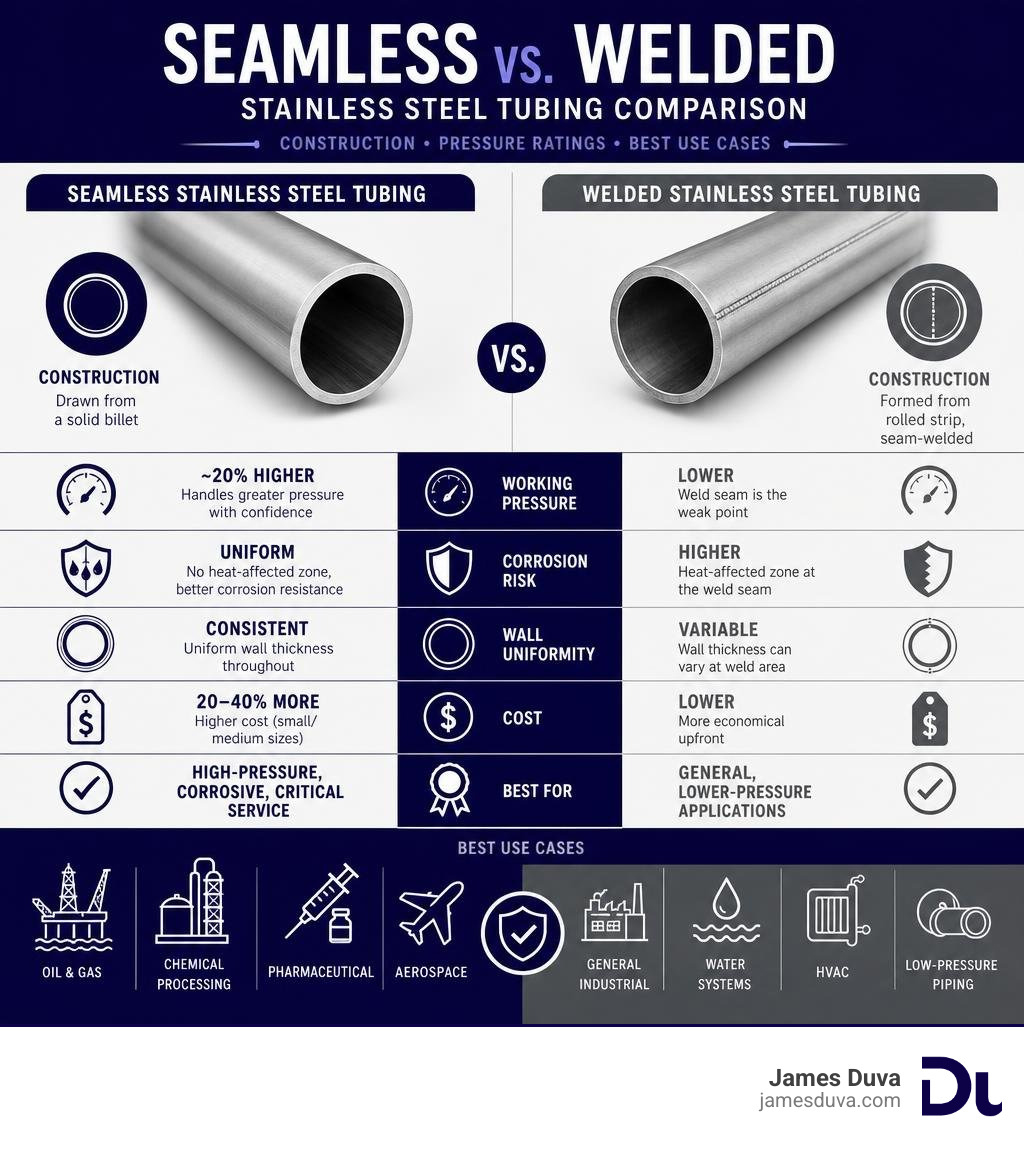
Quick answer: Seamless vs. welded stainless steel tubing
| Factor | Seamless | Welded |
|---|---|---|
| Construction | Drawn from a solid billet | Formed from rolled strip, seam-welded |
| Working pressure | ~20% higher | Lower (weld seam is the weak point) |
| Corrosion risk | Uniform — no heat-affected zone | Higher at the weld seam |
| Wall uniformity | Consistent throughout | Can vary at weld area |
| Cost | 20–40% more (small/medium sizes) | Lower upfront cost |
| Best for | High-pressure, corrosive, critical service | General, lower-pressure applications |
Choose seamless when your system runs at high pressure, handles corrosive media, or operates in environments where a weld failure could cause a shutdown — or worse.
Choose welded when pressures are moderate, budgets are tight, and the application is non-critical.
In harsh industrial environments, the stakes are real. One offshore platform operator discovered this the hard way: welded 316L pipe failed due to chloride stress corrosion cracking at the weld’s heat-affected zone, resulting in $180,000 in unplanned downtime — before being replaced with seamless pipe.
That kind of failure is exactly what seamless tubing is designed to prevent.
The global seamless stainless steel pipe market was valued at $7.6 billion in 2024 and is projected to reach $10.6 billion by 2032 — growing at a 5.1% CAGR. That growth reflects rising demand from oil and gas, aerospace, pharmaceutical, and chemical processing industries, all of which depend on materials that simply cannot fail.
I’m Billy Walker, Vice President of James Duva Inc., where I’ve spent years helping engineers and procurement professionals source the right seamless stainless steel tubing for power, process, and water treatment applications. In this guide, I’ll walk you through everything you need to know — from manufacturing and grade selection to quality testing and supplier criteria — so you can make confident, cost-effective decisions.
Simple guide to seamless stainless steel tubing:
Why Are Alloys So Valuable in Industry?
To understand why seamless tubing is so reliable, we first have to look at the chemistry of the metal itself. Pure metals, like pure iron, are rarely suitable for heavy industrial use. Iron in its pure form is relatively soft, highly malleable, and extremely prone to rust when exposed to oxygen and moisture.
To overcome these natural limitations, metallurgists create alloys. An alloy is a mixture of chemical elements where at least one is a metal. By combining iron with other elements like carbon, chromium, nickel, and molybdenum, we create steel alloys that offer vastly superior strength, durability, and resistance to environmental degradation.
These tailored material properties make alloys indispensable across nearly every major sector:
- Construction: High-strength steel alloys form the structural beams and heavy-duty piping systems that support modern infrastructure.
- Oil & Gas: Specialized fittings, flanges, and high-pressure lines must withstand sour gas, salt water, and extreme depths without corroding.
- Automotive & Aerospace: High-temperature alloys are critical for manufacturing lightweight structural frames, jet engine components, and vehicle exhaust systems.
- Medical & Consumer Goods: Biocompatible alloys are used to craft surgical implants, while cleanable stainless alloys are the standard for commercial kitchenware and food processing lines.
By carefully selecting the right blend of elements, manufacturers can engineer tubing that resists extreme heat, handles massive pressure loads, and completely ignores corrosive chemicals. For a deeper dive into how these metals are deployed, read our guide on stainless steel applications across every industry.
Manufacturing and Mechanics of Seamless Stainless Steel Tubing
The outstanding strength of seamless tubing lies in its lack of a longitudinal weld. But how exactly do you make a long, hollow tube without welding two edges together? The answer is a highly controlled, multi-step mechanical process that transforms a solid block of metal into a precise hollow cylinder.
The journey of seamless pipe manufacturing begins with a solid metal billet. This cylindrical bar is heated to hot-working temperatures—typically between 1,100°C and 1,250°C for austenitic stainless steel—to make the metal pliable. From there, it undergoes a series of heavy forming and refining steps:
- Hot Extrusion or Rotary Piercing: The heated billet is pierced through its center using a mandrel or piercing point while being rolled, forming a rough hollow shell.
- Cold Drawing or Cold Pilgering: To achieve precise dimensional tolerances and a smooth surface finish, the tube is cooled and pulled through a series of dies (cold drawing) or compressed over a mandrel by oscillating rolls (cold pilgering). This cold-working process also hardens and strengthens the metal.
- Solution Annealing: Cold working introduces internal stresses and alters the grain structure of the steel. To restore its corrosion resistance and ductility, the tubing is heated to 1,040°C–1,100°C and rapidly cooled (usually water quenched). This process redissolves precipitated carbides back into the metal matrix.
- Finishing: Finally, the tubing is straightened, cut to length, pickled to remove scale, and polished if a specific surface finish is required.
The Extrusion and Drawing Process
The mechanical forces applied during hot extrusion and cold drawing are immense. The extrusion ratio—the ratio of the cross-sectional area of the initial billet to that of the extruded tube—typically ranges from 4:1 to 10:1. This intense deformation refines the grain structure of the steel, aligning the metal fibers along the length of the tube.
Because the tube is formed from a single, continuous piece of steel, it achieves exceptional concentricity and dimensional precision. Unlike welded tubing, which can suffer from slight wall thickness variations near the weld line, seamless tubing maintains a highly uniform cross-section.
This structural uniformity translates directly into superior mechanical properties. Standard seamless stainless steel tubing typically exhibits:
- Tensile Strength: 515 MPa minimum (75,000 psi minimum)
- Yield Strength: 205 MPa minimum (30,000 psi minimum)
- Total Elongation Under Load: 30% minimum
- Hardness: 22 HRC maximum
These properties ensure the tubing can deform safely under extreme loads without cracking or rupturing.
Choosing the Right Grade of Seamless Stainless Steel Tubing
Selecting the correct alloy grade is just as important as choosing the right manufacturing method. The most common grades for industrial applications belong to the 300-series austenitic family, though duplex and nickel alloys are increasingly common for specialized environments.
- Grade 304/304L: Often referred to as “18/8” due to its 18% chromium and 8% nickel content, 304 is the standard utility grade. It offers excellent resistance to atmospheric corrosion and mild chemicals. The “L” variant (304L) has a lower carbon content (0.03% max), which prevents sensitization—the precipitation of chromium carbides at the grain boundaries during welding—making it ideal for field-welded systems.
- Grade 316/316L: This grade adds 2% to 3% molybdenum to the alloy mix. Molybdenum is the single most important element for resisting pitting and crevice corrosion in chloride-rich environments, such as marine applications or chemical plants processing salt solutions. Like 304L, 316L is the low-carbon version preferred for welded assemblies.
- Grade 304H: This grade features a higher carbon content (0.04% to 0.10%), which provides enhanced creep strength and mechanical durability at elevated temperatures, making it a staple in boiler and heat exchanger applications.
- Duplex 2205: A mixed microstructure of half-ferrite and half-austenite, Duplex 2205 offers nearly double the yield strength of standard austenitic grades and exceptional resistance to chloride stress corrosion cracking.
- Nickel Alloys: For extreme environments involving highly concentrated acids or temperatures exceeding 800°C, nickel alloys (such as Alloy 600, 625, or 825) provide the ultimate level of metallurgical stability.
For a comprehensive comparison of utility grades, consult our guide to 304 stainless tubing.
Industry Standards and Specifications for Seamless Stainless Steel Tubing
To ensure safety and compatibility across global supply chains, seamless tubing must conform to strict industry standards. The most common specifications include:
- ASTM A269: Covers seamless and welded austenitic stainless steel tubing for general service, focusing on corrosion resistance and low- or high-temperature performance.
- ASTM A213: Specifically governs seamless ferritic and austenitic steel boiler, superheater, and heat-exchanger tubes. This standard specifies minimum wall thicknesses, though distributor inventories are often stocked in nominal wall thicknesses.
- ASTM A312: The standard specification for seamless, straight-seam welded, and heavily cold-worked welded austenitic stainless steel pipe intended for high-temperature and general corrosive service.
- ASTM A511: Applies to seamless stainless steel mechanical tubing, often used for structural applications or parts requiring machining.
- ASME Section III: Dictates the stringent material and quality control standards required for nuclear power plant infrastructure, such as Small Modular Reactor (SMR) control lines.
Before ordering, it is critical to verify which standard your system requires. You can learn more about these distinctions in our practical guide to stainless steel tubing.
Size Ranges, Wall Thicknesses, and Schedule Options

Seamless stainless steel tubing is available in an incredibly wide range of sizes to accommodate everything from micro-fluidic medical devices to massive petrochemical transport lines.
- Outside Diameter (OD): Standard sizes range from ultra-fine 1/16″ instrumentation tubing up to heavy 16″ industrial process lines.
- Wall Thickness: Standard wall thicknesses range from ultra-thin 0.001″ up to heavy-walled 2″ tubing.
- Schedules: Pipe sizes are typically classified by their Nominal Pipe Size (NPS) and wall thickness schedule, as defined by ASME B36.19M. Common schedules include 5S, 10S, 40S, 80S, and 160.
It is important to remember that for “pipe” sizes (NPS), the outside diameter is fixed for a given size, while the inside diameter changes depending on the schedule. For “tubing,” the size is ordered by the exact outside diameter and wall thickness. For more details on choosing the correct dimensions, view our guide on industrial tubing solutions.
Seamless vs. Welded: Performance in Extreme Conditions
When designing a piping system for harsh environments, the choice between seamless and welded tubing often comes down to pressure limits and corrosion risks.
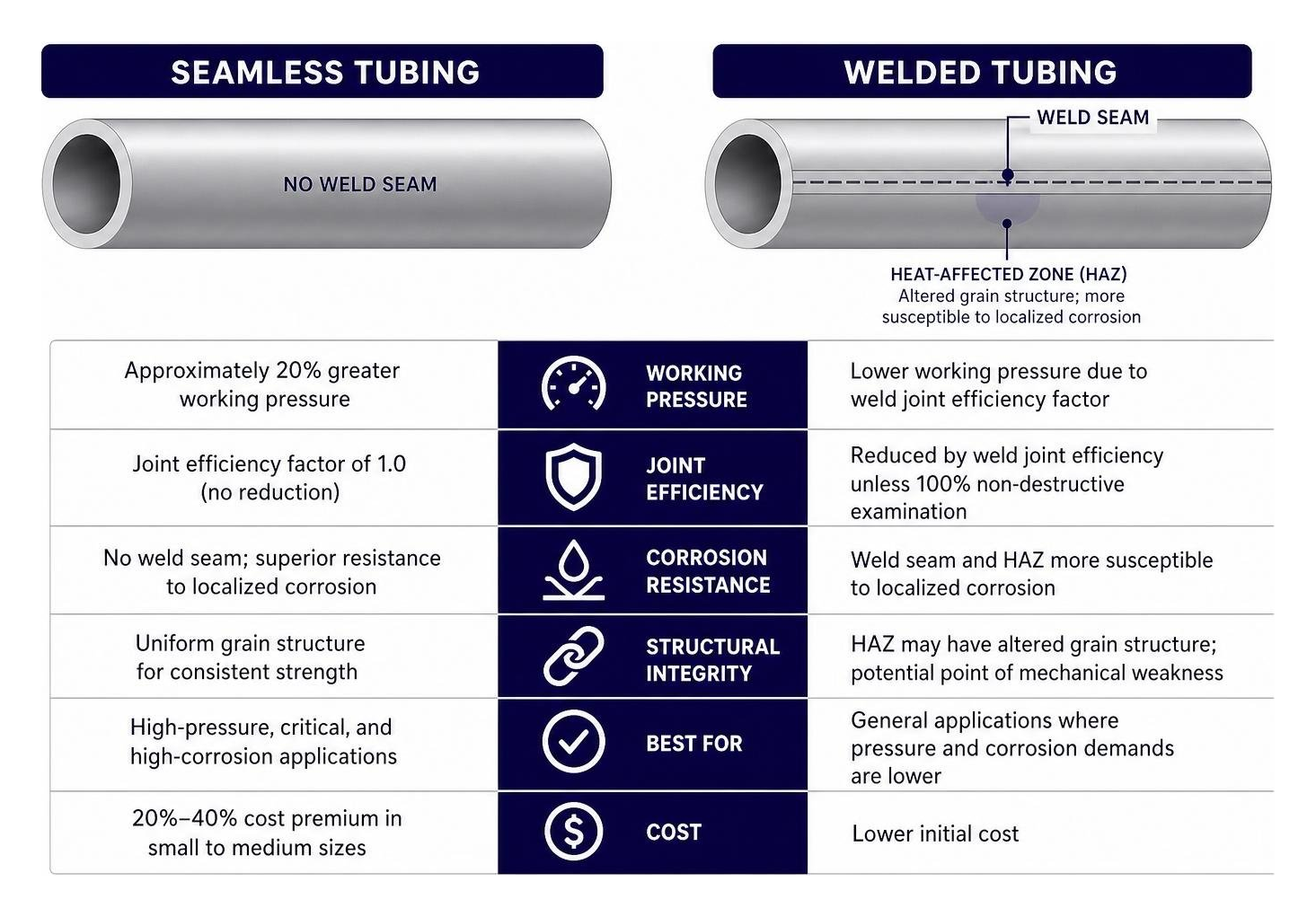
Because welded tubing is formed from flat metal strips and joined with a longitudinal weld, the weld seam represents a potential point of mechanical and chemical vulnerability. Even with modern automated welding and post-weld heat treatments, the heat-affected zone (HAZ) of the weld can have a slightly altered grain structure, making it more susceptible to localized corrosion.
Seamless tubing, having no weld seam, offers approximately 20% greater working pressure than welded tubing of the same material and dimensions. While seamless tubing carries a 20% to 40% cost premium over welded alternatives in small to medium sizes, that initial investment is easily justified in systems where a single line failure can halt production or jeopardize safety.
To compare the two options in detail, read our article on seamless vs welded pipe differences.
Key Differences in Pressure Ratings and Corrosion Resistance
Under design codes like ASME B31.3 (Process Piping), welded pipe must account for a weld joint efficiency factor, which reduces its allowable working pressure unless the weld undergoes 100% non-destructive examination. Seamless pipe carries a joint efficiency factor of 1.0, meaning it requires no pressure rating reduction.
This pressure advantage is clear when looking at actual ratings. For a 2″ NPS 304L seamless pipe at ambient temperatures, the pressure limits are:
- Schedule 10S: 600 psi
- Schedule 40S: 1,750 psi
- Schedule 80S: 3,500 psi
In addition to pressure handling, seamless tubing is highly resistant to chloride stress corrosion cracking and pitting in the heat-affected zones that plague welded lines. Furthermore, wall thickness tolerances for seamless pipe are typically +/-12.5%, ensuring dependable structural integrity throughout the entire run.
Critical Quality Control and Testing Methods
To guarantee that seamless tubing meets these high performance standards, manufacturers and distributors rely on rigorous quality control testing:
- Positive Material Identification (PMI): Handheld XRF analyzers verify the exact chemical composition of the alloy, ensuring the molybdenum and nickel content match the specified grade.
- Hydrostatic Testing: The tube is filled with water and pressurized to a specified limit to check for leaks or structural weaknesses.
- Ultrasonic Testing (UT): High-frequency sound waves scan the tube wall to detect internal flaws, voids, or thickness variations. (Note: UT is not mandatory under standard ASTM A312 unless explicitly specified as supplementary requirement S6).
- Eddy Current Testing (ET): Electromagnetic fields detect surface and near-surface defects along the tube.
- Mill Test Reports (MTRs): These certified documents (often conforming to EN 10204 3.1) verify the chemical analysis, physical properties, and test results of the specific heat of steel used to make the tubing.
Primary Applications and Custom Services
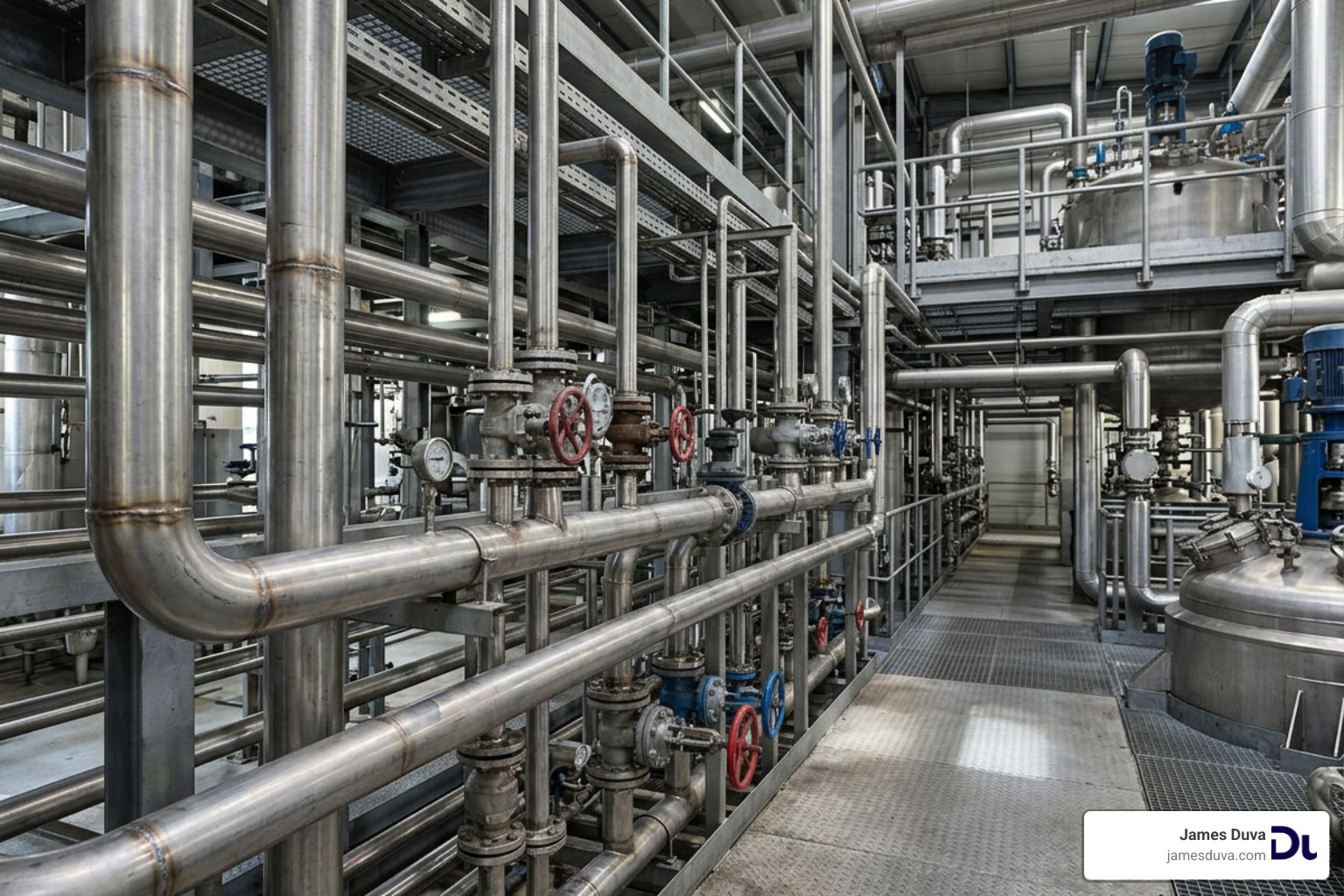
Thanks to its reliability, seamless stainless steel tubing is the standard choice for several critical industries:
- Oil & Gas: High-pressure subsea lines, downhole control lines, and offshore platform process piping.
- Aerospace: Hydraulic lines, engine fuel feeds, and structural components.
- Pharmaceutical & Food Processing: High-purity fluid delivery lines requiring ultra-smooth, crevice-free interior surfaces to prevent bacterial growth.
To support these diverse applications, we provide custom processing services, including precision cutting, custom polishing (to achieve specific Ra surface roughness limits), and custom U-bending for heat exchanger bundles.
Additionally, a high-performance tubing system is only as good as its connections. We stock a complete range of complementary components, including high-pressure Ball Valves, to ensure complete system integrity. For help choosing the right connectors, check out our resources on choosing tube fittings, understanding tube fittings, and sanitary tube fittings.
Frequently Asked Questions About Industrial Tubing
What is the pressure rating difference between seamless and welded tubing?
Seamless tubing generally has a 20% higher working pressure rating than welded tubing of the same material, diameter, and wall thickness. This is because ASME design codes apply a weld joint efficiency factor (typically 0.80 to 0.85) to welded tubing to account for potential weld seam imperfections, whereas seamless tubing is rated at a joint efficiency of 1.0.
How do you verify the quality and authenticity of seamless tubing?
The most reliable way to verify quality is by reviewing the Mill Test Report (MTR), which should provide a complete chemical and mechanical breakdown traceable to the specific heat number stamped on the tubing. For critical projects, you should also perform on-site Positive Material Identification (PMI) testing and check for compliance with EN 10204 3.1 certification standards.
Can seamless tubing be customized for specific industrial projects?
Yes. Seamless tubing can be customized through precision cutting to exact lengths, custom polishing (interior or exterior) for sanitary applications, heat treating to adjust mechanical properties, and precision U-bending for heat exchanger and condenser applications.
Conclusion
In demanding industrial environments, cutting corners on your piping and tubing is a recipe for expensive downtime, safety hazards, and premature system failures. Choosing high-quality seamless stainless steel tubing ensures your fluid systems can handle extreme pressures, high temperatures, and highly corrosive media with a generous margin of safety.
Since 1978, James Duva Inc. has been a trusted, one-stop shop for high-grade stainless steel and nickel alloy industrial products. Based in Branchburg, NJ, we maintain a massive inventory of seamless tubing, pipes, fittings, and valves, backed by decades of metallurgical expertise and rigorous quality assurance.
Whether you are designing a high-pressure chemical reactor, an offshore seawater loop, or a high-purity pharmaceutical line, our team is here to help you select the exact specifications and grades for your project.
To find the perfect materials for your next project, connect with our expert stainless tubing suppliers or explore our full tubing inventory online. You can also learn more about local sourcing options through the New Jersey Stainless Steel Tubing Manufacturers directory.
About James Duva Inc.
Since 1978, James Duva Inc. has been your trusted source for stainless steel and high-nickel alloy industrial products. Whether you’re in the water treatment, process or power industry, we pride ourselves on always having what you need. Say goodbye to your sourcing problems with just one call to James Duva.