
Purely Magnetic Your Guide to Finding the Best Pure Nickel Suppliers
Aug 14, 2026
Understanding Pure Nickel vs. Nickel Alloys
To make informed sourcing decisions, it is essential to understand how pure nickel differs from its alloyed counterparts. Pure nickel is prized for its specific physical and chemical characteristics, whereas nickel alloys are engineered to withstand extreme mechanical stress and highly corrosive environments.
Pure nickel (such as Nickel 200) boasts a density of 8.9 g/cm³ and a melting point of 1450°C. It exhibits a thermal conductivity of 90 W/(mK) and an electrical resistance of 0.06 Ω-mm²/m. Because it is highly ductile and ferromagnetic at room temperature, it is relatively easy to form and possesses unique electromagnetic properties. However, its primary superpower is its resistance to reducing chemicals and caustic alkalies.
To dive deeper into the specific terms and metallurgical behavior of this metal, you can read our Nickel 200 Properties Step by Step Guide to Terms Demystified.
When nickel is alloyed with elements like chromium, molybdenum, iron, or copper, it transforms into high-performance superalloys like Inconel, Hastelloy, or Monel. These alloys trade some of pure nickel’s electrical and thermal conductivity for immense tensile strength and oxidation resistance at temperatures where pure nickel would soften or degrade.
Why Purity Matters for Electroplating and Batteries
In certain applications, even a fraction of a percent of contamination can ruin a production run. This is why working with a verified pure nickel supplier who guarantees high-purity stock is so critical.
In electroplating, pure nickel anodes (often 99.0% to 99.9% pure) are consumed in an electrolytic bath to deposit a protective, aesthetic layer onto base metals. If the anode contains trace impurities like copper, iron, or sulfur, these elements will dissolve into the plating solution, causing rough deposits, poor adhesion, or discoloration on the finished product.
For battery manufacturing and DIY battery building, the electrical properties of the material are paramount. Battery packs, particularly lithium-ion assemblies, rely on pure nickel strips (commonly 0.2mm x 15mm) to spot-weld cells together.
Using inferior nickel-plated steel instead of pure nickel strips increases electrical resistance, which leads to localized overheating, reduced battery efficiency, and potential thermal runaway. High-purity nickel ensures low electrical resistance and excellent weldability. For high-purity piping systems carrying corrosive media, utilizing a Nickel 200 Pipe Purity Performance and Piping Hot Benefits approach ensures system integrity and longevity.
Why Are Alloys So Valuable in Industry?
While pure metals are highly useful for specialized electrical and chemical applications, they often fall short in broader industrial structural roles. Pure iron, for example, is relatively soft and highly prone to rusting when exposed to oxygen and moisture.
This is where alloys prove their immense value. By mixing pure metals with other elements, metallurgists create materials with superior strength, wear resistance, and durability. Steel, an alloy of iron and carbon, is vastly stronger than pure iron. Adding nickel and chromium to the mix yields stainless steel, which resists rust and maintains structural integrity under intense stress. Alloys allow us to customize materials for specific engineering challenges, balancing weight, strength, and corrosion resistance.
To understand when to deploy these specialized mixtures rather than standard materials, you can read our guide on When to Choose Nickel Alloys Over Stainless Steel in Industrial Applications.
Key Applications of Industrial Alloys
Alloys are the backbone of modern infrastructure and advanced manufacturing. Here is how they are utilized across key sectors:
- Construction: Heavy structural beams, high-strength concrete reinforcing bars, and architectural piping rely on steel and high-strength alloys to support massive loads and resist environmental weathering.
- Oil & Gas: High-pressure environments, sour gas wells, and offshore platforms require rugged fittings, flanges, and valves. In these demanding settings, Why Nickel Alloy Fittings Are Essential for Demanding Environments becomes clear, as they prevent catastrophic leaks and withstand corrosive saltwater.
- Automotive & Aerospace: Jet engines, exhaust manifolds, and vehicle frames require materials that can survive extreme heat and mechanical fatigue without warping or cracking.
- Medical & Consumer Goods: Biocompatible titanium and cobalt-chrome alloys are used for joint implants and dental fixtures, while durable stainless steel alloys form the backbone of hygienic kitchenware and food processing machinery.
Common Forms of Pure Nickel Available from a Pure Nickel Supplier
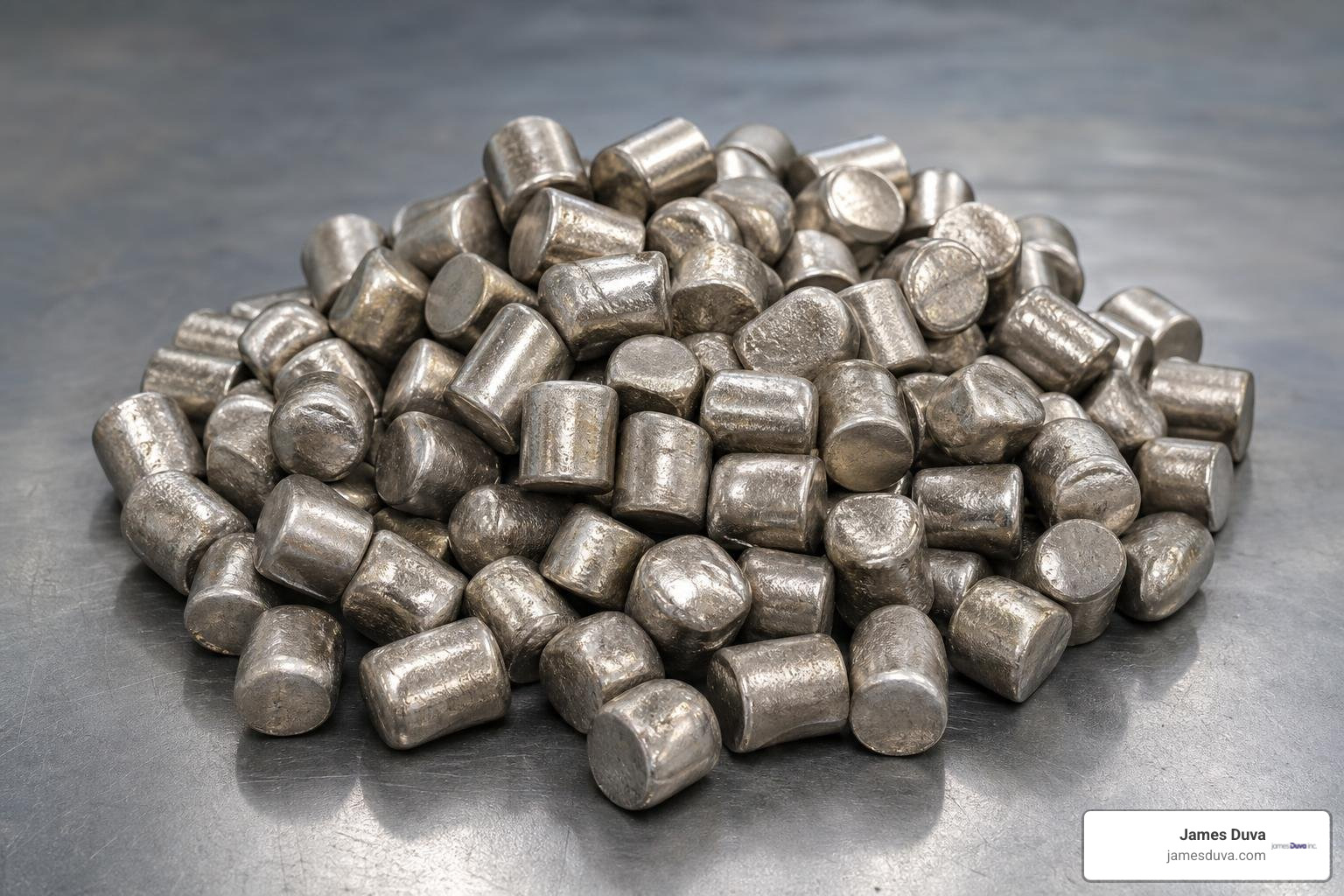
When sourcing from a pure nickel supplier, you will encounter several physical forms. Each form factor is tailored to specific manufacturing processes and equipment.
| Form | Typical Purity | Common Industrial Applications |
|---|---|---|
| Granules | 99.9% to 99.99% | Laboratory research, chemical catalysts, precision alloying |
| Plates / Anodes | 99.0% to 99.9% | Electroplating, electroforming, heavy industrial plating |
| Strips / Foil | 99.6% to 99.9% | Battery pack manufacturing, electronics, spot welding |
| Cathodes (Full/Cut) | 99.9% | Alloy production, melting in foundries, electroplating |
| Briquettes | 99.6% | Stainless steel manufacturing, foundry charge, alloying |
| Chips | 99.9% | Electroplating baskets, chemical synthesis |
Understanding these forms helps you avoid purchasing an incompatible material. For instance, buying nickel briquettes for an electroplating line is highly inefficient, as briquettes are designed for rapid melting in foundries rather than uniform dissolution in a plating bath.
To navigate the wider landscape of metal distribution, check out our A Z Guide to Nickel Alloy Suppliers.
Sourcing from a Certified Pure Nickel Supplier
Sourcing pure nickel requires a focus on supply chain transparency. Reputable global brands and mills — such as Sumitomo (Japan), Vale Inco (Canada/Global), and Norilsk (Russia) — produce high-quality, high-purity nickel products.
When purchasing, you must ensure the material’s origin is documented. A certified pure nickel supplier will always provide Mill Test Reports (MTRs) detailing the chemical composition and mechanical properties of the batch. This level of traceability is essential for aerospace and defense applications where material failure is not an option.
To learn more about identifying top-tier partners, read our article on 5 Ways to Find Nickel Alloy Suppliers Like a Pro.
Verifying Quality with Your Pure Nickel Supplier
Counterfeit or misrepresented metals are a persistent challenge in the global supply chain. It is not uncommon for low-grade nickel-plated steel to be sold as pure nickel strip, or for unbranded, low-purity scrap to be passed off as premium cathode material.
To verify quality:
- Request MTRs: Always match the heat number on the material packaging with the provided Mill Test Report.
- Verify ASTM Standards: Ensure the material complies with relevant standards, such as ASTM B160 for nickel rods and bars or ASTM B162 for nickel plate, sheet, and strip.
- Perform Independent Testing: For critical applications, use handheld Positive Material Identification (PMI) guns or send samples for laboratory chemical analysis.
For a streamlined procurement experience, utilizing a One Stop Solution Sourcing Stainless Steel and Nickel Alloy Products Made Easy model helps consolidate your quality checks and paperwork.
Industrial Applications and Material Properties
Pure nickel’s physical properties make it irreplaceable in several specialized industries:
- Aerospace: High-purity nickel serves as a foundational element in turbine blades, combustion chambers, and exhaust systems. To understand how nickel-based materials perform under these extreme aerospace conditions, read about Nickel Based Alloys in the Aerospace Industry.
- Chemical Processing: Pure nickel is highly resistant to dry halogens, hydrogen chloride, and caustic soda. It is widely used to construct chemical reactors, piping systems, and storage tanks.
- Food Processing: Because it is non-toxic and highly resistant to organic acids and sanitizing chemicals, pure nickel is used in equipment that requires strict hygiene standards.
Storage and Handling to Prevent Contamination
To maintain the quality of pure nickel, proper storage and handling are essential.
- Keep it Dry: Store nickel products in a climate-controlled, dry indoor environment. Moisture can lead to surface staining or oxidation over long periods.
- Avoid Grease and Oils: Handle high-purity nickel with clean gloves. Skin oils, grease, and industrial lubricants can contaminate the surface, which interferes with welding, electroplating, or chemical reactions.
- Secure Packaging: Keep granules, chips, and briquettes in their original sealed bags or pallets to prevent dust contamination.
Sourcing Challenges, Pricing, and Sustainability
The nickel market is famously volatile. Prices are influenced by global mining outputs, geopolitical tensions, and shifting demand from the electric vehicle (EV) battery sector.
Pure nickel prices vary based on form, weight, and brand. For example, standard steel-grade nickel briquettes or Russian pure nickel might trade around Rs 1,400/Kg, while high-purity Sumitomo plate for electroplating can cost Rs 1,390/Kg. Specialty items like premium INCO plates can reach Rs 4,000/Kg, and small-batch pure nickel granules (99.9%) packaged for laboratories start at around €6.44 for tiny quantities.
Because of this volatility, buyers should establish long-term relationships with stable distributors. It is also important to consider the environmental impact of nickel sourcing. Nickel mining and refining are energy-intensive processes.
Fortunately, nickel is highly recyclable. Approximately 70% of all nickel is recycled or reused at various stages of its lifecycle, which significantly lowers its overall carbon footprint. Many leading suppliers now prioritize sourcing from mills that utilize renewable energy and advanced recycling programs. You can read more about these global initiatives through the Scientific research on nickel recycling and sustainability published by the Nickel Institute.
For those requiring structural or machining stock alongside pure materials, exploring Nickel Alloy Round Rod and Bar Inconel Hastelloy and Beyond can provide alternative high-performance options.
Frequently Asked Questions about Pure Nickel
What is the typical purity of commercial pure nickel?
Commercial pure nickel, such as Nickel 200, typically has a purity of 99.0% to 99.6%. Ultra-high-purity nickel granules or cathodes used in laboratories or high-end electroplating can reach 99.9% to 99.99% purity.
How do you distinguish pure nickel from nickel-plated steel?
A quick way to test is by using a strong magnet. While both nickel and steel are magnetic, pure nickel has a distinct magnetic pull that weakens dramatically when heated slightly (its Curie point is 353°C).
Additionally, you can perform a spark test; steel produces bright, yellow sparks when touched to a grinder, whereas pure nickel produces very few, short, dark red sparks. A chemical spot test with dimethylglyoxime is the most reliable non-destructive field test to confirm the presence of high-purity nickel.
What are the storage requirements for pure nickel?
Pure nickel should be stored in a clean, dry, climate-controlled indoor environment. It must be kept away from acids, moisture, and chlorine vapors to prevent surface corrosion. Keep the material in its original packaging to protect it from dust, grease, and cross-contamination from other metals.
Conclusion
Sourcing from a reputable pure nickel supplier ensures that your industrial processes remain efficient, safe, and compliant with international standards. Whether you are electroplating automotive trim, assembling high-capacity battery packs, or formulating advanced aerospace alloys, the purity of your raw materials dictates the quality of your final product.
At James Duva Inc., we have spent decades building a reputation as a trusted, one-stop shop for high-grade stainless steel and nickel alloy products. Operating out of our fully stocked facility in Branchburg, New Jersey, we have served the power, chemical process, and water treatment industries since 1978.
From specialized piping and fittings to high-performance Ball Valves, we provide the documented traceability and engineering expertise your projects demand. Explore our extensive Nickel Alloys Category today, or reach out to our team in Branchburg, NJ, to discuss your specific material requirements.
About James Duva Inc.
Since 1978, James Duva Inc. has been your trusted source for stainless steel and high-nickel alloy industrial products. Whether you’re in the water treatment, process or power industry, we pride ourselves on always having what you need. Say goodbye to your sourcing problems with just one call to James Duva.