
Tips for Sourcing Premium Nickel Alloy 20 Fast and Efficiently

Nov 13, 2026
How to Find a Reliable Nickel Alloy 20 Supplier
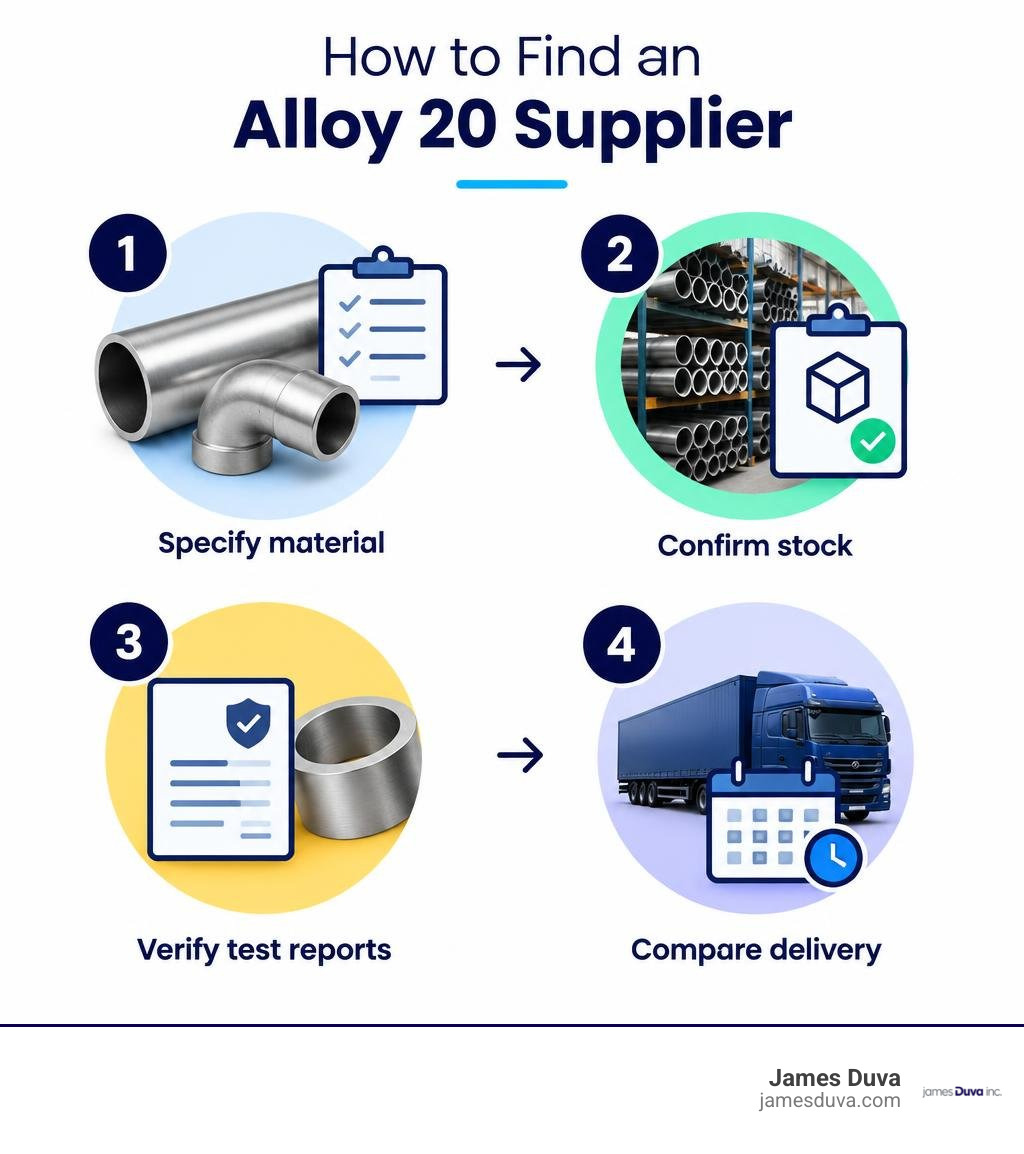
To find a nickel alloy 20 supplier, send distributors a request that lists the product form, size, quantity, and required delivery date. Ask each one to confirm stock, lead time, minimum order quantity, and a material test report that matches the material’s heat number.
Alloy 20, also called UNS N08020, is valued for its resistance to sulfuric acid and is often used in chemical processing. The fastest quote is not always the safest choice: clear records and a realistic delivery promise help protect your schedule. For additional technical background, see Fundamental Studies on Anodic Protection: Alloy 20 in Sulfuric Acid.
I’m Billy Walker, vice president of James Duva Inc., where I help industrial buyers source specialty piping components and high-nickel alloys. My work with power, process, and water treatment projects has taught me which questions to ask a nickel alloy 20 supplier before an order is placed.
Nickel alloy 20 supplier terms to know:
Why Are Alloys So Valuable in Industry?
Pure metals like iron are often too soft or prone to rust in demanding operational settings, whereas alloys like steel offer superior strength and durability. When moisture and oxygen attack elemental iron, structural integrity degrades quickly. To overcome these limitations, metallurgists combine base elements with nickel, chromium, molybdenum, and copper to create high-performance alloys.
Engineers rely on this metallurgical design across multiple sectors:
- Construction: Heavy-duty structural beams and specialized piping systems rely on alloy steels for mechanical load-bearing capacity and environmental resistance.
- Oil & Gas: Severe drilling downhole environments and refinery processing lines demand rugged alloy fittings and flanges that resist hydrocarbon cracking and high pressures.
- Automotive & Aerospace: Structural airframes and high-temperature engine parts require lightweight, heat-resistant superalloys that withstand intense mechanical fatigue.
- Medical & Consumer Goods: Biocompatible surgical implants and commercial kitchenware use refined alloys to prevent chemical leaching and ensure hygienic durability.
Comparing nickel alloy vs stainless steel demonstrates why alloy engineering matters. Standard stainless steels degrade when exposed to aggressive acidic media, whereas nickel-based alloys provide the structural integrity required for severe service applications.
What Makes Nickel Alloy 20 Essential for Severe Service Applications?
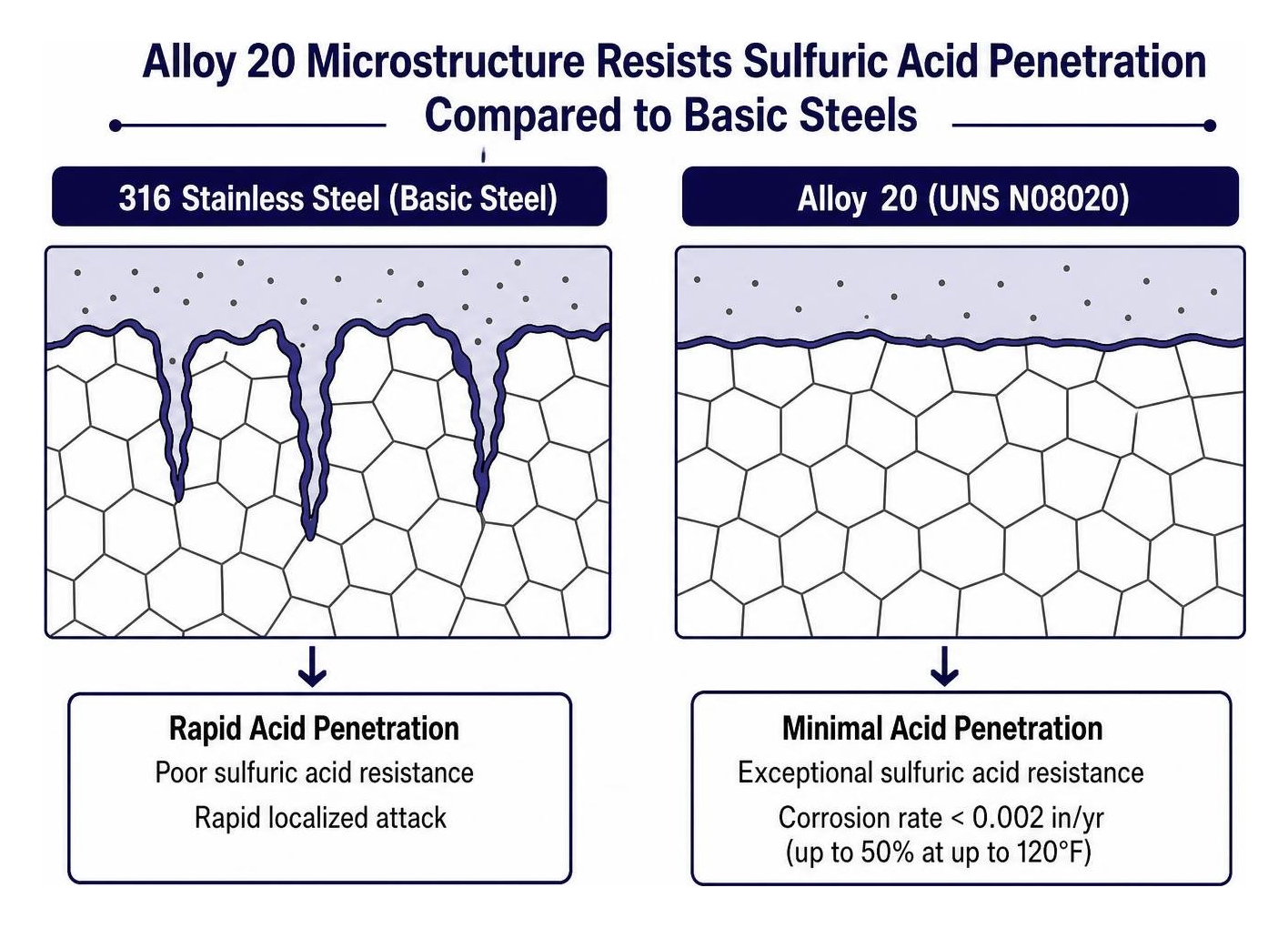
Nickel Alloy 20 (also known as UNS N08020) was engineered specifically to withstand sulfuric acid environments. While traditional 316 stainless steel fails when acid concentrations rise, Alloy 20 maintains its integrity thanks to its balanced chemical composition: roughly 32% to 38% nickel, 19% to 21% chromium, plus additions of molybdenum, copper, and niobium.
Niobium acts as a stabilizer against intergranular corrosion during welding, while copper delivers targeted defense against sulfuric attacks. In fact, Alloy 20 exhibits corrosion rates of less than 0.002 inches per year in sulfuric acid concentrations up to 50% at temperatures up to 120°F. As a result, Alloy 20 is selected for more than 60% of chemical processing systems requiring reliable sulfuric acid and chloride resistance.
| Material Grade | Nickel Content (%) | Sulfuric Acid Resistance (up to 50% conc.) | Chloride Stress Cracking Resistance | Primary Industrial Focus |
|---|---|---|---|---|
| 316 Stainless Steel | 10% – 14% | Poor (Rapid localized attack) | Moderate | Food & Beverage, Light Marine |
| Alloy 20 (UNS N08020) | 32% – 38% | Exceptional (< 0.002 in/yr attack) | High (Immune to standard cracking) | Sulfuric Acid, Pickling, Chemical Synthesis |
| Alloy C-276 | 55% – 60% | Outstanding | Superior | Extreme Mixed-Acid Waste Streams |
Exploring Alloy 20 material properties shows how its mechanical strength handles chemical reactors, pickling tanks, heat exchangers, and process piping. For facilities handling aggressive media, selecting corrosion resistant nickel alloys avoids premature component failure and unexpected maintenance outages.
Key Criteria for Choosing a Trusted Nickel Alloy 20 Supplier
Evaluating distributors requires checking their material quality, inventory depth, and logistical capabilities. Approximately 35% of global specialty nickel alloy distributors are located in North America, with Europe and the Asia-Pacific region accounting for 30% and 25% respectively. Partnering with established North American distributors provides reliable supply routes and transparent material documentation.
Applying proven supplier vetting strategies helps procurement teams avoid unqualified vendors. Our A-Z guide to nickel alloy suppliers outlines the baseline capabilities every distributor should maintain:
Before approving a supplier, buyers can use the same information gathered for each quote to compare options consistently. Record the requested product form, dimensions, quantity, availability, lead time, minimum order quantity, and material test report status for every quote. Then confirm whether the supplier can provide positive material identification or other requested inspection evidence and whether in-stock material can be dispatched on the needed schedule. This makes differences in documentation, inventory, and logistics easier to identify before a purchase order is issued. For critical applications, clear traceability and realistic delivery commitments are more useful than a low initial quote that leaves inspection or shipping details unresolved. A concise comparison also helps project teams flag exceptions that could affect fabrication or maintenance plans.
- Inventory Availability: Dedicated on-shelf stock across seamless pipes, welded tubes, plates, and solid round bars.
- Documented Quality Systems: Comprehensive internal quality audits, ISO certification, and complete material traceability.
- Logistics Flexibility: Rapid dispatch for in-stock orders alongside transparent scheduling for specialized mill fabrications.
Assessing Quality Standards with a Nickel Alloy 20 Supplier
Every order of Alloy 20 must meet strict manufacturing standards, such as ASTM B463 (plate, sheet, and strip), ASTM B464 (welded pipe), and ASTM B473 (bar and wire). When evaluating a distributor, verify that their quality assurance program aligns with recognized industrial metals supplier standards in the United States.
A dependable vendor provides:
- Certified Material Test Reports (MTRs): Legible chemical and mechanical test documentation tied directly to the poured heat number.
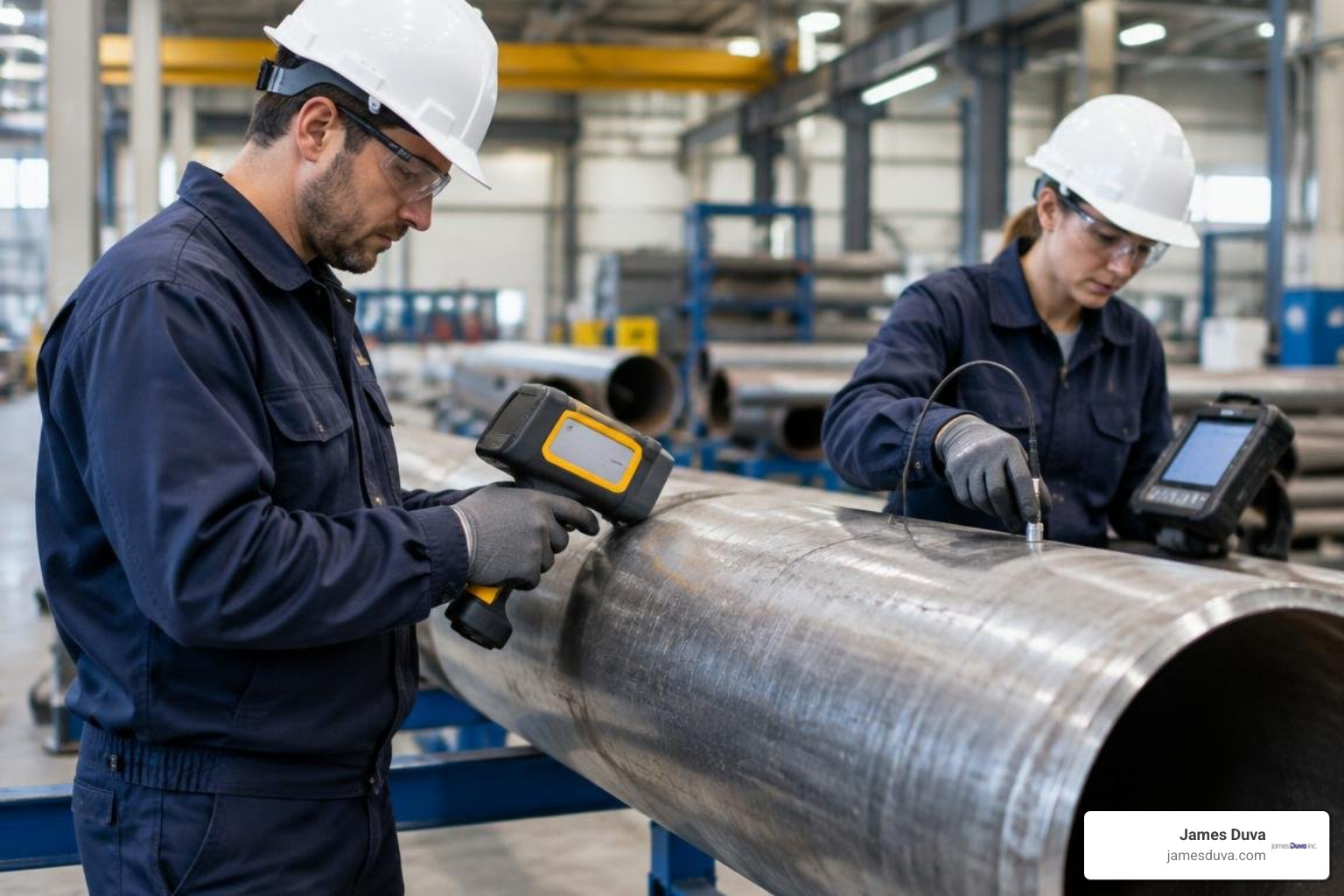
- Positive Material Identification (PMI): Non-destructive XRF or OES testing verifying exact elemental concentrations before shipment.
- Non-Destructive Examination (NDE): Ultrasonic and hydrostatic testing ensuring internal integrity for pressure-rated piping systems.
- ASME Boiler and Pressure Vessel Code Compliance: Verified pressure containment metrics for hazardous process streams.
How a Nickel Alloy 20 Supplier Manages Lead Times and MOQs
Lead times for specialty alloys differ significantly from basic stainless steel commodities. Custom nickel alloy component fabrications average 8 to 12 weeks from specialized mills, whereas standard stainless orders often run 4 to 6 weeks.
To prevent downtime, reliable distributors maintain deep floor inventory of certified Alloy 20 bars, pipe, fittings, and Ball Valves for immediate dispatch. When purchasing, ask about:
- Minimum Order Quantities (MOQs): Flexible stocking distributors supply small maintenance cut lengths without forcing full mill-run minimums.
- Tiered Volume Pricing: Predictable cost structures for bulk system expansions versus localized repair orders.
- Emergency Reserve Programs: Dedicated reserve stock arrangements for mission-critical plants that cannot afford unscheduled downtime.
Value-Added Services and Technical Support Capabilities
Distributors should offer more than basic material storage. Processing services save labor and reduce overall project schedules. When sourcing specialty materials alongside standard lines from stainless steel suppliers, look for these processing capabilities:
- Precision plate cutting, plasma burning, and custom band-sawing to exact job tolerances.
- Custom machining of flanges, fittings, and threaded components.
- Solution annealing and certified post-machining heat treatments.
- Complete material identification marking, tagging, and export packaging.
Navigating Supply Chain Dynamics and Mitigating Sourcing Risks
The global nickel alloy market is projected to reach $18.2 billion by 2027, driven by chemical synthesis, clean energy, and industrial processing. However, global mining bottlenecks, raw material price shifts, and trade policy adjustments create supply and pricing fluctuations.
To safeguard your capital projects against these risks:
- Avoid Counterfeit Documentation: Never accept illegible, re-typed, or altered MTRs. Insist on authentic mill test documentation showing complete chemical heat analysis.
- Perform Independent Lab Testing: Conduct secondary PMI and mechanical testing on random batch samples when sourcing for high-pressure or lethal service environments.
- Leverage Buffer Inventory Agreements: Establish forward-stocking agreements with established North American distributors to lock in pricing and protect project timelines.
Frequently Asked Questions about Sourcing Nickel Alloy 20
What makes Nickel Alloy 20 superior for handling sulfuric acid?
Alloy 20 combines high nickel content (32% to 38%) with intentional copper and molybdenum additions to resist sulfuric acid attack. Its niobium stabilization prevents chromium carbide precipitation during welding, maintaining intergranular corrosion resistance in acid concentrations up to 50% at elevated temperatures.
How can buyers verify that Nickel Alloy 20 is authentic?
Verify authenticity by cross-referencing the stamped heat number on the physical component with the original mill test report. Confirm chemical compositions using handheld Positive Material Identification (XRF analyzers) to ensure nickel, chromium, copper, and niobium levels match ASTM specifications.
What are typical lead times when ordering Nickel Alloy 20?
Off-the-shelf inventory (standard round bar, structural pipe, and standard fittings) typically ships within 24 to 48 hours from domestic distributors. Custom forgings, large-diameter heavy-wall fabrications, or mill runs generally require 8 to 12 weeks depending on current melting schedules.
Conclusion
Sourcing specialty alloys requires material expertise and dependable distribution. Since 1978, James Duva Inc. has served as a trusted partner from Branchburg, NJ, supplying high-grade stainless steel and nickel alloy industrial products to chemical processing, oil and gas, and heavy manufacturing facilities. Whether you need off-the-shelf pipe or certified UNS N08020 alloy components, our technical team is ready to protect your project schedule with rapid quotes, complete material traceability, and dedicated customer support.
About James Duva Inc.
Since 1978, James Duva Inc. has been your trusted source for stainless steel and high-nickel alloy industrial products. Whether you’re in the water treatment, process or power industry, we pride ourselves on always having what you need. Say goodbye to your sourcing problems with just one call to James Duva.