
High Temperature Alloys and Why Heat Resistance Matters
Oct 21, 2026
How to Choose Heat Resistant Alloys
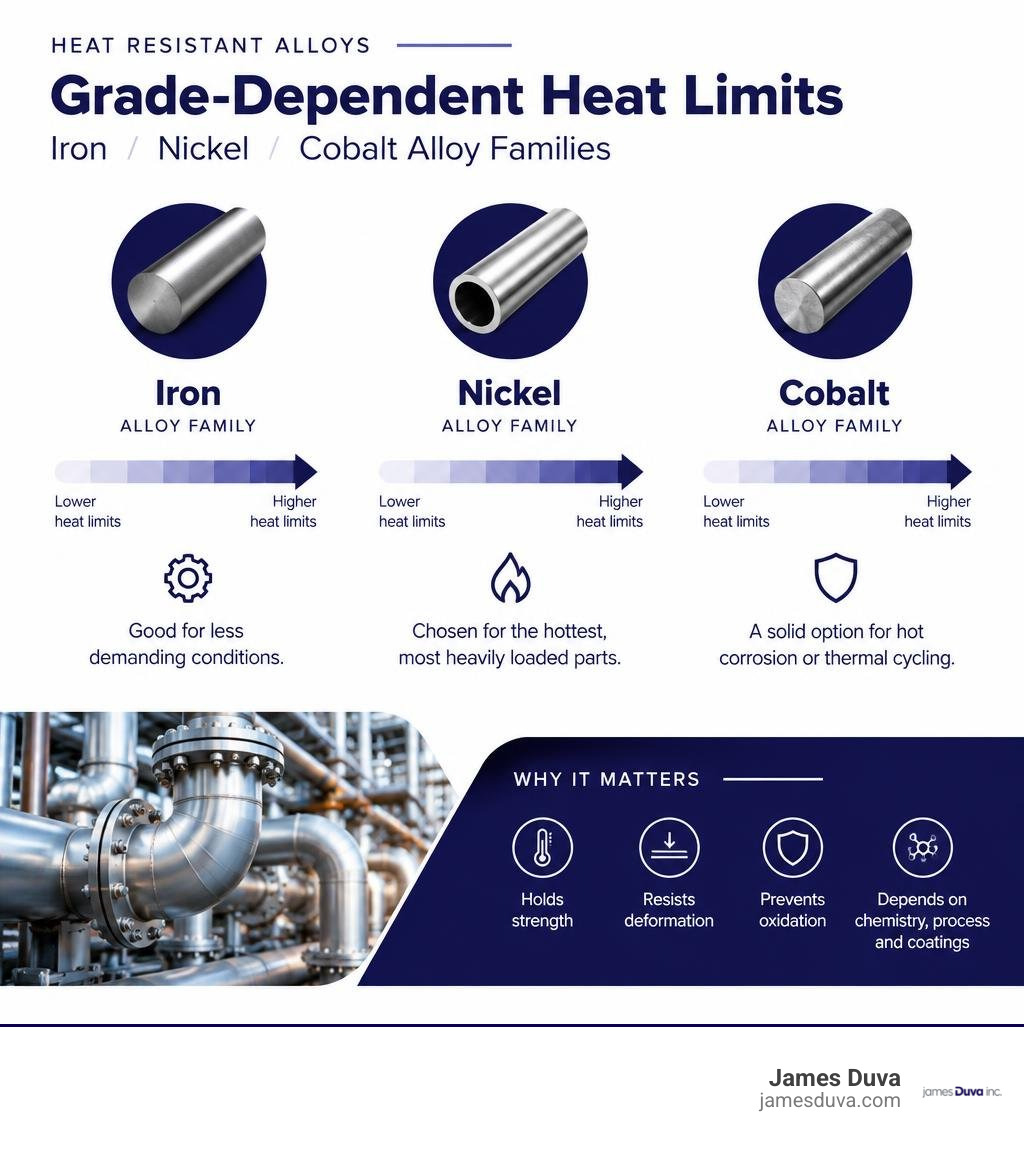
Heat resistant alloys are metals designed to hold their strength and resist damage at high temperatures. The right choice depends on the heat, load, and gases a part will face. Iron-based alloys can suit less demanding conditions, while nickel-based alloys are often chosen for the hottest, most heavily loaded parts. Cobalt-based alloys are another option where hot corrosion or thermal cycling is a concern.
Heat matters because metal can slowly change shape under load, lose strength, or oxidize during service. Evaluating different types of stainless steel and baseline stainless steel corrosion resistance is essential when determining how to choose stainless steel grade options for demanding operating conditions. This guide explains how alloy chemistry, manufacturing, and protective coatings affect those risks, so you can compare options for your application.
I’m Billy Walker, Vice President of James Duva Inc. My experience sourcing stainless steel and high-nickel industrial products helps customers navigate material choices, including heat resistant alloys.
Why Are Alloys So Valuable in Industry?
Elemental metals rarely possess the complete set of mechanical and chemical characteristics required by modern process environments. Pure iron, for example, offers adequate ductility, but it is fundamentally too soft for high-load structural use and rapidly oxidizes into loose, non-protective iron oxide (rust) when exposed to moisture or ambient atmosphere. Pure copper conducts thermal and electrical energy well, yet it deforms readily under modest elevated mechanical loads.
By strategically combining a base element with targeted alloying additions, metallurgists synthesize materials that eliminate these baseline vulnerabilities. Alloys fundamentally disrupt the crystal lattice of pure elements, introducing atomic-level obstacles that prevent crystalline planes from slipping past one another. The result is a structural medium engineered for extreme tensile capability, fatigue life, and environmental endurance.
In industrial systems, these engineered materials serve vital roles across distinct sectors:
- Construction: Heavy load-bearing structural beams, seismic structural supports, and primary industrial piping networks rely on structural carbon and stainless alloys to guarantee high yield strength and structural integrity over decades of service.
- Oil & Gas: Severe downhole and subsea processing equipment utilizes specialized fittings, heavy-wall flanges, high-pressure process line components, and critical control devices such as Ball Valves to prevent catastrophic fluid release under thousands of pounds of pressure in sour, sulfur-bearing environments.
- Automotive & Aerospace: Airframe structural skins, high-temperature combustion chambers, heavy exhaust manifolds, and high-thrust jet engines depend on specialized lightweight and thermal-resistant alloys to withstand continuous vibrational fatigue and localized heat zones.
- Medical & Consumer Goods: Biocompatible joint implants, surgical instrumentation, sanitary food-processing equipment, and high-performance commercial kitchenware demand the non-leaching, easy-to-sterilize surfaces characteristic of specialized austenitic stainless compositions.
When industrial equipment must operate not only under mechanical pressure but also under intense thermal loads exceeding 500°C to well over 1100°C, material degradation mechanisms accelerate drastically. Standard structural metals succumb to thermal fatigue, catastrophic surface scaling, and creep—the progressive, time-dependent deformation of a solid material under mechanical stresses below its yield strength. Managing these combined threats requires deploying metals engineered to withstand extreme heat and corrosion.
Key Families and Performance of Heat Resistant Alloys
Heat-resistant alloys and superalloys are classified into three primary metallurgical systems defined by their solvent matrix element: nickel-base, cobalt-base, and iron-base alloys. Each family occupies a distinct balance of high-temperature yield strength, resistance to specific corrosive or oxidizing atmospheres, thermal expansion behavior, and procurement cost.
| Alloy Family | Primary Matrix | Typical Operating Limit (°C) | Primary Strengthening Mechanism | Primary Environmental Resistance | Relative Cost Factor |
|---|---|---|---|---|---|
| Nickel-Base (Precipitation) | gamma (Ni-FCC) | 950–1150 | gamma’ (Ni3(Al, Ti)) / gamma” (Ni3Nb) | Severe oxidation & thermal fatigue | High to Premium |
| Nickel-Base (Solid Solution) | gamma (Ni-FCC) | 1000–1200 | Interstitial/Substitutional atoms + Carbides | High-temp oxidation & carburization | Moderate to High |
| Cobalt-Base | alpha/epsilon (Co-FCC/HCP) | 900–1100 | Refractory solid solution + Carbide networks | Hot corrosion (sulfidation) & wear | High |
| Iron-Base Austenitic | gamma (Fe-Ni-Cr-FCC) | 700–900 | Solid solution + Secondary carbides | Moderate oxidation & sulfidation | Economical |
Superalloys are engineered to retain significant fractions of their mechanical strength at temperatures above 70% of their absolute melting points (0.7 Tm). As operating temperatures rise across chemical process heaters, industrial furnaces, and turbine flow paths, selecting between these families depends on the dominant failure mode: mechanical creep, gas-phase oxidation, or chemical hot corrosion.
Nickel-Based Superalloys and Solid-Solution Grades
Nickel-based alloys represent the benchmark material for high-temperature service due to the metallurgical stability of the face-centered cubic (FCC) nickel (gamma) matrix. Pure nickel has an FCC crystal structure that remains austenitic and stable from cryogenic temperatures up to its melting point (1455°C), undergoing no destructive phase transformations during thermal cycling.
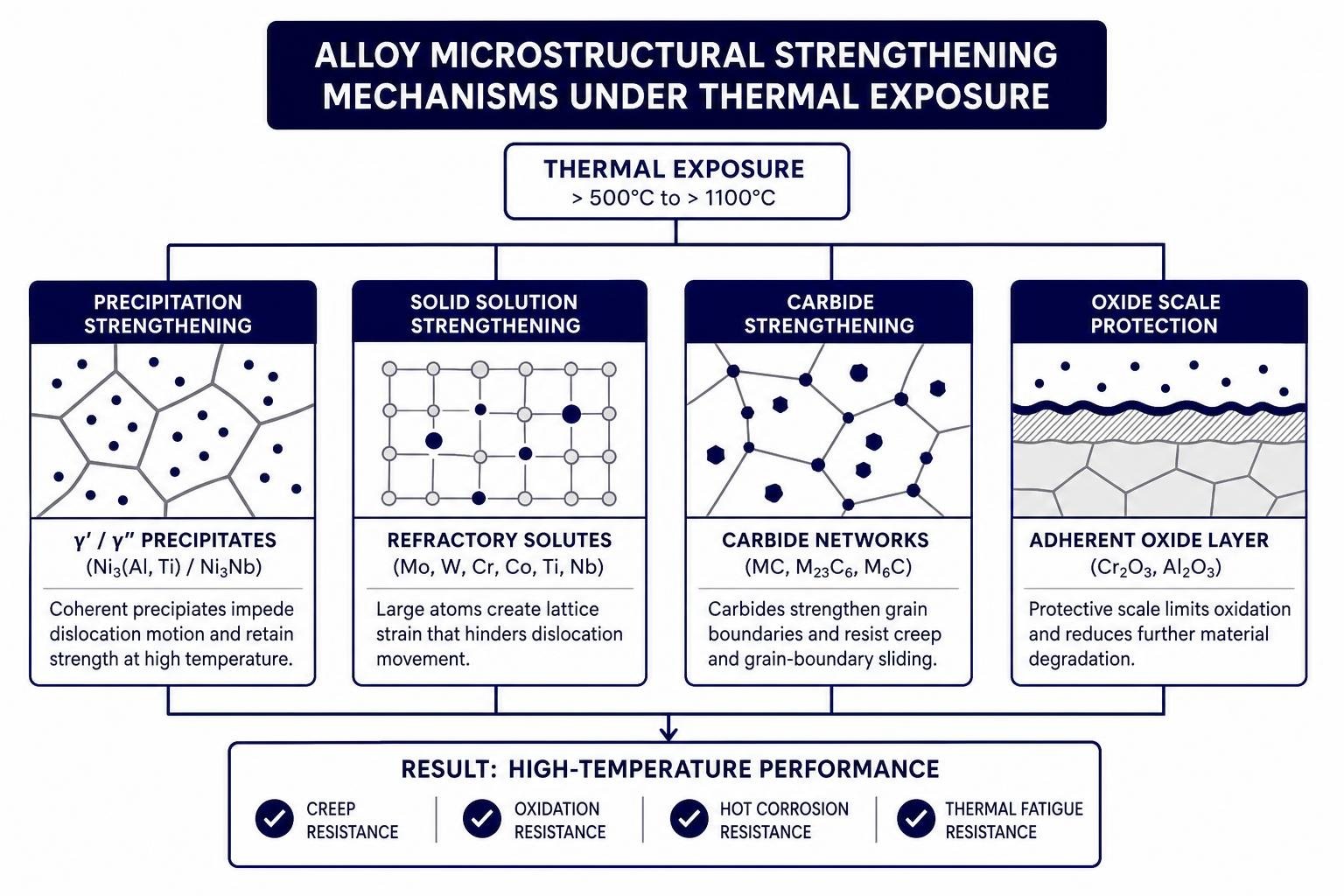
Solid-solution-strengthened nickel grades provide exceptional resistance to high-temperature static and dynamic oxidation. Additions of large refractory atoms such as molybdenum (Mo) and tungsten (W) into the nickel lattice generate local lattice strain fields that impede the movement of dislocations.
For continuous thermal exposures up to 1149°C (2100°F), high-performance nickel compositions balance strength and ductility through targeted chemistry:
- Alloy 230 (UNS N06230): Composed of nominal 57% Ni, 22% Cr, 14% W, and 2% Mo, this grade achieves premier creep and stress-rupture capability through tungsten solid-solution strengthening combined with micro-carbide precipitation. It exhibits an exceptionally low coefficient of thermal expansion compared to alternative high-temperature grades, minimizing thermal fatigue stresses. In long-term testing, Alloy 230 retains high ductility after 16,000 hours of exposure between 650°C and 870°C (1200°F–1600°F) without forming embrittling sigma phases, while exhibiting negligible grain growth even at 1204°C (2200°F) over 24 hours.
- Alloy X (UNS N06002) / Alloy 625 Series: Systems containing balanced molybdenum and chromium additions demonstrate outstanding resistance to both oxidizing and reducing hot gases. Exploring the ultimate guide to Inconel 625 properties highlights how niobium and molybdenum can solidify the nickel matrix against severe high-pressure strain, while understanding how high-temperature nickel alloys resist pressure shows why these grades serve as workhorses in aerospace ducting, chemical synthesis retorts, and high-heat manifolds.
Cobalt-Based and Iron-Based High-Temperature Systems
Cobalt-based superalloys rely on a face-centered cubic cobalt matrix strengthened primarily by solid-solution refractory elements and the intergranular precipitation of complex carbides (MC, M23C6, and M6C). Cobalt possesses an inherently higher melting point (1495°C) than nickel, endowing its alloys with superior resistance to thermal fatigue, galling, and wear under thermal cycling.
Cobalt-based systems exhibit exceptional resistance to high-temperature sulfidation and sulfate-deposit hot corrosion. In low-quality fuel combustors or chemical systems where sulfur impurities combine with alkali salts (such as Na2SO4) at temperatures between 700°C and 900°C, nickel alloys can suffer rapid intergranular liquid-phase attack due to the low-melting-point nickel-sulfide eutectic (635°C). Cobalt-sulfur eutectics melt at considerably higher temperatures (877°C), providing an operational safety margin.
A prime example is Alloy 188 (UNS R30188), a cobalt-nickel-chromium-tungsten alloy (~39% Co, 22% Cr, 22% Ni, 14% W) with micro-additions of lanthanum (0.03%). This alloy combines high-temperature strength with resistance to oxidizing environments up to 1095°C (2000°F) for prolonged exposures.
Key physical and mechanical specifications for Alloy 188 include:
- Room Temperature Density: 0.324 lb/in³ (8.98 g/cm³)
- Melting Range: 1315°C to 1410°C (2400°F–2570°F)
- Room-Temperature Dynamic Modulus of Elasticity: 232 GPa (33.7 × 10⁶ psi)
- Mean Coefficient of Thermal Expansion (25–100°C): 12.1 × 10⁻⁶ m/m/°C (6.7 × 10⁻⁶ in/in/°F)
- High-Temperature Tensile Strength (at 1093°C / 2000°F): 0.2% yield strength of 66 MPa (9.6 ksi) and ultimate tensile strength of 96 MPa (13.9 ksi) for solution-annealed plate.
- Creep Strength: Stress to produce 1% creep in 1000 hours at 649°C (1200°F) is approximately 241 MPa (35 ksi) for plate material.
- Oxidation & Corrosion Resistance: In flowing air at 980°C (1800°F) for 1008 hours, Alloy 188 experiences only 3 µm (0.1 mils) of metal loss and 28 µm (1.1 mils) average metal affected. In sulfate hot corrosion tests at 900°C (1650°F) for 1000 hours, it shows a mere 20 µm (0.8 mils) of metal loss. In severe sulfidation tests at 760°C (1400°F) over 215 hours, metal loss remains limited to 41 µm (1.6 mils).
Historically, alloys such as Alloy N-155 served as standard iron-nickel-cobalt-chromium transitional materials. However, modern designs favor refined solid-solution cobalt or specialized nickel grades because Alloy N-155 demonstrates acceptable oxidation resistance only up to roughly 980°C (1800°F).
Iron-based heat-resistant alloys bridge the performance and cost gap for applications operating between 600°C and 900°C. High-chromium austenitic steels such as AISI 310 (25% Cr, 20% Ni) offer a stable FCC structure that resists scaling under continuous conditions. When assessing cost-effective thermal design, exploring 310 stainless steel elevated temperature durability highlights why this iron-base grade is a standard choice for radiant furnace tubes, kiln baffles, and heat-treating fixtures.
Recent advancements have yielded Alumina-Forming Austenitic (AFA) stainless steels. By balancing iron, nickel, chromium (14%–20%), aluminum (3%–4%), and reactive element micro-additions, AFA steels form a contiguous, slow-growing alpha-Al2O3 scale rather than Cr2O3. These advanced iron-base grades operate at temperatures up to 1100°C in air containing 10% water vapor, achieving creep rupture resistance that approaches certain nickel-base legacy grades like UNS N06617.
Microstructural Architecture and Failure Mechanisms
The long-term survivability of a superalloy under stress and thermal load depends on its underlying microstructural architecture. At elevated temperatures, mechanical failure transitions away from standard athermal plastic slip toward diffusion-controlled creep mechanisms: dislocation climb over precipitates, grain boundary sliding, and vacancy condensation.
Prolonged thermal exposure can also trigger deleterious phase transformations. If the chemical composition contains an over-saturation of refractory elements (such as Cr, Mo, W, or Re), the alloy can precipitate brittle Topologically Close-Packed (TCP) phases, including sigma, mu, and Laves phases. These TCP phases feature complex, non-cubic structures that deplete the surrounding matrix of critical solid-solution strengthening elements and act as internal crack-initiation sites under mechanical load.
For instance, in Alloy 188, long-term exposure to intermediate heat (760°C / 1400°F for 8000 hours) induces sub-microscopic precipitation of secondary phases (such as Laves phase Co2W), which causes room-temperature impact strength to decrease from 194 J (143 ft-lbs) to 4 J (3 ft-lbs). Engineers must account for these microstructural evolutions when designing components intended for multi-year lifecycles.
Strengthening Mechanisms in Nickel-Based Heat Resistant Alloys
Precipitation-hardenable nickel-based superalloys derive their strength from coherent, intermetallic ordered phases distributed uniformly throughout the FCC matrix:
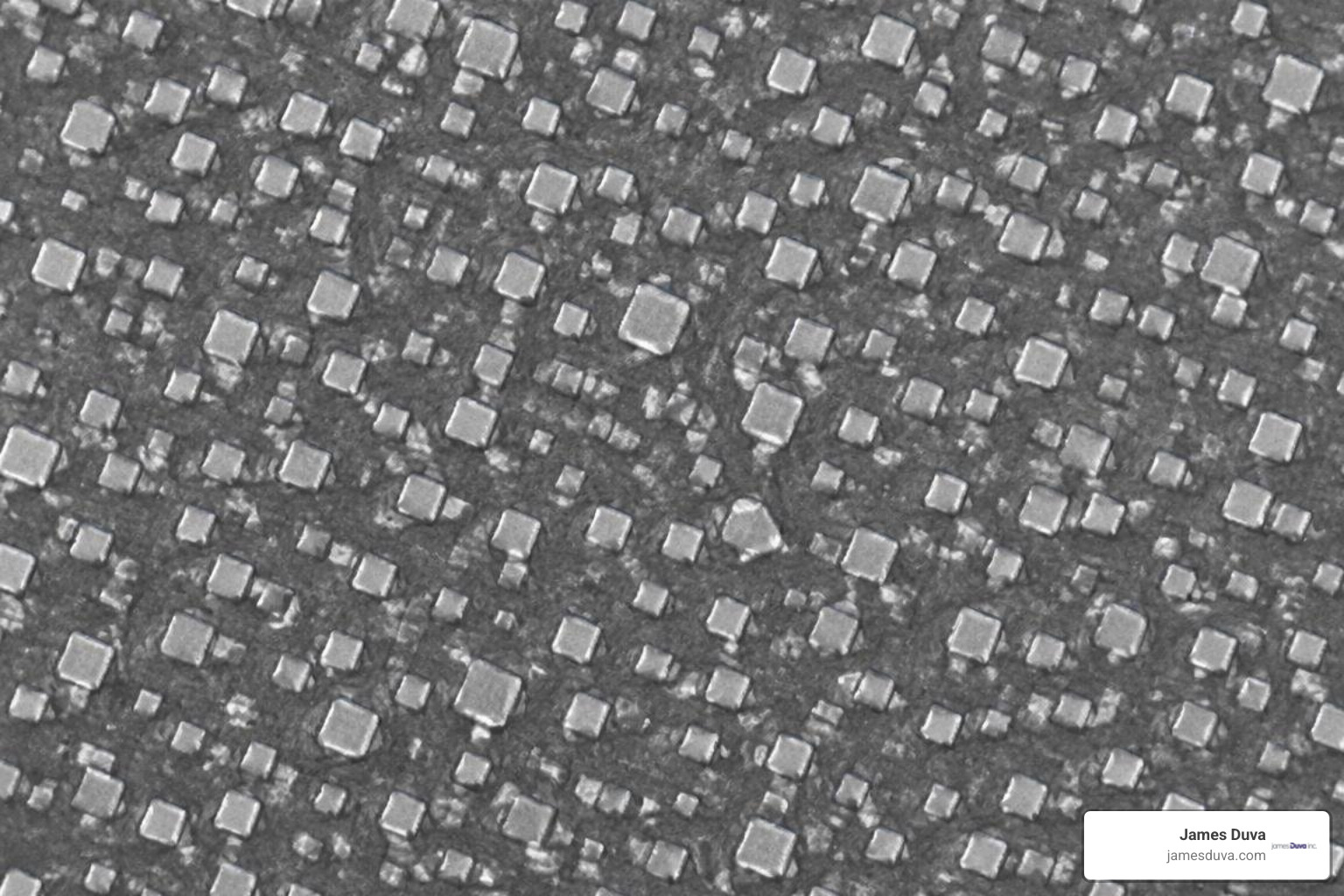
- The gamma’ Phase (Ni3(Al, Ti, Ta)): The gamma’ precipitate possesses an ordered L1₂ superlattice structure where nickel atoms sit on the cube faces and aluminum or titanium atoms occupy the cube corners. Because the lattice parameter of the gamma’ phase matches that of the gamma matrix within a fraction of a percent (producing low lattice mismatch), gamma’ precipitates resist coarsening at high temperatures. As dislocations move through the lattice, they cannot easily shear the ordered gamma’ particles without creating an energetically costly Anti-Phase Boundary (APB). Consequently, dislocations must travel in pairs (superdislocations) or bypass the particles through vacancy-assisted climb, generating exceptional yield strength that actually increases as temperatures rise from 600°C to 800°C. In advanced single-crystal superalloys, the gamma’ volume fraction can reach 50% to 70%.
- The gamma” Phase (Ni3Nb): In niobium-bearing grades like Inconel 718, the primary strengthening precipitate is the body-centered tetragonal (BCT) D0₂₂ gamma” phase. The gamma” phase induces substantial coherency strain fields that provide immense tensile strength up to 650°C. However, above 700°C, gamma” becomes thermodynamically unstable and transforms into the coarse, incoherent orthorhombic delta phase, rendering gamma”-strengthened alloys unsuitable for extreme turbine hot-section use.
- Refractory Element Additions: Elements such as Rhenium (Re), Tungsten (W), Molybdenum (Mo), and Tantalum (Ta) partition selectively into either the gamma matrix or the gamma’ precipitates. Rhenium, introduced at levels of ~3 wt% in second-generation and ~6 wt% in third-generation single-crystal superalloys, is an exceptionally slow diffuser. Re clusters within the gamma channels, retarding overall vacancy transport and reducing the rate of dislocation climb. The addition of rhenium elevated the operational temperature capability of superalloys by 30°C in second-generation alloys and by another 30°C (a total of 60°C) in third-generation systems.
Environmental Degradation and Thermal Barrier Protection
High-temperature alloy components operate under extreme oxidizing and corrosive conditions. Oxidation occurs as oxygen reacts with the alloy surface, forming protective metal oxide scales such as chromia (Cr2O3) or alumina (Al2O3).
At temperatures below 900°C, chromia (Cr2O3) scales provide a protective barrier. However, above 950°C, solid chromia oxidizes further into volatile chromium trioxide gas (CrO3(g)), which rapidly depletes the scale.
At extreme operating temperatures (>1000°C), alloys must rely on the selective oxidation of aluminum to form a dense, thermodynamic alpha-Al2O3 scale. Micro-alloying additions of reactive elements such as Yttrium (Y), Lanthanum (La), Zirconium (Zr), and Boron (B) segregate to scale grain boundaries, preventing sulfur migration and improving scale adhesion to eliminate oxide spallation during thermal cycling.
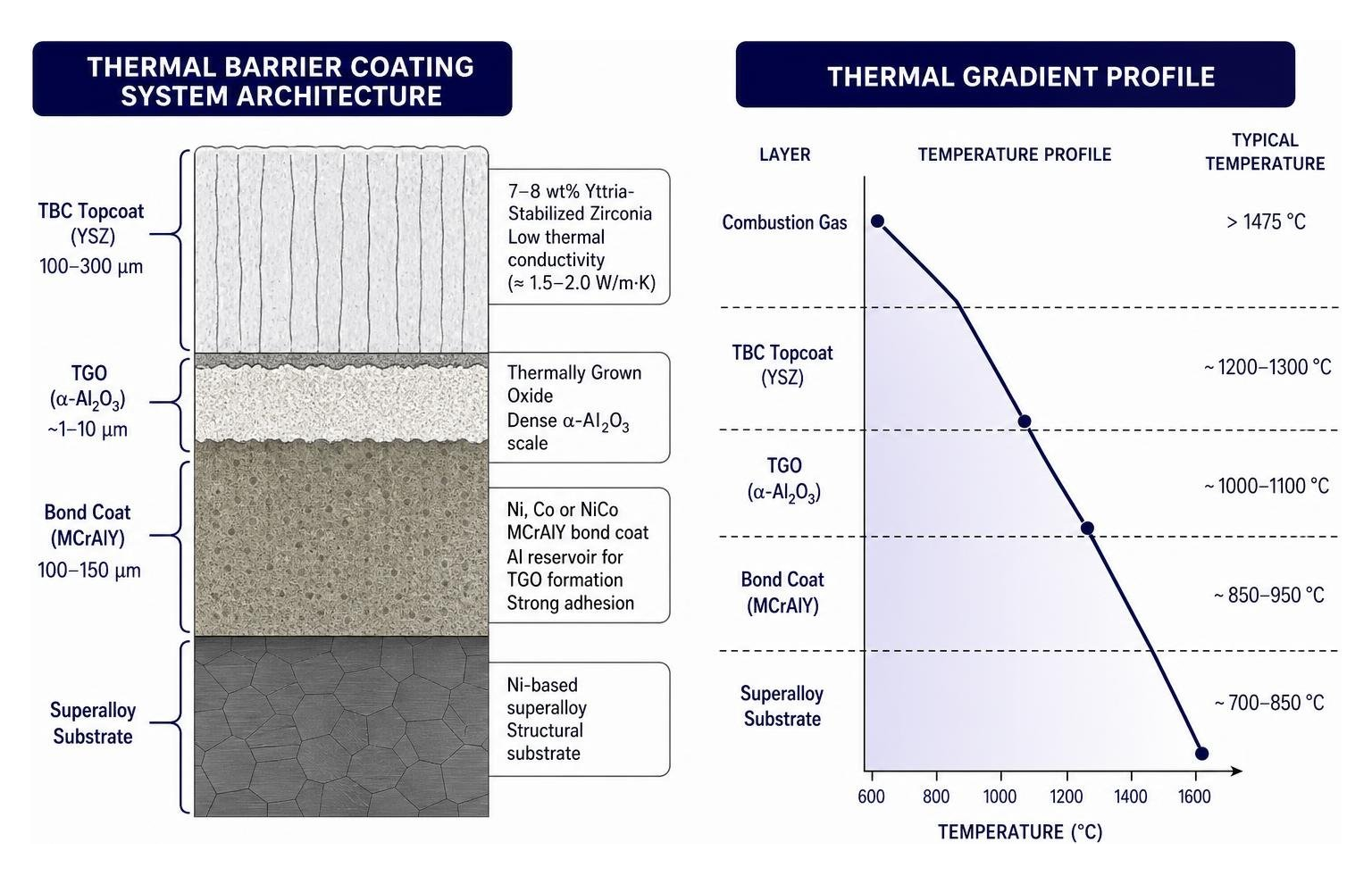
In the hottest sections of industrial and aerospace gas turbines—where combustion gas temperatures exceed 1475°C (1750 K), well beyond the incipient melting point of superalloys (~1325°C / 1600 K)—components require advanced surface engineering. Engineered components rely on a multi-layered coating system:
- MCrAlY Bond Coat (where M is Ni, Co, or NiCo): A 100–150 µm metallic interlayer applied via Low-Pressure Plasma Spray (LPPS) or High-Velocity Oxygen Fuel (HVOF). It provides an aluminum reservoir that establishes a Thermally Grown Oxide (TGO) of pure alpha-Al2O3.
- Thermal Barrier Coating (TBC): A 100–300 µm ceramic topcoat, typically composed of 7–8 wt% Yttria-Stabilized Zirconia (YSZ), deposited via Electron Beam Physical Vapor Deposition (EB-PVD) or Air Plasma Spray (APS). The ceramic layer exhibits an exceptionally low thermal conductivity (~1.5–2.0 W/m·K).
When paired with internal cooling air routed through hollow airfoil channels, a modern 300 µm TBC reduces the temperature on the underlying superalloy surface by 100 K to over 200 K, preserving the mechanical integrity of the structural metal. In industrial processing and manufacturing furnaces, specialized ceramic metallizing and thermal barrier solutions similarly apply engineered coatings to protect high-temperature production equipment.
Manufacturing Advancements and Material Innovations
The performance of heat-resistant alloys is tied to their fabrication and consolidation methods. Conventional equiaxed casting leaves a network of randomly oriented grains. Under high temperatures and multi-axial loads, these transverse grain boundaries act as preferred pathways for vacancy condensation and sliding, initiating intergranular failure.
Advanced metallurgy has transformed superalloy processing:
- Directional Solidification (DS): By withdrawing molten alloy from a heated furnace zone past a water-cooled chill plate, grains grow longitudinally along the primary stress axis (<001> crystallographic direction), eliminating transverse grain boundaries and doubling thermal fatigue life.
- Single-Crystal (SX) Solidification: Incorporating a geometric crystal selector (such as a pigtail constriction) into the DS casting mold allows only one single grain with a <001> orientation to enter the component cavity.
- Powder Metallurgy (P/M): Used for high-stress turbine disks, P/M atomization ensures uniform composition, suppressing the macro-segregation of heavy refractory elements found in large conventional ingots.
- Additive Manufacturing (AM): Laser Powder Bed Fusion (LPBF) and Directed Energy Deposition (DED) allow the creation of internal cooling channels within superalloys like Inconel 718 and Inconel 939. However, AM requires specialized post-process hot isostatic pressing (HIP) and solution heat treatment schedules to relieve residual stresses and eliminate build micro-cracking. In precision high-temperature electronics and aerospace brazing assemblies, specialized braze materials supply the necessary micro-braze preforms and spherical alloy geometries to join complex heat-resistant components.
Single-Crystal Superalloy Engineering and Creep Optimization
Single-crystal (SX) casting represents a pinnacle of structural alloy design. By removing all grain boundaries, SX technology eliminates the primary site for high-temperature sliding and void coalescence.
This microstructural change removed the need for traditional grain-boundary-strengthening elements like carbon, boron, and zirconium. Because these elements act as melting point depressants, their removal raised the incipient melting temperature of the alloy by more than 50°C. This higher tolerance allowed metallurgists to increase solution heat treatment temperatures, fully dissolving coarse, as-cast eutectic phases and reprecipitating a refined, highly ordered gamma’ morphology (0.3–0.5 µm cuboids).
Through single-crystal engineering, modern turbine blade alloys contain upwards of ten discrete alloying additions. From 1990 through the present day, turbine airfoil temperature capability has increased on average by approximately 2.2°C per year, allowing blade surface temperatures in advanced engines to approach 1150°C. When applications require unique elemental profiles or proprietary pilot melts, custom alloy development enables metallurgists to tailor composition boundaries for target operating parameters.
Emerging Innovations in Lightweight Heat Resistant Alloys
While nickel and cobalt superalloys dominate the highest temperature regimes, their high density (8.0–9.0 g/cm³) imposes a substantial weight penalty in rotating machinery and aerospace structures. Material research is focused on developing lightweight high-temperature materials:
- Nanoparticle-Reinforced Heat-Resistant Aluminum: Conventional aluminum alloys lose their mechanical strength rapidly above 350°C (662°F) as traditional strengthening precipitates coarsen and dissolve. Researchers at Tianjin University introduced a nanoparticle-dispersion-strengthened aluminum alloy that incorporates high-density, thermally stable oxide nanoparticles throughout the matrix. This aluminum alloy retains exceptional structural integrity up to 500°C, delivering more than six times the tensile strength of conventional aluminum alloys at that temperature and offering a lightweight alternative for elevated-temperature transport and engine components.
- Multi-Principal-Element Superalloys (MPES): Developed collaboratively by researchers at Sandia National Laboratories, Ames National Laboratory, and Iowa State University, high-entropy MPES compositions challenge traditional solvent-solute design. One notable MPES demonstrates a hardness-to-density ratio of 1.8–2.6 GPa·cm³/g, outperforming conventional nickel-based superalloys, refractory high-entropy alloys, and titanium aluminides. With a peak hardness of 4.5 GPa at a density of 8.2 g/cm³ (0.55 GPa·cm³/g), this alloy represents a 300% specific hardness improvement over Inconel 718. The MPES remains phase-stable at 800°C, offering high creep resistance for supercritical power systems and clean energy generation.
Frequently Asked Questions About Heat-Resistant Alloys
What is the maximum operating temperature for modern nickel-based superalloys?
Uncoated precipitation-hardened nickel-based single-crystal superalloys can sustain high mechanical stresses up to roughly 1050°C–1100°C, near their incipient melting point of 1320°C–1360°C. When protected with MCrAlY bond coats, modern Yttria-Stabilized Zirconia (YSZ) thermal barrier coatings, and active interior air cooling, these components operate within gas turbine entry environments exceeding 1475°C (1750 K). Solid-solution nickel grades like Alloy 230 resist oxidation under lower mechanical stress levels up to 1149°C (2100°F).
Why are single-crystal superalloys superior in creep resistance?
Single-crystal superalloys eliminate internal grain boundaries entirely. At elevated service temperatures (>0.5 Tm), grain boundaries normal to the tensile stress axis become the primary failure mechanism via grain boundary sliding, vacancy diffusion (Nabarro-Herring and Coble creep), and intergranular cavity nucleation. Eliminating grain boundaries removes these failure modes, prevents transverse tearing, and allows higher solution heat-treatment temperatures that optimize the strengthening gamma’ precipitate size and distribution.
How do cobalt-based alloys compare to nickel-based alloys in extreme environments?
Cobalt-based alloys feature a higher melting point (1495°C) and superior resistance to hot corrosion (sulfidation) in contaminated fuel environments compared to standard nickel alloys. They are strengthened primarily by solid-solution refractory elements and robust carbide networks (MC, M23C6), providing high thermal fatigue resistance and galling endurance. However, nickel-based superalloys achieve higher peak yield and creep strength at extreme temperatures due to their coherent, high-volume-fraction gamma’ intermetallic precipitates (Ni3(Al, Ti)).
Conclusion
Selecting the right heat-resistant alloy requires balancing operational temperature, mechanical stress profile, environmental chemistry (oxidation, sulfidation, or carburization), component geometry, and material cost. While austenitic stainless steels provide economical heat resistance for moderate thermal service, severe industrial environments demand the strength and stability of solid-solution or precipitation-hardenable nickel and cobalt superalloys.
At James Duva Inc., we supply mission-critical materials to chemical processors, refineries, energy producers, and manufacturing facilities across the United States. Operating from our central facility in Branchburg, NJ, we maintain extensive inventories of high-performance piping, flanges, fittings, and specialty flow-control components engineered to withstand extreme thermal and corrosive conditions.
To source fully certified components for your high-temperature processing needs, explore our extensive inventory of James Duva Inc. high-grade stainless steel products or contact our technical team in Branchburg, New Jersey today.
About James Duva Inc.
Since 1978, James Duva Inc. has been your trusted source for stainless steel and high-nickel alloy industrial products. Whether you’re in the water treatment, process or power industry, we pride ourselves on always having what you need. Say goodbye to your sourcing problems with just one call to James Duva.